
 English
 Español
Content
Selecting the correct industrial chiller units for a manufacturing or process cooling application is a technical decision with direct consequences for production uptime, energy cost, and equipment lifespan. This guide covers the full selection process — from understanding how chillers work and comparing system types, to evaluating performance specifications and operational requirements — giving procurement managers, plant engineers, and OEM buyers the framework they need to make an informed purchase.
What Are Industrial Chiller Units?
Definition of Industrial Chiller Units
Industrial chiller units are mechanical refrigeration systems designed to remove heat from a process fluid — typically water or a water-glycol mixture — and transfer it to the surrounding environment. The cooled fluid is then circulated through production equipment, molds, or reactors to maintain stable operating temperatures. Unlike commercial HVAC chillers, industrial systems are engineered for continuous-duty operation and precise temperature control under high-load conditions.
"An industrial chiller is a closed-loop refrigeration system that extracts thermal energy from a process fluid and rejects it via an air-cooled condenser or water cooling tower, maintaining target temperatures within manufacturing environments."
How Industrial Chillers Work
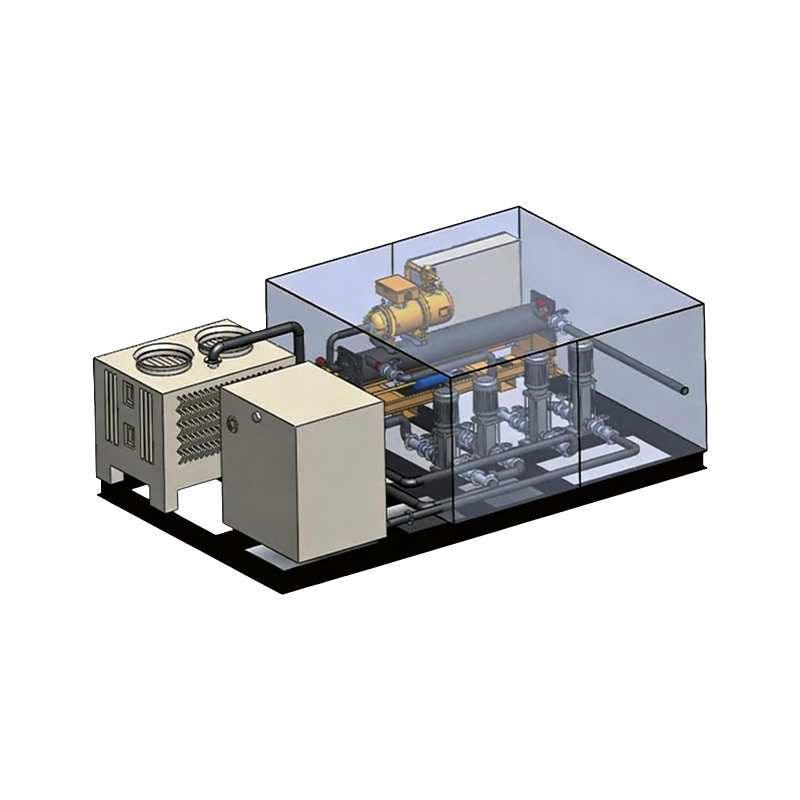
All vapor-compression chillers operate on the same thermodynamic cycle: a compressor pressurizes refrigerant gas, which then releases heat through the condenser, expands through a valve to drop in pressure and temperature, and absorbs heat from the process fluid via the evaporator before returning to the compressor. The difference between chiller types lies in compressor design, heat rejection method, and capacity range.
Air-Cooled vs Water-Cooled Systems
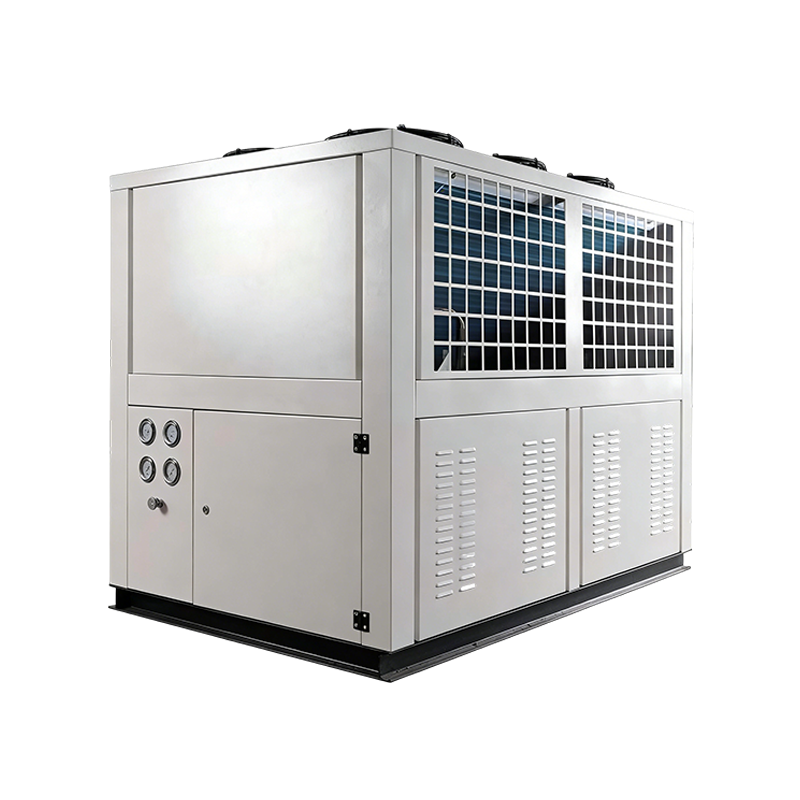
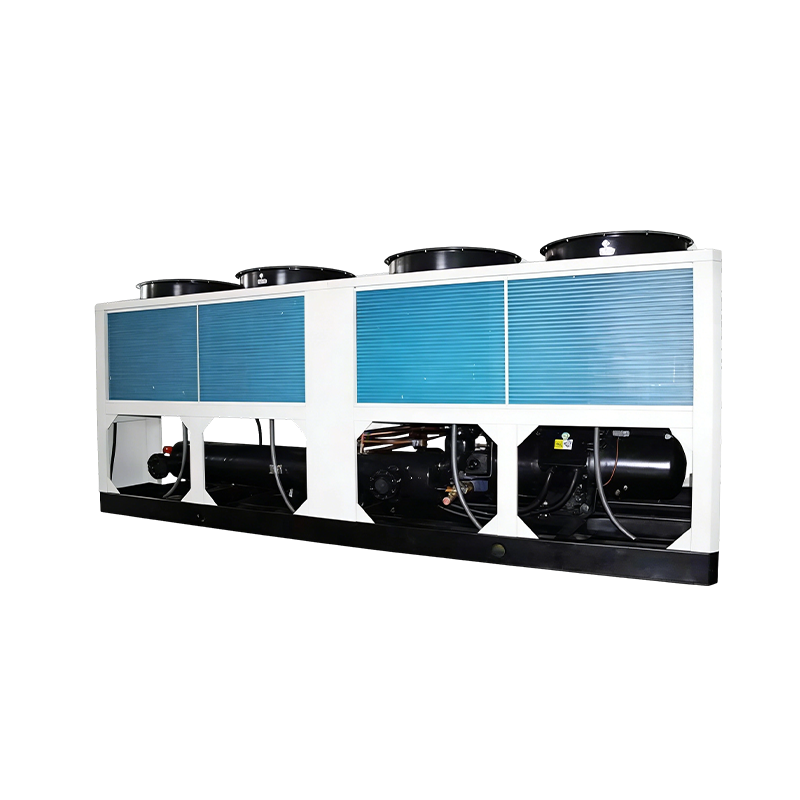
Air-cooled chillers use ambient air to reject condenser heat through a finned coil and fan array — no external water supply is required, making installation straightforward. Water-cooled chillers reject heat to a cooling tower via a water circuit, delivering higher energy efficiency but requiring water treatment and tower maintenance. Capacity, site infrastructure, and climate all influence which configuration is appropriate.
Why Industrial Cooling Is Critical
Uncontrolled heat buildup in plastic molds, CNC spindles, laser sources, and chemical reactors causes dimensional instability, premature equipment failure, and scrap rates that directly erode profitability. Properly sized industrial chiller units eliminate these variables by maintaining process temperatures within defined tolerances around the clock.
Types of Industrial Chiller Units
The market offers six primary chiller configurations, each suited to different capacity ranges and process requirements.
| Chiller Type | Capacity Range | Best Application | Key Advantage |
| Air-Cooled Scroll | 1 – 60 Ton | Injection molding, laser cooling | No cooling tower, low install cost |
| Water-Cooled Scroll | 5 – 80 Ton | CNC machining, food processing | Higher COP than air-cooled |
| Air-Cooled Screw | 50 – 500 Ton | Chemical plants, large mold shops | Part-load efficiency, robust duty |
| Water-Cooled Screw | 60 – 600 Ton | Pharmaceutical, HVAC | Best efficiency in large systems |
| Centrifugal | 200 Ton+ | District cooling, large HVAC | Highest efficiency at full load |
| Low-Temperature | 1 – 100 Ton | Pharmaceutical, food freezing | Setpoints to -25 degrees C |
Scroll Chillers
Scroll compressors use two interlocking spiral elements to compress refrigerant. They are compact, relatively quiet, and well-suited to capacities below 60 tons. Scroll chillers are the most common choice for small-to-mid industrial facilities that require reliable cooling without the complexity of screw or centrifugal systems.
Screw Chillers
Twin-rotor screw compressors offer stepless capacity modulation — typically from 25% to 100% — which dramatically improves part-load efficiency in facilities with variable thermal loads. Screw industrial chiller units are the standard choice for capacities between 50 and 600 tons in continuous manufacturing environments.
Low-Temperature Chillers
Standard chillers maintain process fluid temperatures between 7 and 35 degrees C. Low-temperature or ultra-low systems use cascade refrigeration or specialized refrigerants to achieve setpoints as low as -25 degrees C, serving pharmaceutical cold rooms, chemical reactors, and food freezing lines.
Industrial Applications of Chiller Units
Industrial chiller units serve as the thermal backbone of nearly every continuous manufacturing process. The specific application defines required temperature setpoints, flow rates, and contamination-resistance requirements.
Mold cooling accounts for up to 70% of the total injection cycle time. Chillers maintaining coolant at 8–15 degrees C enable faster cycle times, better surface finish, and reduced warpage. Dedicated mold chillers with high-flow pumps and precise temperature control are standard in modern injection facilities.
Spindle motors and hydraulic systems generate consistent heat loads that, if unmanaged, cause thermal expansion in the machine bed and spindle — directly affecting dimensional accuracy. CNC machine tool chillers maintain spindle oil and coolant temperatures within 0.1 degrees C of setpoint.
CO2 and fiber laser sources require stable water cooling to maintain beam quality and protect optical components. Chillers serving laser applications must deliver extremely stable temperatures (typically plus or minus 0.5 degrees C) and use corrosion-resistant wetted materials.
Exothermic reactions in reactors and batch tanks require continuous heat removal to maintain reaction rates within specification. Process cooling chillers for chemical applications often require stainless steel or titanium evaporators to resist corrosive process fluids.
Chilling product streams, jacketed tanks, and fermentation vessels demands hygienic system design with NSF-compliant materials. Temperature stability directly affects product consistency and shelf life in brewing, dairy, and beverage manufacturing.
GMP manufacturing environments require validated, documented temperature control. Pharmaceutical chillers must offer precise setpoint control, alarm systems, and data logging capabilities compatible with FDA 21 CFR Part 11 or equivalent regulatory frameworks.
Key Performance Properties Buyers Should Evaluate
Technical specification comparison is the most reliable method for differentiating industrial chiller units before purchase. The following eight parameters should be documented and verified for every system under consideration.
Cooling Capacity (Ton/kW)
Cooling capacity must be sized with a 10–20% safety margin above the calculated peak heat load. Undersized chillers operate continuously at full load, accelerating compressor wear and failing to maintain setpoints during peak production. One ton of refrigeration equals 3.517 kW of heat removal — a conversion that standardizes cross-regional capacity comparisons.
Energy Efficiency (COP/EER)
The Coefficient of Performance (COP) measures cooling output per unit of electrical input. Scroll chillers typically achieve COP values of 3.0–3.5; screw chillers range from 4.0–5.5 at full load; centrifugal systems can exceed 6.0 under optimal conditions. A difference of 0.5 in COP translates to measurable annual energy savings in continuous-duty applications.
Temperature Stability
Standard industrial chillers maintain setpoints within plus or minus 1 degree C. PID-controlled precision chillers achieve plus or minus 0.1 degree C, which is required for laser cooling, semiconductor processes, and laboratory applications. Verify stability specifications under variable load conditions, not just at steady state.
Compressor and Refrigerant Type
Scroll compressors are reliable and cost-effective to 60 tons. Screw compressors offer superior part-load efficiency above 50 tons. For refrigerant selection, R-410A, R-134a, and R-32 are widely available; R-22 has been phased out in most markets. Low-GWP alternatives including R-513A and R-1234ze are increasingly specified for new installations in regulated markets.
Control System Accuracy
Modern chillers integrate microprocessor controllers with touchscreen HMI, real-time fault diagnostics, and remote monitoring via Modbus or BACnet protocols. Remote access capabilities reduce response time for maintenance interventions and enable integration with facility energy management systems.
Industry Standards and Operational Considerations
Long-term reliability of industrial chiller units depends as much on installation environment and maintenance practice as on initial equipment quality.
Maintenance Requirements
- Condenser coil cleaning every 3–6 months for air-cooled systems in dusty environments
- Refrigerant leak checks annually or per applicable regulation
- Compressor oil analysis annually for screw compressor systems
- Evaporator tube inspection for water-cooled chillers every 12 months
- Filter replacement on chilled water circuits per manufacturer schedule
Installation Environment
Air-cooled chillers require adequate airflow clearance — typically 1–2 meters on all sides — and should not be installed in enclosed spaces without dedicated ventilation. Ambient temperature limits (commonly 40–43 degrees C maximum) must not be exceeded; high-ambient kits are available for hot climate installations. Water-cooled systems require proximity to a cooling tower and water treatment infrastructure.
Water Quality for Water-Cooled Systems
Poor water quality is the leading cause of premature heat exchanger failure in water-cooled chillers. Maintain chilled water pH between 7.0 and 8.5, hardness below 200 ppm, and chloride content below 50 ppm. Use corrosion inhibitors and biocides appropriate for the system materials, and test water quality quarterly.
Safety Systems
Industrial chillers should include high-pressure cutout, low-pressure protection, anti-freeze protection on the evaporator, motor overload protection, and phase-loss detection. Verify that all safety devices comply with applicable local electrical and refrigerant codes before commissioning.
FAQ
What are industrial chiller units used for?
Industrial chiller units are used to remove process heat from manufacturing equipment and production fluids. Common applications include injection mold cooling, CNC machine tool temperature control, laser source cooling, chemical reactor temperature management, food and beverage chilling, and pharmaceutical process cooling. Any application requiring stable fluid temperatures below ambient conditions benefits from chiller-based cooling.
What is the difference between air-cooled and water-cooled industrial chillers?
Air-cooled chillers reject condenser heat directly to ambient air using fans and finned coils — no water supply is needed, reducing installation complexity. Water-cooled chillers reject heat to a cooling tower via a secondary water circuit, achieving higher COP values (typically 15–25% more efficient) but requiring water treatment and tower maintenance. Air-cooled systems are preferred where water supply is limited or installation simplicity is a priority; water-cooled systems are chosen where energy efficiency and large capacities are critical.
How do you size an industrial chiller correctly?
Calculate the total heat load of the process in kilowatts or tons of refrigeration, accounting for all heat sources: machine heat input, friction, and ambient infiltration. Add a 10–20% safety factor to the calculated peak load. Specify the required supply fluid temperature and flow rate. For variable-load processes, consider screw chillers with capacity modulation rather than fixed-capacity scroll systems.
How long do industrial chillers last, and what maintenance is required?
Well-maintained industrial chillers have service lives of 15–20 years. Critical maintenance tasks include regular condenser coil cleaning, annual refrigerant leak verification, compressor oil analysis for screw systems, and water quality monitoring for water-cooled configurations. Neglecting these tasks — particularly water treatment — is the most common cause of premature heat exchanger failure and compressor damage.
Final Thoughts
Choosing the right industrial chiller units requires matching system type and capacity to the specific thermal demands of the process, verifying performance specifications against documented test data, and accounting for installation environment and long-term maintenance requirements. Air-cooled scroll and screw chillers cover the majority of industrial applications; water-cooled systems and low-temperature configurations address specialized requirements. Buyers who approach selection systematically — starting with an accurate heat load calculation and working through refrigerant, compressor, and control requirements — consistently achieve better efficiency, longer equipment life, and lower total cost of ownership.