English
 Español
Welcome to Soouney

Custom Integrated Chiller
Search Here
Services List
Feel Free to Contact Us
WhatsApp:+86 18921753771


About Soouney.
Read More
A Technological Benchmark In The Industrial Refrigeration Sector
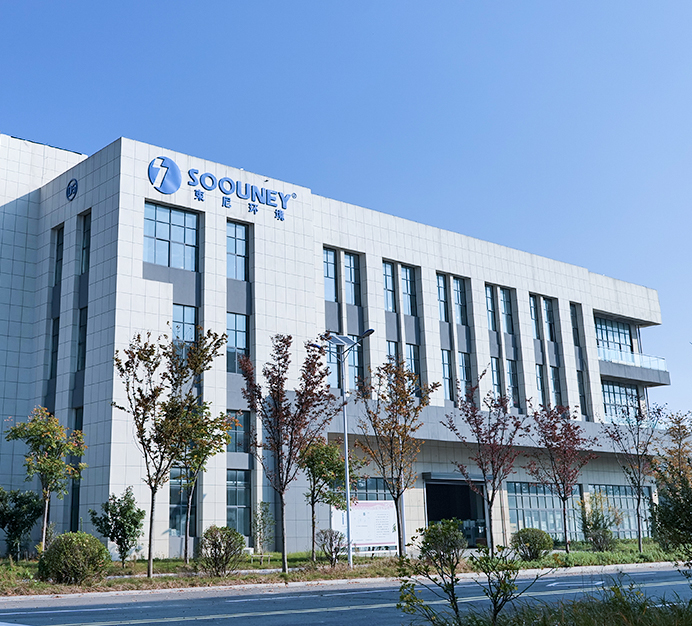
Shanghai Soouney Refrigeration Equipment Co., Ltd. is a large-to-medium-sized high-tech enterprise within Shanghai's refrigeration sector, integrating research, development, production and sales. We China Integrated Chiller Manufacturers and Custom Integrated Chiller Factory. Upholding the quality principles of 'integrity, quality, service and innovation', the company pursues a development philosophy centred on humanisation and technological advancement, driving product R&D and manufacturing with high starting points and stringent standards. It has now grown into a renowned brand in the domestic and international markets for cabinet air conditioners and industrial chillers, earning high recognition from industry professionals and a broad customer base. Rooted in the Chinese market, it provides reliable refrigeration solutions to clients worldwide. We focus on international trade and B2B business, providing tailored solutions to global clients. We ensure the smooth, stable, and long-term operation of your projects with a comprehensive research and development, production, sales, and after-sales service system. We have nearly 20 years of experience in providing one-stop solutions for overseas projects.
-
 0
0Site Area
-
 0
0Established
-
 0+
0+Employees
Pay Attention To Our Latest News And Exhibitions
View All News
What'S News?
-
Industry NewsLearn More
-
Industry NewsLearn More
-
Industry NewsLearn More
-
Industry NewsLearn More
-
Industry NewsLearn More
Integrated Chiller Industry knowledge
What Sets Integrated Chiller Architecture Apart from Modular Designs
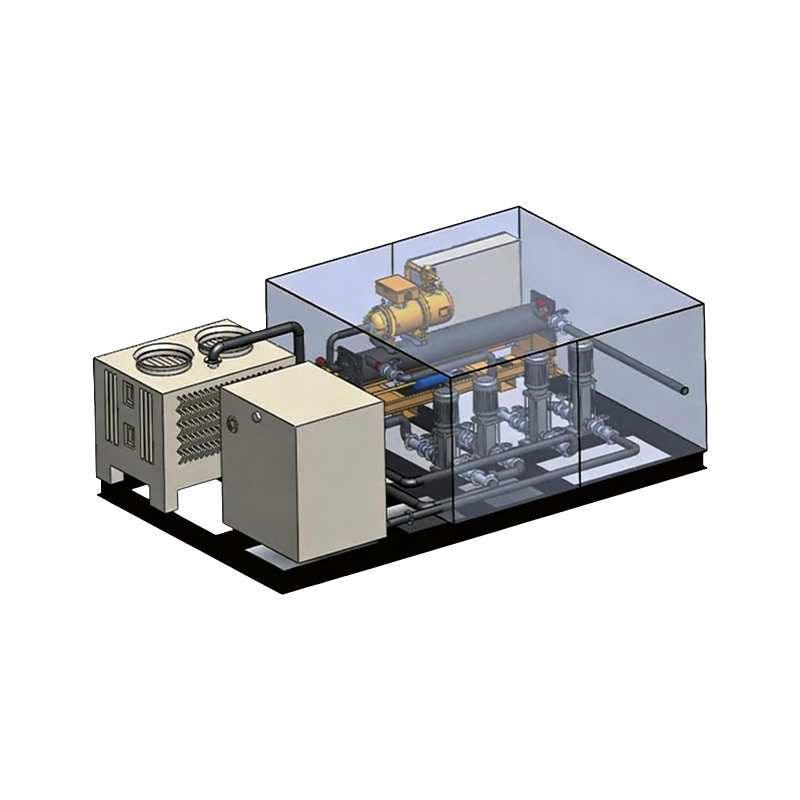
An integrated chiller consolidates every functional component — compressor, evaporator, condenser, expansion device, controls, and often the pump and tank — into a single factory-assembled unit. This contrasts with modular or split configurations where components are shipped separately and connected on site. The practical consequence is a dramatically reduced installation timeline: a pre-tested, pre-charged integrated unit typically reaches full operation within hours of positioning and connection, versus days for field-assembled systems.
Factory integration also shifts quality control upstream. Every critical joint, refrigerant charge, electrical termination, and control parameter is verified under load conditions at the manufacturer's facility before the unit ships. At Shanghai Soouney Refrigeration Equipment Co., Ltd., full-load performance testing against specified supply and return temperatures is standard prior to dispatch, giving project engineers documented evidence of performance conformance before installation begins.
Compressor and Refrigerant Circuit Engineering for Integrated Units
Capacity modulation strategy is one of the most consequential engineering decisions in an integrated chiller. Fixed-speed scroll compressors offer low first cost and high reliability but deliver capacity in discrete steps — typically through compressor staging in multi-circuit units. Variable-speed drive (VSD) compressors, increasingly standard on higher-specification integrated chillers, modulate output continuously from roughly 20 % to 100 % of rated capacity. At partial load — which represents the majority of real-world operating hours in most industrial applications — VSD compressors can reduce energy consumption by 30–50 % compared to fixed-speed equivalents.
Refrigerant circuit redundancy is a worthwhile consideration for continuous-process applications. Dual independent refrigerant circuits within a single chassis mean that a compressor fault on one circuit does not result in a complete process shutdown — the second circuit maintains partial cooling capacity while repairs are arranged. This architecture is particularly relevant in pharmaceutical manufacturing, data centre support cooling, and precision laser applications where any thermal excursion carries significant downstream cost.
Electronic expansion valves with superheat control algorithms have become the standard for integrated units. Compared to thermostatic expansion valves, they respond faster to load transients, protect the compressor more reliably from liquid slugging, and allow the evaporator to operate at a slightly higher average suction pressure — improving COP without hardware changes.
Built-In Pump and Tank Configurations: Sizing Implications
Many integrated chillers incorporate a chilled water pump and buffer tank within the skid envelope. The buffer tank serves a function that is frequently underestimated: it decouples the chiller's minimum run time from the process load cycle. Without adequate buffer volume, short-cycling — where the compressor starts and stops repeatedly over intervals of minutes — accelerates motor winding wear and increases thermal fatigue on brazed joints. A commonly applied sizing rule is a minimum of 3–5 litres of buffer volume per kW of chiller capacity, though processes with very rapid load swings may require larger ratios.
Pump selection within the integrated unit should be matched to the external circuit resistance, not just the chiller's internal pressure drop. Soouney's application engineers recommend providing a full system curve — including all process equipment, pipe lengths, and fitting losses — before finalising pump specification, as an undersized pump will restrict flow below the evaporator's design rate and raise leaving water temperatures above setpoint even when the compressor is running at capacity.
| System Element | Integrated (Built-In) | External / Field-Supplied |
|---|---|---|
| Installation Time | Hours | Days |
| Performance Verification | Factory-tested before shipment | Commissioned on site |
| Footprint Flexibility | Fixed skid dimensions | Configurable to space |
| Single-Source Accountability | Yes — one manufacturer | Split across suppliers |
Control System Capabilities and Remote Monitoring in Modern Integrated Chillers
The control platform in a modern integrated chiller does far more than maintain a setpoint. Multi-parameter monitoring — tracking suction and discharge pressures, superheat, subcooling, evaporator inlet and outlet temperatures, compressor operating hours, and power draw — gives operators the data needed to distinguish normal operating variance from developing faults before a shutdown occurs. Early fault detection through trend analysis can reduce unplanned downtime by 40–60 % in continuous industrial processes.
Communication protocol support — Modbus RTU/TCP, BACnet, or Profibus depending on specification — allows the chiller to integrate directly into a plant's SCADA or building management system. This enables centralised alarming, remote setpoint adjustment, and energy metering without secondary instrumentation. For international B2B projects, Soouney supplies detailed communication mapping documents alongside each unit, allowing the client's automation team to complete integration without requiring on-site support from the chiller manufacturer — a practical advantage for projects in regions where service visits carry significant lead time and logistical cost.
Quick Links
Product Categories
Contact Us
-
 Email: [email protected]
-
 Whatsapp: +86 18921753771
-
 Mobile Phone : +86-18921753771
Mobile Phone :+86-13022163998 -
 Telephone: +86-021-58223918
-
 No. 128 Hui'an Road, Fengxian District, Shanghai, China