English
 Español
Welcome to Soouney

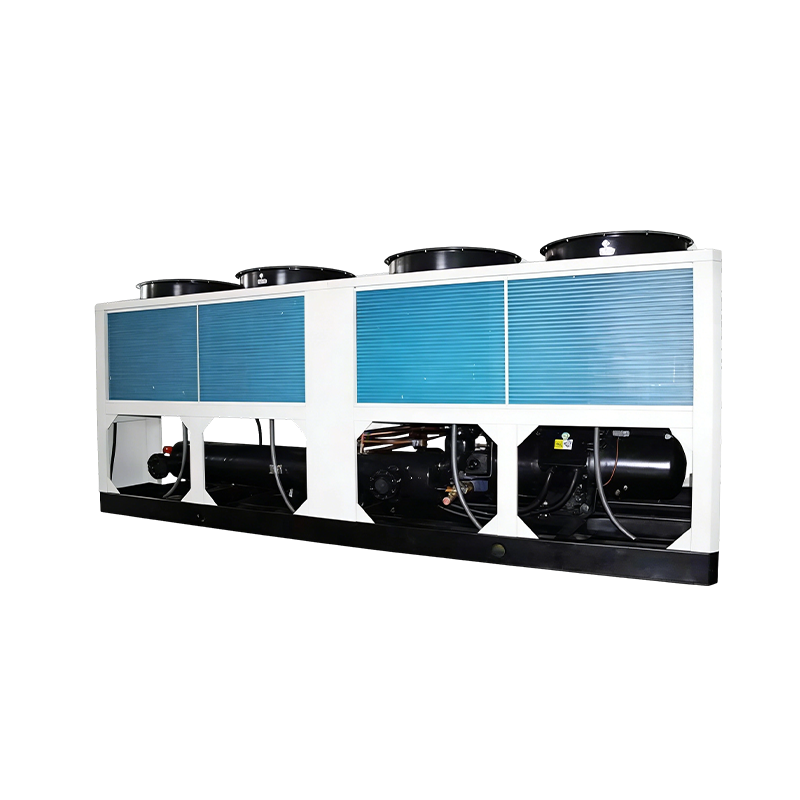
Custom Air Cooled Screw Chiller
Search Here
Services List
Feel Free to Contact Us
WhatsApp:+86 18921753771



About Soouney.
Read More
A Technological Benchmark In The Industrial Refrigeration Sector
Shanghai Soouney Refrigeration Equipment Co., Ltd. is a large-to-medium-sized high-tech enterprise within Shanghai's refrigeration sector, integrating research, development, production and sales. We China Air Cooled Screw Chiller Manufacturers and Custom Air Cooled Screw Chiller Factory. Upholding the quality principles of 'integrity, quality, service and innovation', the company pursues a development philosophy centred on humanisation and technological advancement, driving product R&D and manufacturing with high starting points and stringent standards. It has now grown into a renowned brand in the domestic and international markets for cabinet air conditioners and industrial chillers, earning high recognition from industry professionals and a broad customer base. Rooted in the Chinese market, it provides reliable refrigeration solutions to clients worldwide. We focus on international trade and B2B business, providing tailored solutions to global clients. We ensure the smooth, stable, and long-term operation of your projects with a comprehensive research and development, production, sales, and after-sales service system. We have nearly 20 years of experience in providing one-stop solutions for overseas projects.
-
 0
0Site Area
-
 0
0Established
-
 0+
0+Employees
Pay Attention To Our Latest News And Exhibitions
View All News
What'S News?
-
Industry NewsLearn More
-
Industry NewsLearn More
-
Industry NewsLearn More
-
Industry NewsLearn More
-
Industry NewsLearn More
Air Cooled Screw Chiller Industry knowledge
How Air Cooled Screw Chillers Regulate Capacity in Real-World Conditions
Unlike scroll or centrifugal units, air cooled screw chiller systems achieve capacity modulation through slide valve technology built into the twin-screw compressor. By axially shifting the slide valve, the active compression length changes, allowing step-free output reduction — typically from 100% down to 25% or lower — without cycling the compressor on and off.
This matters in industrial environments where heat loads fluctuate throughout the day. Continuous part-load operation at a matched capacity point consumes significantly less power than full-load cycling. In practice, facilities running chillers at an average 60–70% load see energy savings of 20–35% compared to fixed-capacity alternatives.
At Shanghai Soouney Refrigeration Equipment Co., Ltd., our screw chiller control systems pair slide valve modulation with electronic expansion valves and inverter-driven fans, enabling the unit to adapt to both load changes and ambient temperature swings simultaneously.
Ambient Temperature Limits and High-Ambient Performance Design
Air cooled screw chillers reject heat directly to ambient air, which makes condenser design the determining factor in high-temperature climates. Standard units are rated to operate at ambient temperatures up to 43–46°C, but actual cooling capacity derates as outdoor temperatures rise — a consequence of reduced condensing pressure differential.
To maintain reliable output in hot regions, manufacturers apply several engineering countermeasures:
- Larger condenser coil surface area to lower condensing temperature at a given ambient
- Variable-speed condenser fans that ramp up during peak ambient periods
- Subcooling circuits that lower refrigerant temperature before the expansion valve, recovering lost capacity
- Compressor economizers, which inject intermediate-pressure refrigerant vapor to boost mass flow rate
Projects in the Middle East, Southeast Asia, and North Africa routinely specify high-ambient variants rated to 52°C or above. Buyers sourcing for these regions should confirm the derating curve from the manufacturer, not just the nominal capacity figure, as stated cooling tonnage is always measured at standard test conditions (typically 35°C ambient, 12/7°C chilled water).
Refrigerant Selection: R410A vs R134a vs Low-GWP Alternatives
Refrigerant choice has significant downstream implications for operating pressure, compressor sizing, and regulatory compliance. The table below summarises the key characteristics of refrigerants commonly used in screw chillers:
| Refrigerant | GWP | Operating Pressure (typical) | Notes |
|---|---|---|---|
| R410A | 2,088 | High | Being phased down under F-Gas regulations in EU |
| R134a | 1,430 | Medium | Common in large-tonnage screw chillers; restricted in new equipment from 2025 in EU |
| R513A | 631 | Medium | Drop-in replacement for R134a; growing adoption |
| R1234ze | <1 | Low–Medium | Preferred for low-GWP compliance; requires optimised compressor design |
For buyers exporting equipment to EU markets or specifying chillers for LEED-certified projects, verifying GWP compliance with the receiving country's current and future regulations is essential before procurement. Soouney offers screw chiller configurations across multiple refrigerant options to match regional compliance requirements.
Installation Footprint, Noise Constraints, and Placement Best Practices
Air cooled screw chillers are designed for outdoor placement, but poor siting decisions create problems that no amount of controls tuning can fully compensate. Three factors consistently drive field complaints: insufficient clearance, recirculation, and noise propagation.
Clearance: Manufacturers specify minimum maintenance and airflow clearances — typically 1.2–1.5 m on fan discharge sides and 1.0 m on service panels. Installing units closer than specified raises condensing pressure and accelerates compressor wear. For rooftop installations with walls or parapets, maintaining clearance above the fan plane is equally important.
Recirculation: Discharged hot air re-entering the condenser coil is the most common cause of unexplained capacity loss in multi-unit installations. Units should never face each other at close range. Where space is constrained, baffles or directional shrouds can redirect discharge airflow.
Noise: Twin-screw compressors generate broadband noise in the 70–85 dBA range at one meter. For sites near residential zones or noise-sensitive buildings, acoustic enclosures, compressor blankets, and anti-vibration mounts are standard mitigation tools. Inverter-driven fans also reduce noise during part-load operation by running at lower speeds. Our air cooled screw chiller lineup includes low-noise configurations with factory-fitted acoustic treatment, available for projects with strict environmental sound limits.
Quick Links
Product Categories
Contact Us
-
 Email: [email protected]
-
 Whatsapp: +86 18921753771
-
 Mobile Phone : +86-18921753771
Mobile Phone :+86-13022163998 -
 Telephone: +86-021-58223918
-
 No. 128 Hui'an Road, Fengxian District, Shanghai, China