English
 Español
Welcome to Soouney

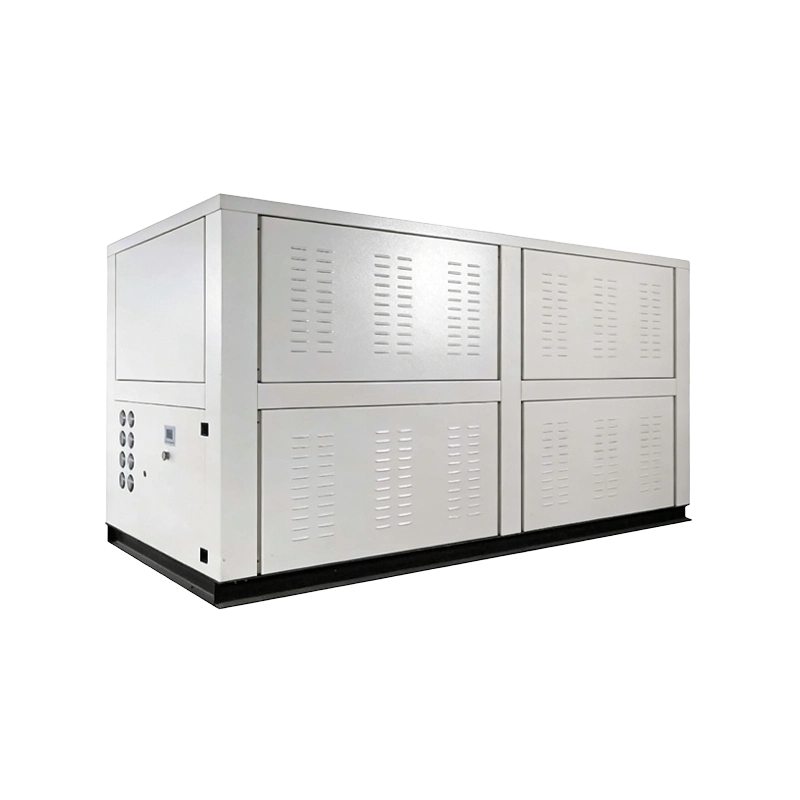
Custom Water Cooled Box Chiller
Search Here
Services List
Feel Free to Contact Us
WhatsApp:+86 18921753771


About Soouney.
Read More
A Technological Benchmark In The Industrial Refrigeration Sector
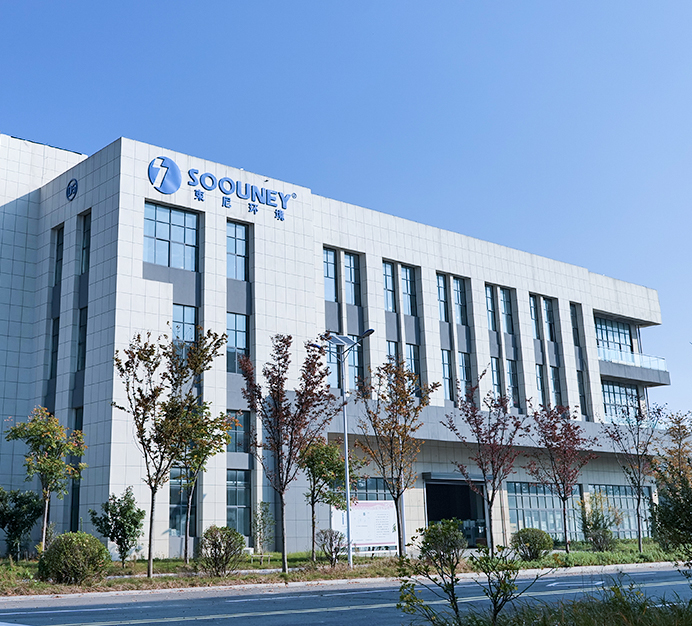
Shanghai Soouney Refrigeration Equipment Co., Ltd. is a large-to-medium-sized high-tech enterprise within Shanghai's refrigeration sector, integrating research, development, production and sales. We China Water Cooled Box Chiller Manufacturers and Custom Water Cooled Box Chiller Factory. Upholding the quality principles of 'integrity, quality, service and innovation', the company pursues a development philosophy centred on humanisation and technological advancement, driving product R&D and manufacturing with high starting points and stringent standards. It has now grown into a renowned brand in the domestic and international markets for cabinet air conditioners and industrial chillers, earning high recognition from industry professionals and a broad customer base. Rooted in the Chinese market, it provides reliable refrigeration solutions to clients worldwide. We focus on international trade and B2B business, providing tailored solutions to global clients. We ensure the smooth, stable, and long-term operation of your projects with a comprehensive research and development, production, sales, and after-sales service system. We have nearly 20 years of experience in providing one-stop solutions for overseas projects.
-
 0
0Site Area
-
 0
0Established
-
 0+
0+Employees
Pay Attention To Our Latest News And Exhibitions
View All News
What'S News?
-
Industry NewsLearn More
-
Industry NewsLearn More
-
Industry NewsLearn More
-
Industry NewsLearn More
-
Industry NewsLearn More
Water Cooled Box Chiller Industry knowledge
How Water-Side Heat Rejection Actually Works in a Box Chiller
Unlike air-cooled units that rely on ambient airflow, a water cooled box chiller transfers compressor and condenser heat into a circulating water loop — typically connected to a cooling tower or municipal water supply. This closed-loop rejection mechanism allows the condenser to operate at a significantly lower condensing temperature, which directly raises the coefficient of performance (COP). In practical terms, water-cooled condensers routinely achieve condensing temperatures 10–15 °C lower than equivalent air-cooled systems under the same ambient conditions, translating to measurable reductions in compressor power draw.
The heat exchange surfaces inside the condenser are typically shell-and-tube or brazed-plate designs. Shell-and-tube condensers suit high-capacity or high-fouling applications due to their ease of cleaning; brazed-plate condensers offer a more compact footprint at lower flow rates. Selecting the right condenser geometry for your cooling water quality and flow rate is a decision that pays dividends over the equipment's operating life. At Shanghai Soouney Refrigeration Equipment Co., Ltd., condenser sizing and material selection are matched to each project's water chemistry data to prevent premature scaling or corrosion.
Refrigerant Circuit Considerations for Industrial Box Chiller Configurations
The compressor type at the heart of a water-cooled box chiller has a direct bearing on capacity modulation, noise floor, and long-term reliability. Scroll compressors dominate the small-to-medium range (typically 5–60 kW) for their low vibration signature and simple construction. Screw compressors take over at higher capacities, offering continuous slide-valve modulation from roughly 25 % to 100 % of rated output — a key advantage in processes with variable thermal loads, such as injection moulding, laser cutting, or pharmaceutical reaction vessels.
Refrigerant selection has grown more complex following the HFC phase-down schedules under the Kigali Amendment. R-410A, long the dominant choice, is being displaced in new equipment by lower-GWP alternatives — R-32 (GWP ≈ 675), R-454B (GWP ≈ 466), and in some commercial lines, R-1234ze. Buyers specifying equipment today should confirm that the refrigerant circuit is compatible with future refrigerant transitions, paying attention to compressor oil specifications, expansion valve calibration ranges, and pressure-rating margins on heat exchangers.
Electronic expansion valves (EEVs) have largely replaced thermostatic expansion valves in modern designs. EEVs respond to superheat changes in milliseconds rather than seconds, enabling tighter evaporator exit temperature control and reducing the risk of liquid slugging at part-load conditions.
Cooling Tower Integration and Water Treatment Requirements
A water-cooled chiller system is only as reliable as its condenser water circuit. Cooling tower selection hinges on wet-bulb temperature — the true driver of condenser water supply temperature — rather than dry-bulb. A common design basis is a condenser water supply temperature of 29–32 °C at a local wet-bulb of 27 °C, but project-specific climate data should always override rules of thumb.
| Water Quality Parameter | Recommended Range | Risk if Out of Range |
|---|---|---|
| pH | 7.0 – 8.5 | Copper corrosion (<7.0) / scale deposition (>8.5) |
| Total Hardness | < 200 mg/L as CaCO₃ | Calcium carbonate scaling on tube surfaces |
| Chloride Ions | < 200 mg/L | Pitting corrosion on stainless steel and copper |
| Conductivity | 200 – 1000 µS/cm | Galvanic corrosion or mineral build-up |
Biocide dosing schedules and blowdown cycles must be maintained to control Legionella risk and prevent biofilm formation — both of which significantly degrade condenser heat transfer. Soouney's engineering team routinely assists overseas clients in establishing site-specific water treatment protocols as part of the commissioning handover, reducing the risk of warranty claims arising from water-side fouling.
Installation Layout, Maintenance Access, and Lifecycle Cost Planning
The box-type chassis format consolidates the evaporator, compressor, condenser, and controls within a single skid-mounted enclosure. This reduces on-site pipework complexity compared to split or modular configurations, and simplifies factory pre-testing — most units undergo full-load performance verification before shipping. When planning the equipment room layout, allow for a minimum clearance of 1 m on service panels and valve access points; failure to plan maintenance clearance is the single most common cause of avoidable downtime in industrial chiller installations.
Lifecycle cost analysis for a water cooled box chiller should account for: compressor oil analysis intervals (typically every 2,000 operating hours), condenser tube inspection and brushing (annually or per water quality data), refrigerant leak checks (per local regulations, often semi-annually), and control software updates. Units with onboard data logging and remote monitoring capability — increasingly standard on quality industrial chillers — allow predictive maintenance scheduling based on actual operating data rather than calendar-based assumptions, extending mean time between failures and lowering total cost of ownership over a 15–20 year equipment lifespan.
Quick Links
Product Categories
Contact Us
-
 Email: [email protected]
-
 Whatsapp: +86 18921753771
-
 Mobile Phone : +86-18921753771
Mobile Phone :+86-13022163998 -
 Telephone: +86-021-58223918
-
 No. 128 Hui'an Road, Fengxian District, Shanghai, China