English
 Español
Welcome to Soouney

Custom Water Cooled Screw Chiller
Search Here
Services List
Feel Free to Contact Us
WhatsApp:+86 18921753771
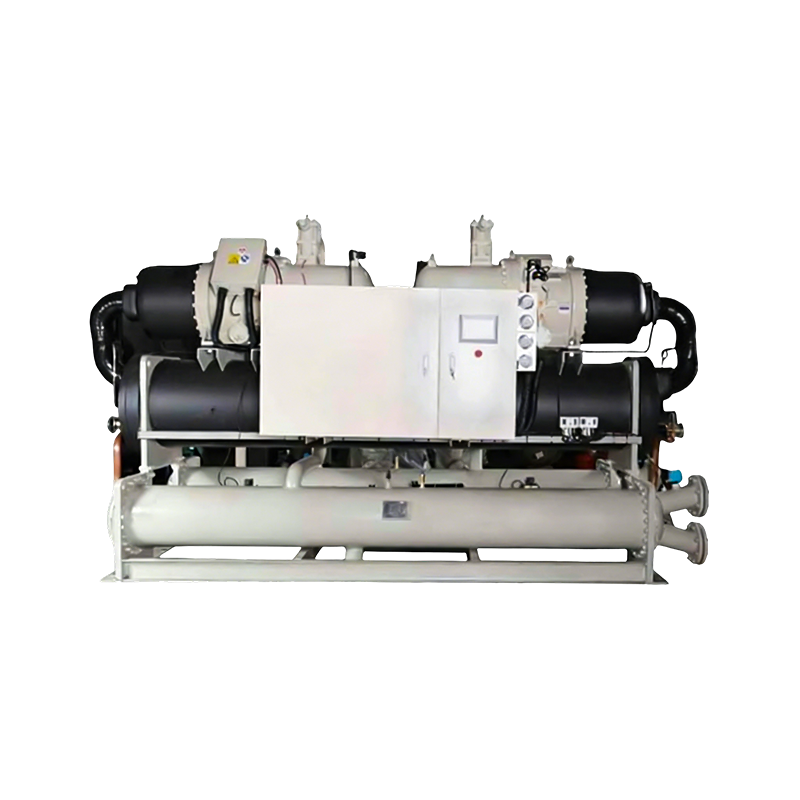
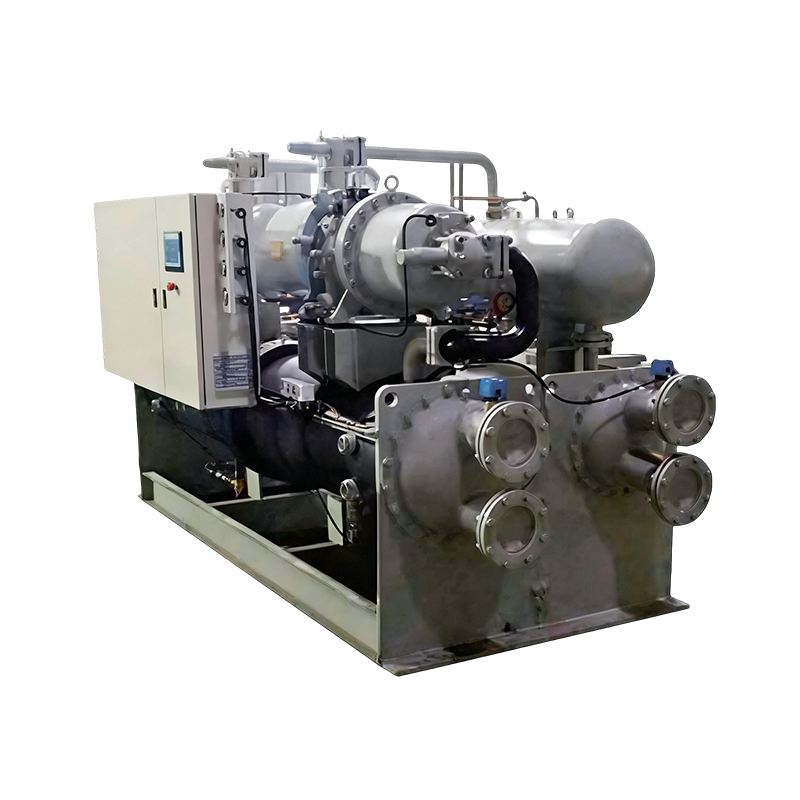
Water Cooled Screw Chiller Manufacturers


About Soouney.
Read More
A Technological Benchmark In The Industrial Refrigeration Sector
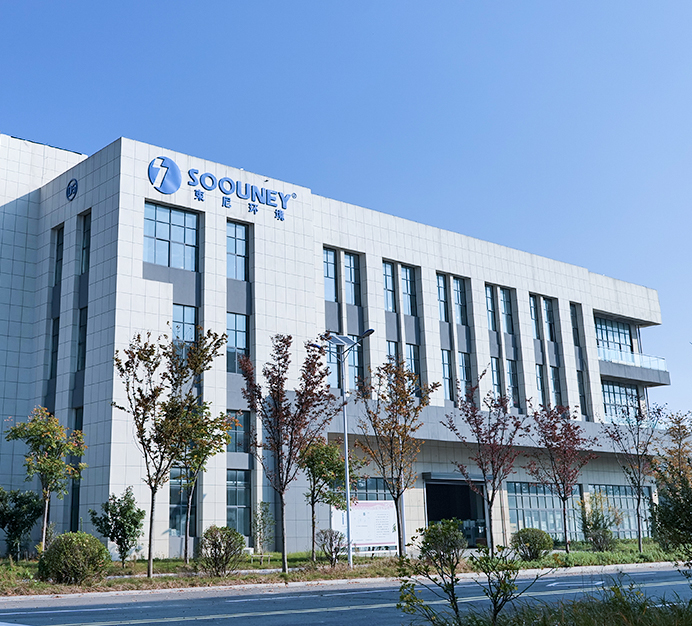
Shanghai Soouney Refrigeration Equipment Co., Ltd. is a large-to-medium-sized high-tech enterprise within Shanghai's refrigeration sector, integrating research, development, production and sales. We China Water Cooled Screw Chiller Manufacturers and Custom Water Cooled Screw Chiller Factory. Upholding the quality principles of 'integrity, quality, service and innovation', the company pursues a development philosophy centred on humanisation and technological advancement, driving product R&D and manufacturing with high starting points and stringent standards. It has now grown into a renowned brand in the domestic and international markets for cabinet air conditioners and industrial chillers, earning high recognition from industry professionals and a broad customer base. Rooted in the Chinese market, it provides reliable refrigeration solutions to clients worldwide. We focus on international trade and B2B business, providing tailored solutions to global clients. We ensure the smooth, stable, and long-term operation of your projects with a comprehensive research and development, production, sales, and after-sales service system. We have nearly 20 years of experience in providing one-stop solutions for overseas projects.
-
 0
0Site Area
-
 0
0Established
-
 0+
0+Employees
Pay Attention To Our Latest News And Exhibitions
View All News
What'S News?
-
Industry NewsLearn More
-
Industry NewsLearn More
-
Industry NewsLearn More
-
Industry NewsLearn More
-
Industry NewsLearn More
Water Cooled Screw Chiller Industry knowledge
Condenser Water System Design: Cooling Tower Sizing and Water Quality Requirements
A water cooled screw chiller does not reject heat to ambient air — it transfers condenser heat to a circulating water loop, which then dissipates it through an external cooling tower. This separation of heat rejection from the chiller itself is what gives water cooled systems their efficiency advantage, but it also means the cooling tower and condenser water circuit must be engineered as carefully as the chiller itself.
Cooling tower sizing is based on the chiller's total heat rejection, which equals cooling capacity plus compressor power input. For a 500 kW chiller with a COP of 6.0, total heat rejection reaches approximately 583 kW — the tower must handle this entire load, not just the 500 kW cooling output. Undersized towers raise condenser water supply temperature, which drives up condensing pressure and degrades efficiency or triggers high-pressure cutouts.
Water quality is the other critical variable. Condenser water circuits are open to atmosphere at the cooling tower, making them susceptible to scaling, biofouling, and corrosion. Standard water treatment programmes monitor conductivity, pH (typically maintained at 7.0–8.5), total dissolved solids, and biological activity. Untreated systems see heat transfer degradation of 10–25% within a single operating season due to scale buildup on condenser tube surfaces. Shanghai Soouney Refrigeration Equipment Co., Ltd. recommends specifying copper-alloy enhanced tubes in condensers for projects in regions with hard water or high mineral content.
COP, IPLV, and How Efficiency Ratings Are Actually Measured
Efficiency figures for water cooled screw chillers are published in two forms: full-load COP and Integrated Part Load Value (IPLV). Understanding both is essential for comparing equipment specifications honestly.
Full-load COP is measured at standard ARI/ISO conditions — typically 7°C chilled water supply, 12°C return, and 30°C condenser water inlet. High-quality water cooled screw chillers achieve full-load COPs of 5.5–7.0 at these conditions. This figure reflects peak compressor performance but does not represent real operating conditions, since most chillers spend the majority of their runtime at 40–80% load.
IPLV weights efficiency at four load points (100%, 75%, 50%, 25%) using a fixed weighting formula that approximates a typical annual load distribution. IPLV values are almost always higher than full-load COP because screw chillers with slide valve modulation are more efficient at part load than at full load. A unit with a full-load COP of 5.8 may carry an IPLV of 7.2 or higher.
The practical implication: for facilities with variable loads — commercial buildings, data centres with fluctuating IT loads, batch-process manufacturing — IPLV is the more meaningful purchasing metric. For continuous full-load industrial processes, full-load COP takes precedence. Our water cooled screw chiller specifications include both values across the full capacity range to support accurate lifecycle cost comparisons.
| Metric | Test Condition | Typical Range (Screw) | Best Suited For |
|---|---|---|---|
| Full-load COP | 100% load, standard conditions | 5.5 – 7.0 | Continuous process loads |
| IPLV | Weighted 25–100% load points | 6.5 – 9.0+ | Variable / seasonal loads |
Evaporator Configuration: Shell-and-Tube vs Falling Film Design
The evaporator is where chilled water gives up heat to the refrigerant, and its internal geometry has a direct impact on heat transfer efficiency and refrigerant charge requirements. Two configurations are used in modern water cooled screw chillers: flooded shell-and-tube and falling film.
Flooded shell-and-tube evaporators submerge the chilled water tubes in liquid refrigerant. They are robust, tolerant of varying load conditions, and straightforward to maintain — making them the dominant choice for industrial and process cooling applications where reliability is the primary requirement. Refrigerant charge is relatively high, and there is a practical lower limit on chilled water supply temperature, typically 4–5°C, before freeze risk becomes a concern.
Falling film evaporators distribute refrigerant as a thin film over the outside of horizontal tubes rather than flooding them. This reduces refrigerant charge by 30–50%, improves heat transfer coefficients at low temperature differences, and lowers the risk of refrigerant migration during off-cycles. They are more sensitive to load variations and require precise liquid distribution, but are increasingly specified in high-efficiency centrifugal and large-tonnage screw chiller designs where refrigerant cost and charge reduction regulations are driving factors.
For most industrial buyers selecting a water cooled screw chiller in the 200–2,000 kW range, flooded shell-and-tube remains the practical default. Soouney's engineering team can advise on evaporator configuration based on process temperature requirements, load profile, and refrigerant type.
Parallel and Series Chiller Plant Configurations for Large Installations
Large facilities rarely run a single chiller. Chiller plants with multiple units offer redundancy, staged capacity, and the ability to optimise efficiency by running fewer machines at higher individual load points during off-peak periods. Water cooled screw chillers are routinely deployed in parallel or series configurations, each with distinct operating logic.
Parallel configuration is the standard approach: multiple chillers share common chilled water and condenser water headers, each producing the same supply temperature. Load is distributed by staging units on and off, or by trimming individual chiller outputs. The main efficiency strategy is to avoid running all units at low part load simultaneously — it is almost always more efficient to run two chillers at 70% than four at 35%.
Series counterflow configuration stages chillers so that chilled water passes through a first chiller at higher return temperature, then a second chiller to reach the final supply setpoint. This allows each chiller to operate at a more favourable lift — the high-stage chiller runs a smaller temperature differential, improving its COP. Series configurations are most beneficial for low chilled water supply temperatures (4°C or below) and large temperature differentials (8–12°C delta-T) where a single chiller would operate at high compressor lift.
Plant sequencing logic — which chiller leads, at what load threshold additional units stage on, and how condenser water flow is managed across machines — is as important as equipment selection. Poorly sequenced plants with correctly specified chillers routinely consume 15–25% more energy than optimally controlled equivalents. With nearly 20 years of experience in overseas project delivery, Shanghai Soouney supports clients through plant configuration design, not just equipment supply.
Quick Links
Product Categories
Contact Us
-
 Email: [email protected]
-
 Whatsapp: +86 18921753771
-
 Mobile Phone : +86-18921753771
Mobile Phone :+86-13022163998 -
 Telephone: +86-021-58223918
-
 No. 128 Hui'an Road, Fengxian District, Shanghai, China