English
 Español

Search Here
Services List
Feel Free to Contact Us
WhatsApp:+86 18921753771


About Soouney.
Read More
A Technological Benchmark In The Industrial Refrigeration Sector
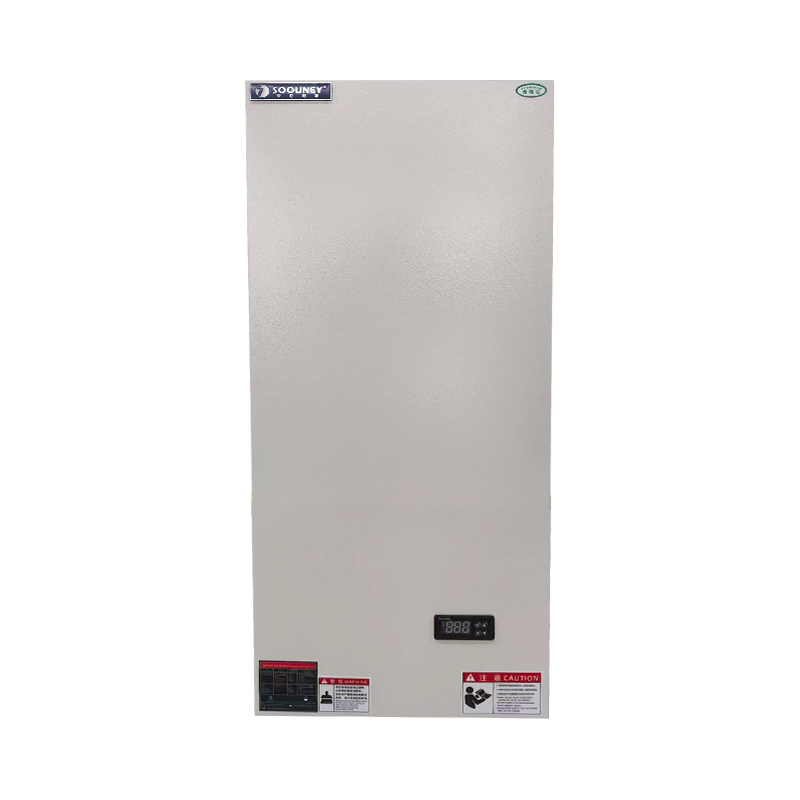
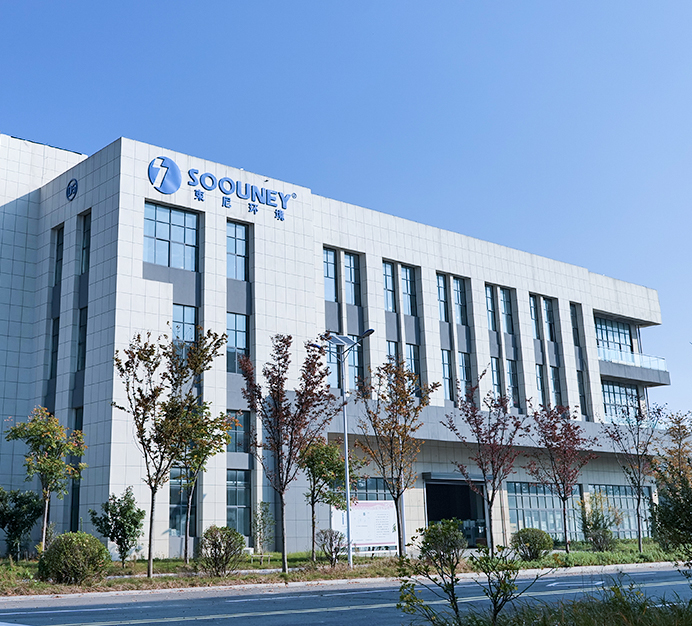
Shanghai Soouney Refrigeration Equipment Co., Ltd. is a large-to-medium-sized high-tech enterprise within Shanghai's refrigeration sector, integrating research, development, production and sales. We China Water Heat Exchanger Manufacturers and Custom Water Heat Exchanger Factory. Upholding the quality principles of 'integrity, quality, service and innovation', the company pursues a development philosophy centred on humanisation and technological advancement, driving product R&D and manufacturing with high starting points and stringent standards. It has now grown into a renowned brand in the domestic and international markets for cabinet air conditioners and industrial chillers, earning high recognition from industry professionals and a broad customer base. Rooted in the Chinese market, it provides reliable refrigeration solutions to clients worldwide. We focus on international trade and B2B business, providing tailored solutions to global clients. We ensure the smooth, stable, and long-term operation of your projects with a comprehensive research and development, production, sales, and after-sales service system. We have nearly 20 years of experience in providing one-stop solutions for overseas projects.
-
 0
0Site Area
-
 0
0Established
-
 0+
0+Employees
Pay Attention To Our Latest News And Exhibitions
View All News
What'S News?
-
Industry NewsLearn More
-
Industry NewsLearn More
-
Industry NewsLearn More
-
Industry NewsLearn More
-
Industry NewsLearn More
Water Heat Exchanger Industry knowledge
Plate vs Shell-and-Tube: Choosing the Right Configuration for Your Application
The two dominant configurations in industrial water heat exchanger design — gasketed plate and shell-and-tube — each carry distinct performance trade-offs that make one or the other the correct choice depending on operating conditions, fluid characteristics, and maintenance access.
Plate heat exchangers achieve very high heat transfer coefficients due to turbulent flow across corrugated plate surfaces. Their compact footprint and low fluid hold-up volume make them the default choice for HVAC chiller evaporators, free cooling circuits, and heat recovery applications where both fluids are clean water or glycol solution. Thermal effectiveness above 90% is achievable, and approach temperatures as low as 1–2°C are common. The trade-off is susceptibility to fouling and blockage with particulate-laden fluids, and gasket limitations on maximum operating temperature and pressure — typically 150–180°C and 25 bar for standard HNBR gaskets.
Shell-and-tube exchangers tolerate higher pressures (up to 300 bar in custom designs), elevated temperatures, and fluids with suspended solids, making them the industrial standard for process cooling, condenser water circuits, and refrigerant condensers. Heat transfer coefficients are lower per unit area than plates, but the larger surface area and robust construction offset this in high-duty applications. Shanghai Soouney Refrigeration Equipment Co., Ltd. integrates both configurations across its chiller and heat exchanger product range, selecting the appropriate type based on each project's process parameters.
Fouling Factors: How They Are Specified and Why They Matter for Long-Term Performance
Fouling is the accumulation of scale, biofilm, corrosion products, or suspended solids on heat transfer surfaces. It is not an installation problem — it is an inherent operating condition that every water heat exchanger design must account for. The standard approach is to apply a fouling resistance factor (Rf) during thermal design, which effectively reduces the calculated clean heat transfer coefficient to a conservative working value.
TEMA (Tubular Exchanger Manufacturers Association) publishes reference fouling factors widely used in shell-and-tube design. For water-side applications, representative values are:
- Treated cooling tower water: 0.000176 m²·K/W
- River water (below 52°C): 0.000352 m²·K/W
- Seawater: 0.000088–0.000176 m²·K/W depending on temperature
- Hard well water: 0.000528 m²·K/W or higher
Applying an overly conservative fouling factor results in an oversized exchanger that runs inefficiently when clean; applying too low a factor produces a unit that underperforms as soon as fouling develops. The correct approach is to match fouling factors to the actual water quality data for the project site, not to apply generic conservative values as a default safety margin. Soouney's engineering team reviews water analysis reports as part of the equipment selection process for overseas projects to ensure specified performance is maintained throughout the operating life.
Counterflow vs Parallel Flow Arrangement and Its Effect on Thermal Effectiveness
The relative flow direction of the two fluid streams through a water heat exchanger determines the maximum thermal effectiveness the unit can theoretically achieve. This is not a detail — it is a fundamental design variable that affects both equipment size and operating performance.
In a parallel flow arrangement, both fluids enter the exchanger at the same end. The temperature difference between streams is highest at the inlet and diminishes along the flow path, approaching a common outlet temperature as a theoretical maximum. Thermal effectiveness is inherently limited — the hot stream outlet temperature can never fall below the cold stream outlet temperature.
In a counterflow arrangement, fluids travel in opposite directions. The hot stream outlet faces the cold stream inlet, and the hot stream inlet faces the cold stream outlet. This maintains a more uniform temperature difference along the entire heat transfer surface and allows the hot stream to be cooled to within a few degrees of the cold stream inlet temperature — a condition impossible in parallel flow. For the same duty, a counterflow exchanger requires significantly less surface area, or alternatively, achieves greater heat recovery within the same physical envelope.
| Parameter | Parallel Flow | Counterflow |
|---|---|---|
| Maximum theoretical effectiveness | ~50% (balanced flow) | Up to ~100% |
| Minimum approach temperature | Higher | Can approach 1–2°C |
| Surface area for equivalent duty | Larger | Smaller |
| Thermal stress at inlet | Lower (gradual gradient) | Higher at hot inlet end |
Counterflow is the preferred arrangement in almost all water-to-water applications. Parallel flow is occasionally used where thermal shock at the inlet must be limited, or where the process specifically benefits from a lower peak temperature differential at the entry point.
Material Selection for Corrosive and High-Purity Water Circuits
Standard copper tube and carbon steel shell construction is appropriate for closed chilled water loops with treated water, but a range of industrial applications require alternative materials to handle corrosive, high-purity, or chemically aggressive water streams.
Titanium plates or tubes are specified for seawater cooling circuits, desalination plant heat recovery, and marine applications. Titanium's resistance to chloride-induced pitting corrosion is unmatched among practical heat exchanger materials, and it maintains this resistance at temperatures up to approximately 315°C. The cost premium over stainless steel is significant — typically 3–5× — but is justified by service life in aggressive saline environments where stainless steel grades would fail within months.
316L stainless steel covers the majority of mildly corrosive applications: process water with moderate chloride levels, food and beverage cooling circuits requiring hygienic construction, and pharmaceutical pure water systems. Its passive oxide layer provides good general corrosion resistance, though it is susceptible to crevice corrosion in stagnant high-chloride conditions.
Duplex stainless steels (2205, 2507) offer roughly twice the yield strength of 316L with superior resistance to stress corrosion cracking in chloride-containing water — making them a cost-effective alternative to titanium for brackish water and moderately saline cooling applications. Our water heat exchanger product line covers copper-brazed, stainless steel, and titanium plate options, with material selection guided by project-specific water chemistry analysis provided by the client.
Quick Links
Product Categories
Contact Us
-
 Email: [email protected]
-
 Whatsapp: +86 18921753771
-
 Mobile Phone : +86-18921753771
Mobile Phone :+86-13022163998 -
 Telephone: +86-021-58223918
-
 No. 128 Hui'an Road, Fengxian District, Shanghai, China