
 English
 Español
Content
- 1 01What is an indoor cabinet air conditioner and how does it work in electrical enclosures?
- 2 02What are the main types of cabinet air conditioners?
- 3 03Where are indoor cabinet air conditioners commonly used?
- 4 04What performance features should a cabinet air conditioner provide?
- 5 05How is an indoor cabinet air conditioner designed and manufactured?
- 6 06How do cabinet air conditioners compare with fans and heat exchangers?
- 7 07What are common problems or limitations of cabinet air conditioners?
- 8 08What is the future trend of cabinet cooling technology?
- 9 FAQ
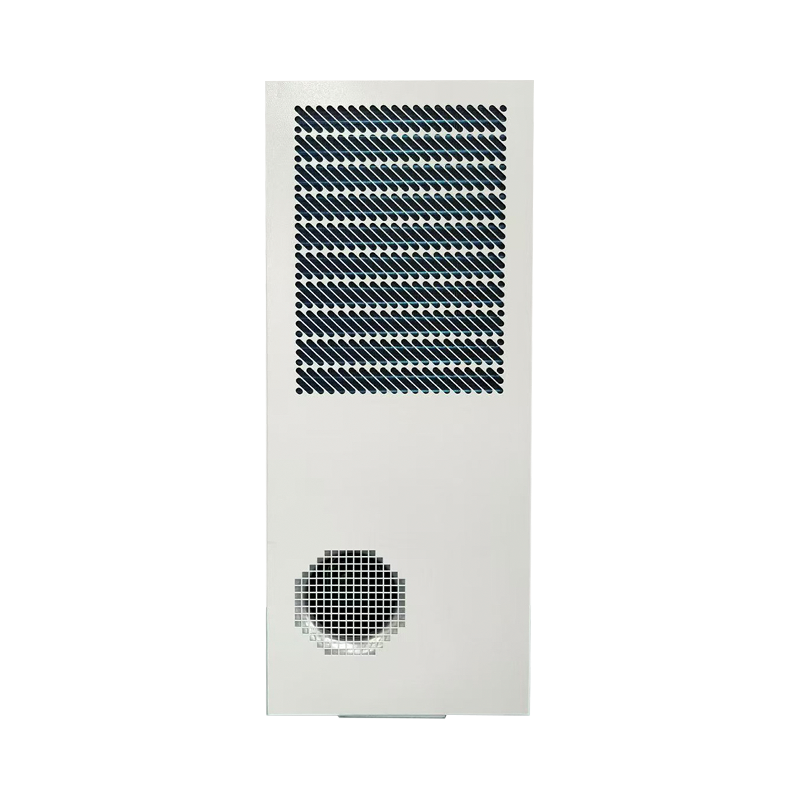
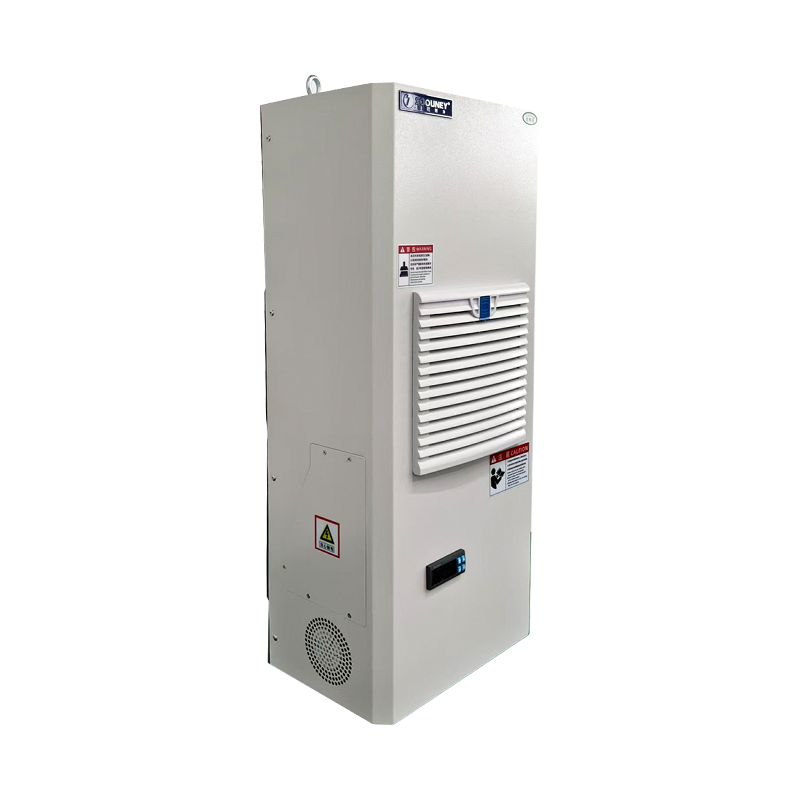
Electrical cabinets, control panels, and server enclosures generate heat that has nowhere to go once the door is sealed shut. An indoor cabinet air conditioner solves this by mounting directly onto the enclosure and actively removing heat from inside, rather than relying on the surrounding room air to do the job.
01What is an indoor cabinet air conditioner and how does it work in electrical enclosures?
A cabinet air conditioner definition starts with its sealed operating principle: rather than exchanging air with the surrounding room, it removes heat from inside a closed enclosure and rejects it outside, keeping the internal compartment sealed against dust and moisture. This is the foundation of electrical enclosure cooling systems used across industrial automation.
Industrial control panel cooling depends on this closed-loop approach because the electronics inside cannot tolerate outside contaminants entering the cabinet. Closed cabinet heat dissipation through an active cooling unit works by circulating refrigerant through an internal coil that absorbs heat, then rejecting that heat through an external coil, functioning much like any indoor HVAC cabinet cooling unit scaled down to enclosure size.
02What are the main types of cabinet air conditioners?
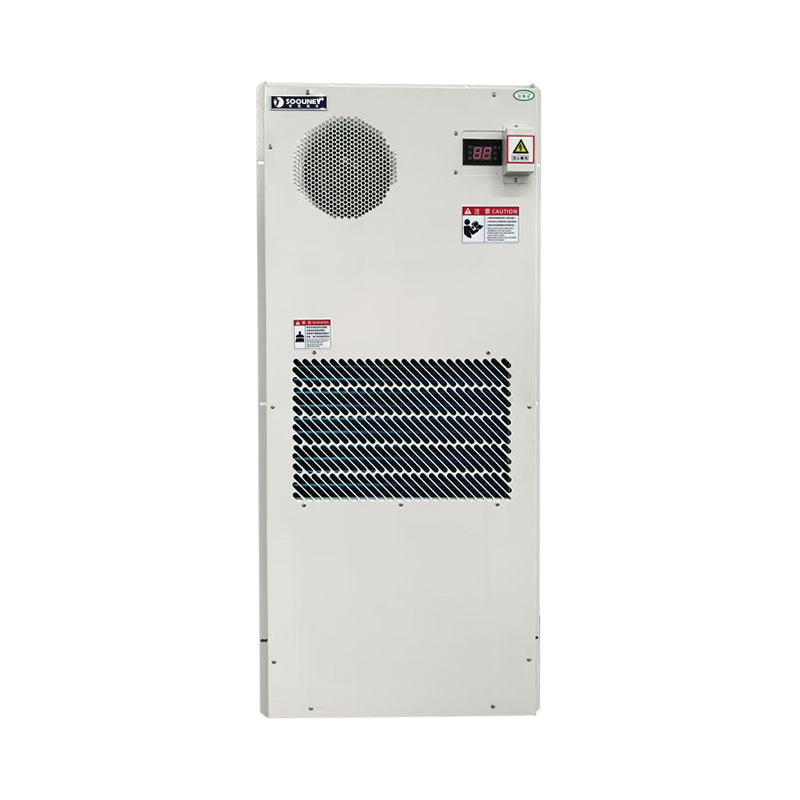
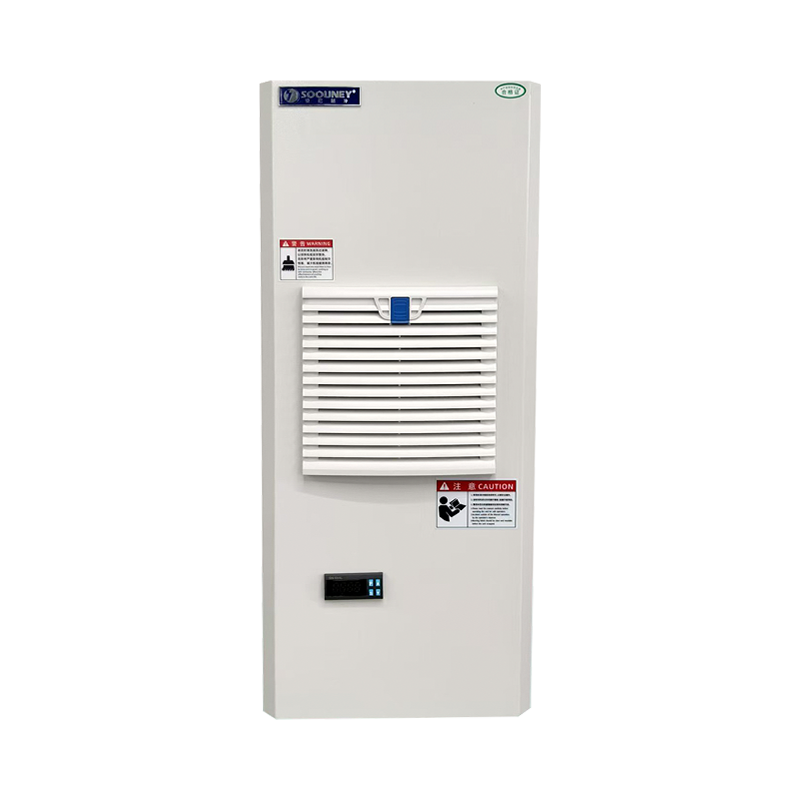
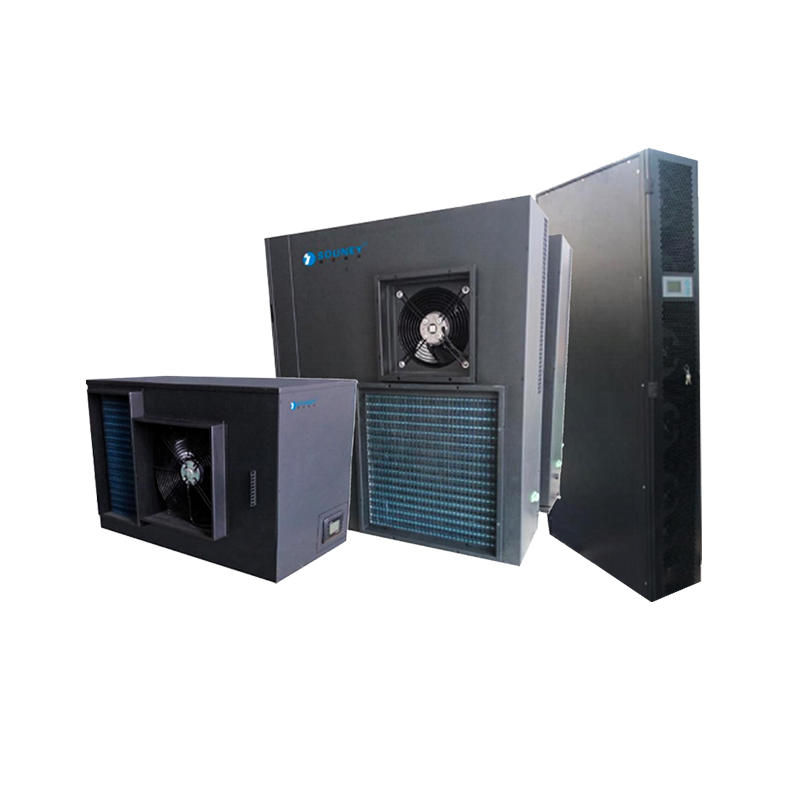
Cabinet cooling units are built in several mounting configurations to fit different enclosure shapes and space constraints. A wall mounted cabinet AC unit attaches to a flat panel surface and is the most common configuration for standard control cabinets. A roof mounted enclosure air conditioner sits on top of the cabinet, useful where side space is limited. A side mounted cabinet cooling system attaches to a vertical panel face when roof space is unavailable. A compact industrial AC unit is sized for smaller enclosures where a full-size unit would not fit. A thermoelectric cabinet cooler uses solid-state heat transfer instead of a refrigeration cycle, suited to lower heat loads where compressor-based cooling would be oversized.
| Mounting Type | Best Suited For | Key Trade-off |
| Wall mounted unit | Standard flat-panel cabinets | Most widely compatible option |
| Roof mounted unit | Cabinets with limited side clearance | Requires overhead installation space |
| Side mounted unit | Cabinets with open side panels | Alternative when roof space is unavailable |
| Compact industrial unit | Small enclosures | Lower cooling capacity by design |
| Thermoelectric cooler | Low heat load enclosures | No refrigerant, lower capacity ceiling |
03Where are indoor cabinet air conditioners commonly used?
Enclosure cooling units are installed wherever sensitive electronics operate inside a sealed housing. Electrical control cabinets use them to keep relays, drives, and circuit boards within safe operating temperatures. Industrial automation systems depend on stable internal temperatures to keep programmable controllers and sensors functioning correctly. Telecom equipment cabinets, often installed outdoors or in unconditioned spaces, rely on cabinet AC units since there is no building HVAC system to draw from. Data server enclosures use them where a dedicated server room is not available. Factory production control panels use cabinet cooling to protect the electronics that keep production lines running.
04What performance features should a cabinet air conditioner provide?
A dependable cabinet cooling unit is defined by a specific set of operating traits. Stable temperature control system behavior keeps internal cabinet temperature within a narrow band rather than swinging widely as the load cycles. High efficiency heat exchange determines how quickly the unit can remove a given heat load. A dust proof sealed cooling unit protects internal electronics from the same contaminants the enclosure was sealed against in the first place. An energy efficient compressor system reduces the ongoing power draw of running the unit continuously. Continuous operation reliability ties these traits together, since many cabinet AC applications run around the clock without scheduled downtime.
Narrow internal temperature band under varying load
Fast removal of generated heat load
Contaminants kept out of the enclosure
Lower ongoing power consumption
05How is an indoor cabinet air conditioner designed and manufactured?
Building a cabinet air conditioner combines mechanical refrigeration engineering with sheet metal fabrication. A compressor refrigeration system design lays out the refrigerant loop, compressor sizing, and expansion components needed for the target heat load. Heat exchanger coil manufacturing shapes the internal and external coils that absorb and reject heat on either side of the sealed barrier. Sheet metal enclosure fabrication forms the outer housing that mounts to the cabinet and holds all internal components. An electronic temperature controller assembly integrates the sensors and control logic that cycle the compressor on and off to hold a target temperature. Airflow optimization system design finishes the process, positioning internal fans so air circulates evenly across the coil rather than short-cycling past it.
06How do cabinet air conditioners compare with fans and heat exchangers?
AC cooling vs ventilation fan systems is the most common comparison in enclosure cooling, since fans are cheaper but only work when outside air is cooler than the cabinet interior. Active cooling vs passive heat exchange follows the same logic, with passive exchangers relying entirely on ambient temperature difference to move heat. Compressor cooling vs air circulation highlights the core distinction: a compressor-based unit can cool below ambient temperature, while circulation alone cannot. An efficiency comparison enclosure cooling methods analysis usually favors fans for low heat loads and AC units for higher, more consistent loads. Environmental protection cooling systems built around sealed AC units also keep the enclosure closed to outside air, which ventilation fans cannot do.
Cabinet Air Conditioner
- Cools below ambient temperature
- Enclosure stays fully sealed
- Higher upfront and running cost
Fan / Passive Exchanger
- Limited to ambient temperature or above
- Requires venting, breaking the seal
- Lower cost, simpler installation
07What are common problems or limitations of cabinet air conditioners?
Cabinet AC units carry a known set of operating risks that maintenance teams plan around. Compressor failure risk grows with continuous duty cycles and limited cooling airflow around the outdoor-facing coil. Refrigerant leakage issues can develop at fittings over time, gradually reducing cooling capacity before they are caught. Filter clogging maintenance is a recurring task, since airflow across the internal coil weakens as dust builds up on the filter. Energy consumption concerns arise because compressor-based cooling draws meaningfully more power than passive alternatives. Installation space limitations also affect many enclosures, since a cabinet AC unit needs adequate clearance on the outdoor-facing side to reject heat effectively.
08What is the future trend of cabinet cooling technology?
Smart industrial IoT cooling systems are increasingly connecting cabinet AC units to plant monitoring networks, reporting internal temperature and unit status remotely. Energy saving refrigeration technology continues to push compressor efficiency higher, reducing the running cost gap against passive cooling methods. AI temperature monitoring systems are being layered onto existing units to predict maintenance needs before a failure occurs. Eco friendly refrigerant adoption is replacing older refrigerant types across the industry as environmental regulations tighten. Modular enclosure cooling design is also emerging, allowing a single cooling platform to scale across different cabinet sizes rather than requiring a fully custom unit for each enclosure type.
FAQ
What is an indoor cabinet air conditioner?
It is a sealed cooling unit mounted directly to an electrical cabinet or enclosure that actively removes internal heat without exchanging air with the surrounding room.
How does cabinet AC work?
It circulates refrigerant between an internal coil that absorbs heat from inside the cabinet and an external coil that rejects that heat outside the sealed enclosure.
Is a cabinet air conditioner necessary for control panels?
It becomes necessary once internal heat generation would otherwise push electronics beyond their safe operating temperature inside a sealed enclosure.
What is the difference between a fan and a cabinet AC?
A fan moves outside air through the cabinet and cannot cool below ambient temperature, while a cabinet AC actively cools below ambient temperature while keeping the enclosure sealed.
How long do cabinet air conditioners last?
Service life depends heavily on duty cycle, ambient conditions, and maintenance, with compressor condition and coil cleanliness being the biggest factors.
Can a cabinet AC run continuously?
Yes, many industrial applications run cabinet AC units continuously, which is why continuous operation reliability is a key selection factor.