
 English
 Español
Content
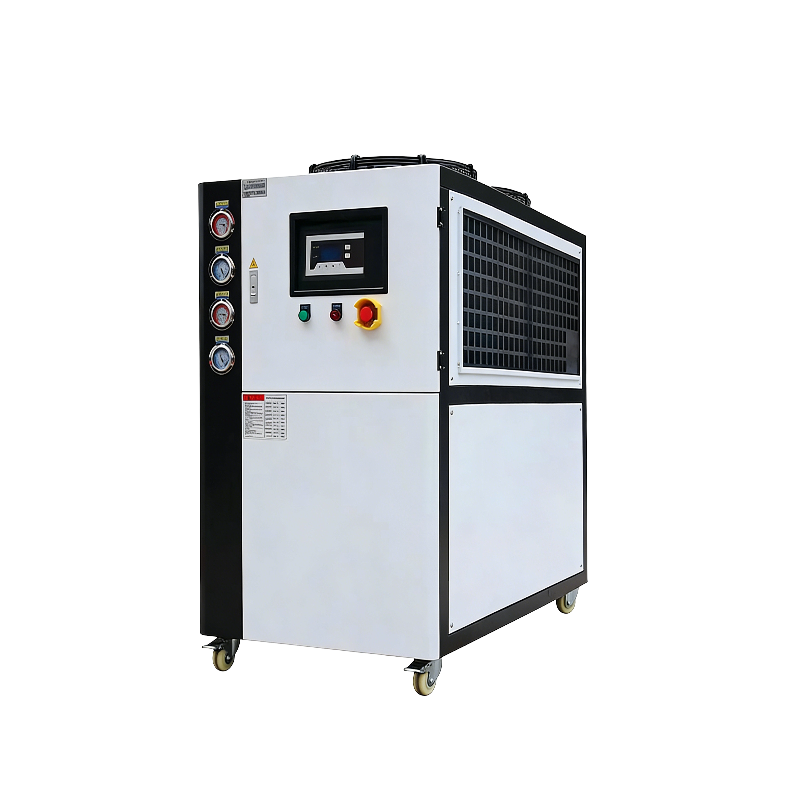
Continuous production lines fail in expensive ways when process temperatures drift, which is why so many plants standardize on an air cooled industrial chiller instead of a water cooled system. Rejecting heat directly to ambient air removes the cooling tower, water treatment, and makeup water infrastructure that water cooled systems require, at the cost of some efficiency in very hot climates. Here is how these systems work and where they make the most sense.
HowHow an Air Cooled Industrial Chiller Works
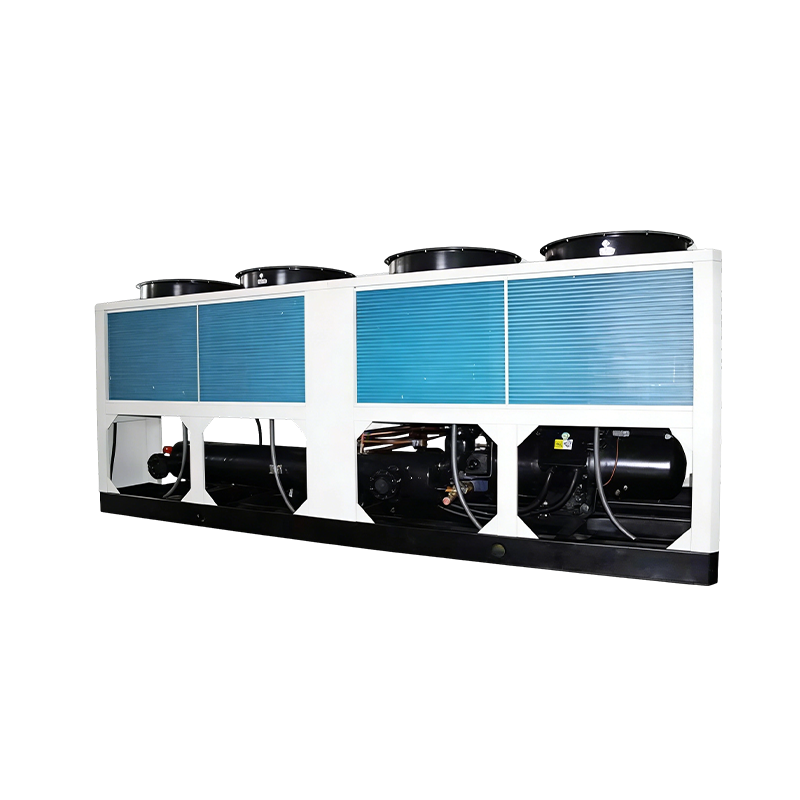
An air cooled industrial chiller removes heat from a process fluid, typically water or a glycol mixture, and rejects that heat directly to the surrounding air through a condenser coil and fans, rather than through a separate water loop and cooling tower. The chilled fluid then circulates through the production equipment to absorb process heat before returning to the chiller.
WhyWhy Air Cooled Chillers Suit Industrial Use
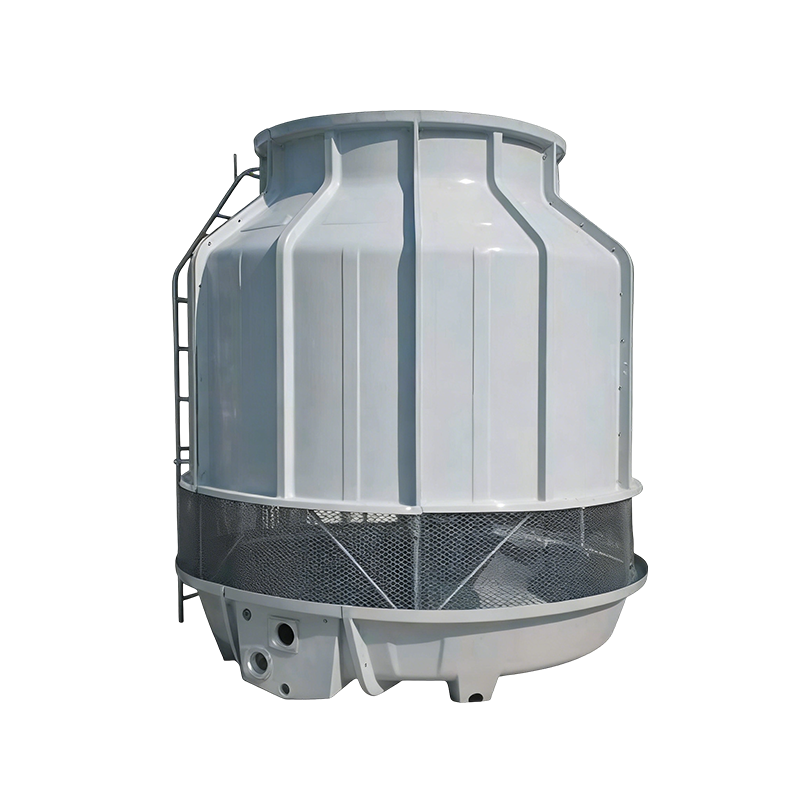
Removing the cooling tower and its associated water loop is the single biggest advantage air cooled systems offer over water cooled alternatives.
Eliminating the cooling tower also eliminates its maintenance burden: no water treatment chemicals, no Legionella risk management, and no seasonal tower shutdown and startup procedures.
WhereIndustries That Rely on Air Cooled Chillers
- Plastic manufacturing and injection molding, where consistent mold temperature affects part quality
- Food and beverage processing requiring precise temperature control for product safety
- Pharmaceutical and chemical manufacturing with tight process temperature tolerances
- Electronics and semiconductor manufacturing needing stable equipment cooling
- Industrial HVAC and commercial facility cooling systems
VsAir Cooled vs Water Cooled Chillers
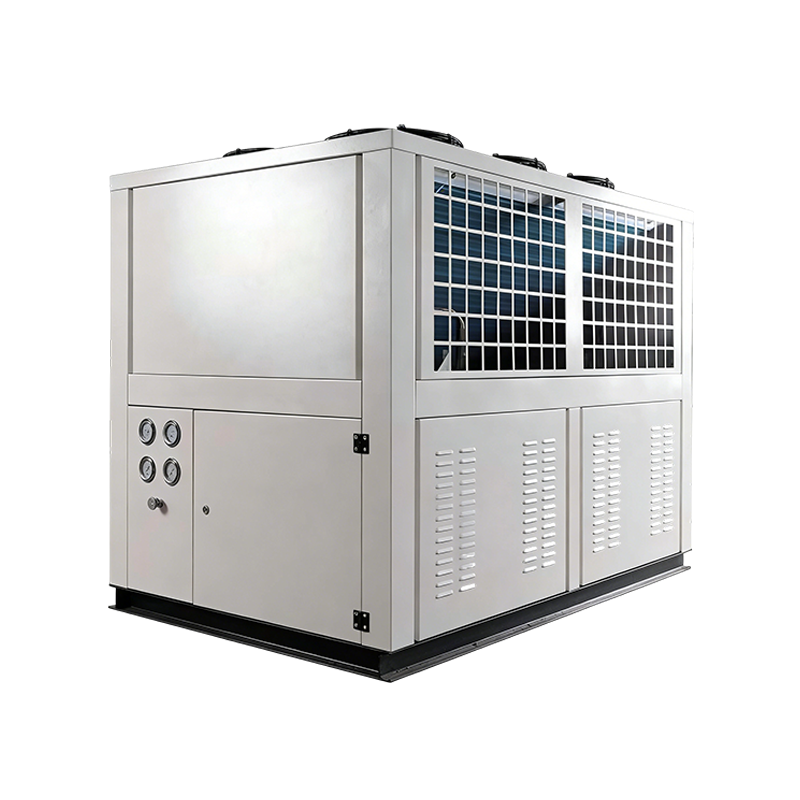
Simpler installation, no cooling tower or water treatment needed, but generally less efficient in high ambient temperatures.
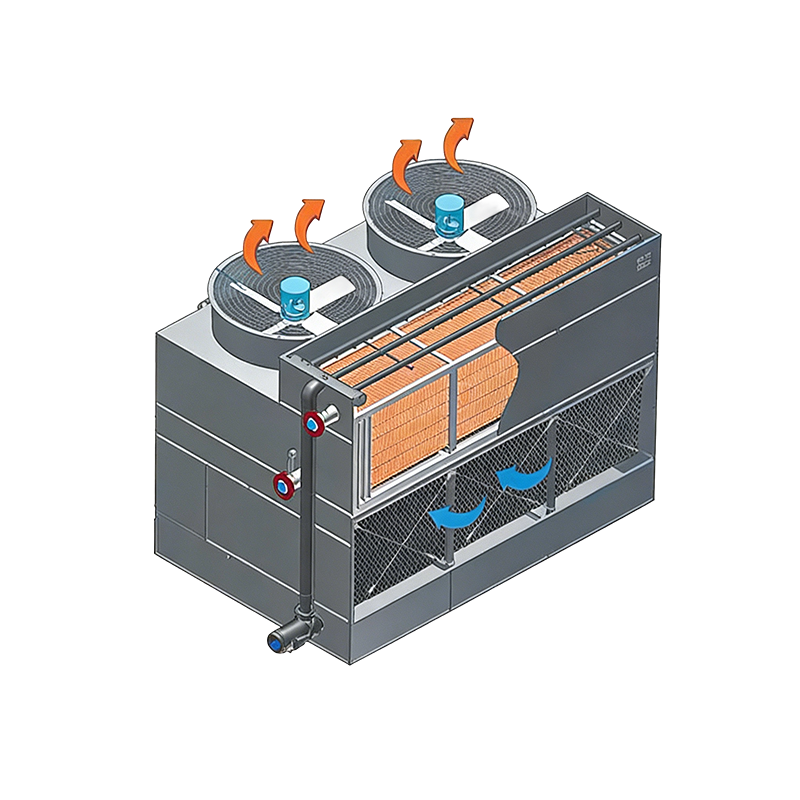
Higher efficiency, especially at scale, but requires a cooling tower, water treatment system, and more complex installation.
PickChoosing the Right Air Cooled Chiller
| Factor | What to Evaluate |
| Cooling capacity | Peak and average process heat load in tons or kW |
| Operating temperature range | Required chilled fluid temperature and ambient design conditions |
| Energy efficiency | Compressor type and part-load performance for the expected duty cycle |
| Installation space | Outdoor footprint, airflow clearance, and noise constraints |
BuildManufacturing and Quality Control
- System design and component selection are matched to the target cooling capacity and application
- The refrigeration circuit, including compressor, condenser, and evaporator, is assembled and pressure tested
- Performance testing verifies cooling capacity and temperature control accuracy under load
- Reliability testing confirms the unit is ready for continuous industrial deployment
FAQFrequently Asked Questions
Is an air cooled chiller less efficient than a water cooled chiller?
In high ambient temperature conditions, water cooled chillers generally achieve better efficiency, but air cooled units close much of that gap in moderate climates while avoiding water system costs entirely.
Do air cooled industrial chillers need to be installed outdoors?
Most air cooled chillers are designed for outdoor or rooftop installation to provide adequate airflow across the condenser coil, though some compact units support indoor use with proper ventilation.
How much maintenance does an air cooled chiller require?
Air cooled chillers generally require less maintenance than water cooled systems since there is no cooling tower, water treatment, or Legionella risk management involved.
What industries benefit most from air cooled chillers?
Plastics processing, food and beverage production, pharmaceutical manufacturing, and electronics manufacturing are among the industries that rely most heavily on air cooled chillers for process cooling.