English
 Español
0
Site Area


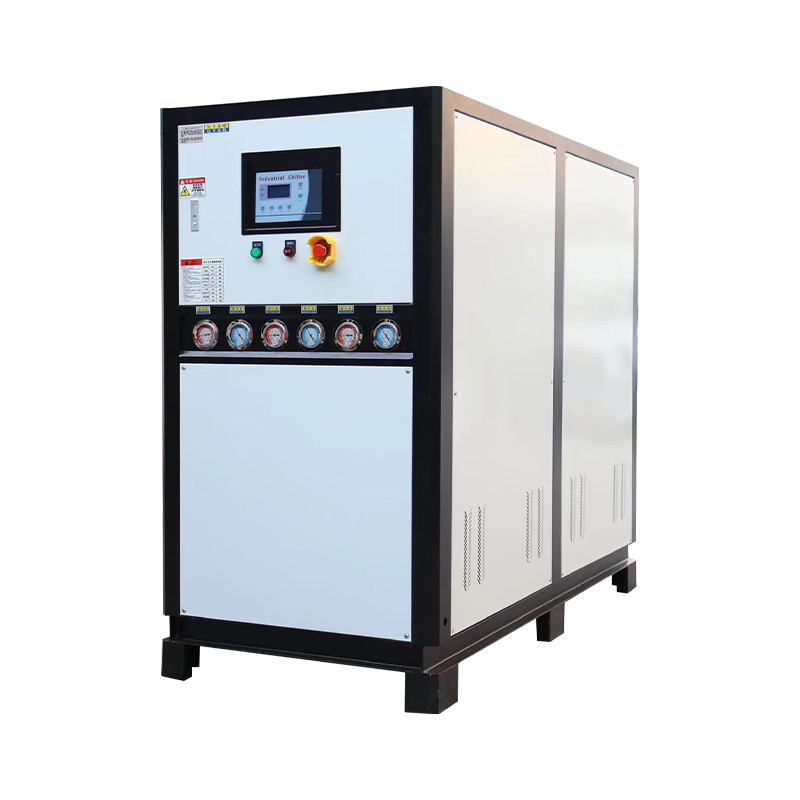
Water Cooled Chiller
A water-cooled air chiller uses water as a cooling medium, producing chilled water through a vapor-compression refrigeration cycle. The chilled water is pumped to a remote air handling unit or fan coil unit for space or process cooling. The core heat exchange process occurs in a specially designed water-cooled condenser.
Product Features
·Condenser Design: The core component is a shell-and-tube or plate-type condenser, where the refrigerant condenses within the tubes, releasing heat to the cooling water outside.
·Cooling Water System: The chiller must be connected to an external cooling tower to form a circuit, utilizing the sensible heat of evaporation and the latent heat of condensation to dissipate the heat of condensation.
·Overall Unit Structure: Typically, a sturdy box-type structure integrates the compressor, condenser, evaporator, expansion valve, and control unit.
·Capacity Range: Single units cover a wide range of cooling capacities, scalable from small and medium-sized commercial applications to large industrial applications.
·Control Logic: Equipped with a microprocessor controller, it monitors and adjusts operating parameters such as outlet water temperature, compressor load, and water flow.
Product Advantages
·Energy Efficiency: Due to water's high specific heat capacity and low condensing temperature, the unit typically achieves a high energy efficiency ratio under stable operating conditions.
·Space Adaptability: The unit itself does not require an outdoor unit installation location, allowing the main equipment to be concentrated within the machine room, making it suitable for applications with limited space or where aesthetically pleasing design is crucial.
·Environmental Adaptability: Its performance is not significantly affected by ambient temperature fluctuations, maintaining stable cooling capacity even in high-temperature climates.
·Operational Stability: The integrated design and indoor installation environment reduce aging and corrosion of core components, helping to extend the unit's lifecycle.
·Large-Capacity Applications: The system architecture facilitates modular assembly and centralized control, making it suitable for providing cooling for large buildings or centralized process cooling systems.
Applications
·Water-cooled air chillers are primarily suitable for medium- to large-scale projects requiring a centralized cooling source, continuous operation, and high energy efficiency.
·Commercial Buildings: Providing chilled water for central air conditioner systems in large shopping malls, hotels, and office buildings.
·Industrial Manufacturing: Used for process cooling in industries such as plastic molding, food processing, chemicals, and pharmaceuticals.
·Data Centers: Provides a reliable cooling source for the environmental control systems of high-density Machine Rooms.
·Healthcare: Meets the air temperature, humidity, and cleanliness control requirements of hospitals and laboratories.


Derived from authentic European technology.
Ensuring the core technological prowess of our products.
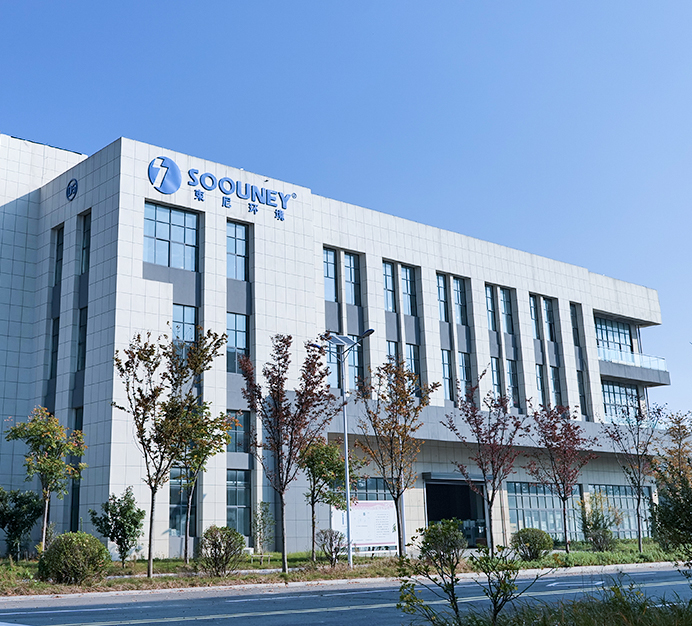


Shanghai Soouney Refrigeration Equipment Co., Ltd. is a large-to-medium-sized high-tech enterprise within Shanghai's refrigeration sector, integrating research, development, production and sales. We are China Water Cooled Cryogenic Chiller Suppliers and Wholesale Water Cooled Cryogenic Chiller Company. Upholding the quality principles of 'integrity, quality, service and innovation', the company pursues a development philosophy centred on humanisation and technological advancement, driving product R&D and manufacturing with high starting points and stringent standards. It has now grown into a renowned brand in the domestic and international markets for cabinet air conditioners and industrial chillers, earning high recognition from industry professionals and a broad customer base. Rooted in the Chinese market, it provides reliable refrigeration solutions to clients worldwide. We focus on international trade and B2B business, providing tailored solutions to global clients. We ensure the smooth, stable, and long-term operation of your projects with a comprehensive research and development, production, sales, and after-sales service system. We have nearly 20 years of experience in providing one-stop solutions for overseas projects.

Site Area

Established

Employees
In modern industrial processes, precise temperature control is essential for ensuring product quality, operational safety, and system efficiency. A water cooled cryogenic chiller stands out as a critical solution for applications requiring temperatures far below conventional cooling ranges. By combining advanced refrigeration cycles with efficient water-based heat rejection, these systems deliver reliable cryogenic cooling for demanding environments.
A water cooled cryogenic chiller is a specialized refrigeration system designed to produce extremely low temperatures, often below -40°C, and in some cases reaching cryogenic ranges below -100°C. Unlike air-cooled systems, it uses water as the primary medium for heat dissipation, significantly improving thermal efficiency.
These systems are widely used in industries such as pharmaceuticals, chemical processing, aerospace testing, and semiconductor manufacturing.
The working principle of a water cooled cryogenic chiller is based on a multi-stage vapor compression refrigeration cycle, often combined with cascade or compound refrigeration technologies.
The system operates through four fundamental processes:
Compression
The compressor increases the pressure and temperature of the refrigerant gas.
Condensation
The high-temperature refrigerant releases heat to the cooling water in the condenser and transforms into a liquid.
Expansion
The liquid refrigerant passes through an expansion valve, where pressure drops rapidly, causing partial evaporation and temperature reduction.
Evaporation
The low-temperature refrigerant absorbs heat from the target medium, producing the desired cooling effect.
This cycle repeats continuously, maintaining stable low-temperature conditions.
To achieve cryogenic temperatures, standard refrigeration cycles are not sufficient. Therefore, water cooled cryogenic chillers integrate advanced configurations:
Two or more independent refrigeration circuits operate in stages:
Sequential compression stages reduce thermal stress and improve efficiency.
Low boiling-point refrigerants are used to reach ultra-low temperatures.
Water cooling is a defining feature that enhances the efficiency of cryogenic chillers.
Instead of releasing heat into ambient air, the condenser transfers heat to circulating water, which is then cooled via:
| Aspect | Water Cooled System | Air Cooled System |
|---|---|---|
| Heat Transfer Efficiency | High | Moderate |
| Temperature Stability | Excellent | Variable |
| Energy Consumption | Lower in large systems | Higher under heavy loads |
| Environmental Dependence | Low | High |
| Noise Level | Lower | Higher |
This makes water cooled cryogenic chillers ideal for continuous industrial applications.
A water cooled cryogenic chiller consists of several critical components working in coordination.
| Component | Function | Material Considerations |
|---|---|---|
| Compressor | Drives refrigerant circulation | High-strength alloys for durability |
| Condenser | Transfers heat to water | Copper or stainless steel for corrosion resistance |
| Evaporator | Absorbs heat from process medium | High thermal conductivity materials |
| Expansion Valve | Controls refrigerant flow and pressure | Precision-engineered metals |
| Control System | Regulates temperature and operation | Integrated electronic modules |
Each component is optimized for low-temperature performance and long-term reliability.
Cryogenic chillers can maintain extremely stable temperatures with minimal fluctuation, which is critical for sensitive processes.
Designed for 24/7 industrial use, these systems ensure uninterrupted cooling.
Water cooling significantly reduces energy consumption in large-scale operations.
Advanced control systems include:
The water cooled cryogenic chiller plays a vital role across multiple sectors:
| Industry | Application |
|---|---|
| Pharmaceutical | Drug storage and reaction cooling |
| Chemical Processing | Low-temperature reactions |
| Electronics | Semiconductor manufacturing |
| Aerospace | Material testing under extreme conditions |
| Energy | LNG and gas processing |
Its ability to deliver consistent ultra-low temperatures makes it indispensable in precision-driven industries.
Modern cryogenic chillers are evolving toward higher efficiency and smarter operation.
Integration of automation allows:
New refrigerants and system designs aim to reduce environmental impact while maintaining performance.
Modular designs improve scalability and simplify maintenance.
Shanghai Soouney Refrigeration Equipment Co., Ltd. has made significant contributions to the advancement of water-cooled cryogenic chiller technology.
As a large-to-medium-sized high-tech enterprise within Shanghai's refrigeration sector, the company integrates research, development, production, and sales. It has established itself as a recognized brand in both domestic and international markets, particularly in cabinet air conditioners and industrial chillers.
Through these principles, the company continues to enhance the performance and reliability of industrial cooling systems, including cryogenic solutions.
A water cooled cryogenic chiller offers several key benefits:
These advantages position it as a preferred solution for advanced cooling requirements.
The working principle behind a water cooled cryogenic chiller is rooted in advanced refrigeration cycles enhanced by cascade systems and efficient water-based heat dissipation. By combining precision engineering, specialized refrigerants, and intelligent control systems, these chillers deliver reliable and stable cryogenic cooling for modern industrial applications.
1. What temperature range can a water cooled cryogenic chiller achieve?
Typically, it can reach temperatures below -40°C, with advanced systems achieving cryogenic levels below -100°C.
2. Why is water cooling more efficient than air cooling?
Water has higher thermal conductivity, allowing faster and more stable heat transfer, especially in large-scale systems.
3. What industries benefit most from cryogenic chillers?
Pharmaceutical, chemical, semiconductor, aerospace, and energy industries rely heavily on these systems.
4. How does a cascade system improve performance?
It uses multiple refrigeration stages to achieve lower temperatures efficiently while reducing system stress.
5. What factors affect the performance of a cryogenic chiller?
Key factors include refrigerant type, compressor efficiency, heat exchange design, and control system accuracy.
 Email: [email protected]
 Whatsapp: +86 18921753771
 Mobile Phone : +86-18921753771
 Telephone: +86-021-58223918
 No. 128 Hui'an Road, Fengxian District, Shanghai, China