
 English
 Español

Content
A 500 kW process load, a roof with 60 square meters of clear deck, and no cooling tower anywhere on site. Those three facts usually settle the air-cooled versus water-cooled chiller question before anyone opens an efficiency table. Both machine types deliver chilled water at a controlled leaving temperature and both run the same vapor-compression cycle, yet they reject condenser heat through completely different paths, and that single difference drives power draw, water use, footprint, noise, maintenance scope, and installed cost.
Baseline rule: an air-cooled chiller rejects 100 percent of its condenser heat to ambient air through its own coil and fans, while a water-cooled chiller rejects that heat into a condenser-water loop that a cooling tower, an evaporative condenser, or a once-through water source must then dispose of.
Everything downstream of that design choice is a consequence: electrical demand, parasitic pump and fan power, water treatment, permitting, and the number of items your maintenance team has to touch every month. For industrial buyers the decision is rarely about which machine is better in the abstract. It is about which one fits the load profile, the site, and the operating budget you actually have.
The Mechanical Difference: Two Heat Rejection Paths
An air-cooled chiller rejects 100 percent of its condenser heat to ambient air through a fin-and-tube coil and axial fans, while a water-cooled chiller transfers that heat to a closed condenser-water loop that a cooling tower, evaporative condenser, or once-through source then cools.
Condensing temperature explains nearly everything that follows. An air-cooled condenser must run above outdoor dry-bulb temperature, so a machine rated at 35 Celsius ambient typically condenses refrigerant at 50 to 55 Celsius. A water-cooled condenser fed with 29.4 Celsius tower water condenses at roughly 37 to 40 Celsius. Lower condensing temperature means lower compressor lift, lower lift means fewer kilowatts per ton of cooling, and that is the entire efficiency story in three sentences.
A chiller is a packaged refrigeration machine that removes heat from a liquid stream such as water, glycol, or brine and rejects that heat to a secondary heat sink. The compressor, evaporator, expansion device, and controls are largely the same in air-cooled and water-cooled designs. The condenser and the heat sink are what change.
- Condenser type: fin-and-tube coil with axial fans versus shell-and-tube heat exchanger.
- Condensing temperature: 50 to 55 Celsius air-cooled versus 37 to 40 Celsius water-cooled under rated conditions.
- Auxiliaries: none beyond the packaged unit versus cooling tower, condenser pumps, water treatment, and condenser piping.
- Rating basis: AHRI 550/590 (I-P) and AHRI 551/591 (SI) publish both configurations at fixed entering conditions so the numbers remain comparable.
Efficiency and Power Draw: A 30 to 40 Percent Gap
At AHRI Standard 550/590 rating conditions, a water-cooled screw chiller typically draws 0.55 to 0.70 kW per ton, while an air-cooled screw chiller of identical capacity draws 0.95 to 1.15 kW per ton, so the air-cooled machine consumes 30 to 40 percent more electrical input for the same cooling output.
Part-load behavior decides how much of that gap survives in real operation. AHRI 550/590 weights performance at 100, 75, 50, and 25 percent capacity, with different condenser conditions at each step. Because a cooling tower follows wet-bulb temperature rather than dry-bulb, water-cooled machines usually keep their advantage at 50 percent load, while air-cooled units lose capacity and gain power as ambient air climbs above the 35 Celsius rating point.
Relative index, water-cooled = 100
Translate that into budget language. A 500 kW water-cooled machine, about 142 tons, running 4,000 hours a year with a 0.45 kW/ton advantage over an air-cooled unit of the same size avoids roughly 256,000 kWh annually, which is about USD 25,600 at USD 0.10 per kWh. Deduct 0.05 to 0.10 kW/ton for tower fans and condenser pumps and the net saving still lands in the 25 to 35 percent range, which is the dominant life-cycle cost item on any plant running more than 3,000 hours a year.
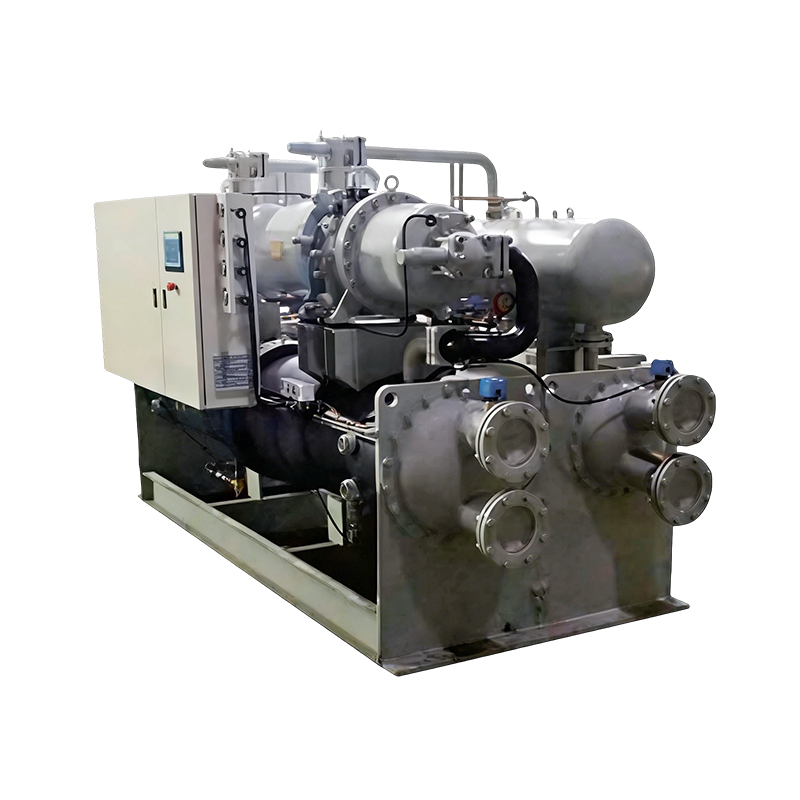
Where that arithmetic applies, a high-load water-cooled screw machine with a flooded evaporator is the configuration to price first, because a flooded evaporator typically runs with a closer temperature approach and trims additional kilowatts at part load.
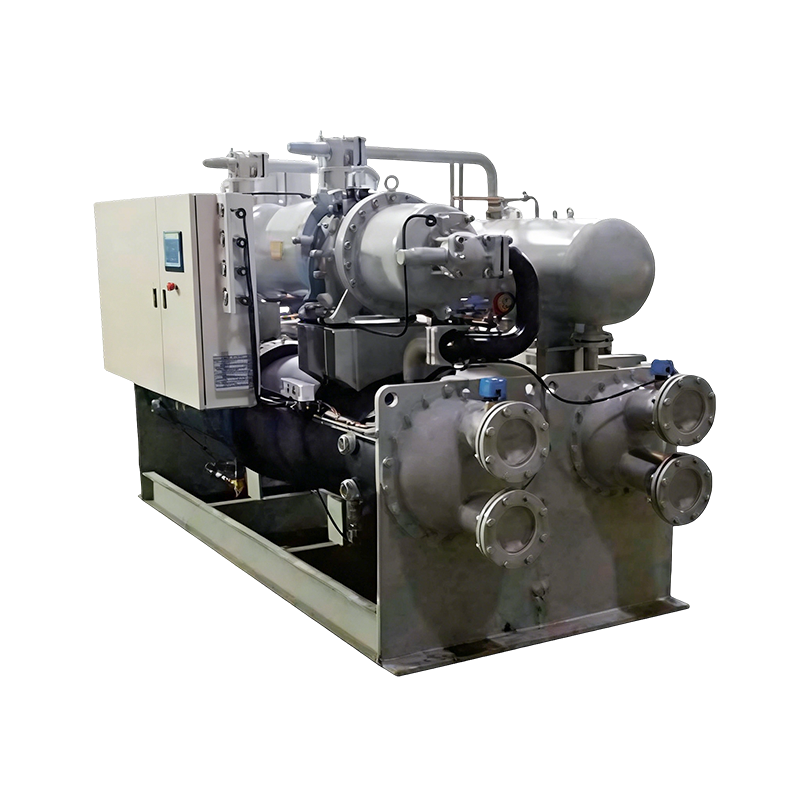 Water Cooled Screw Flooded ChillerElectronic expansion valve Electronic expansion valve has proportional integral regulator technology, to allow better control of air conditioner units and reduce runni...View Product →
Water, Space, Noise, and Climate Constraints
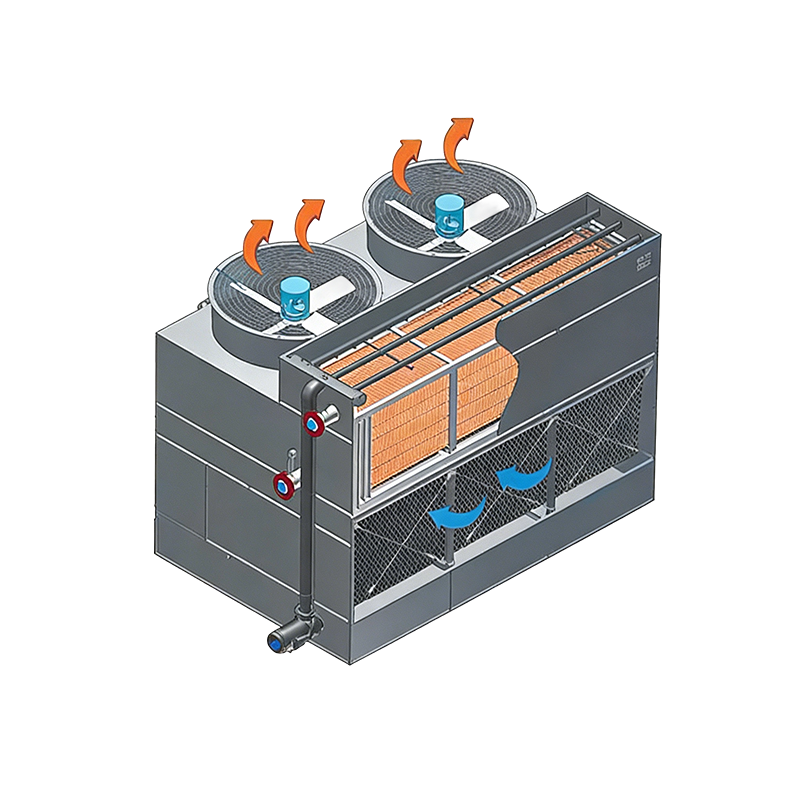
A water-cooled plant consumes roughly 1.8 to 2.0 liters of make-up water per hour for every kW of cooling capacity, so a 500 kW chiller evaporates about 0.9 to 1.0 cubic meter per hour, close to 22 cubic meters per day, before blowdown is counted.
Blowdown, the water drained to control dissolved solids, adds 25 to 30 percent to that figure. A tower held at three to five cycles of concentration pushes total make-up on the same 500 kW load to roughly 1.2 cubic meters per hour, about 29 cubic meters per day of continuous operation. In regions where process water is metered, treated, or permitted, that volume carries a real cost and a real administrative obligation.
A 500 kW air-cooled package needs roughly 60 to 90 square meters of clear roof or yard space plus a structural check for fan and compressor vibration. The same duty in water-cooled form needs a machine room, condenser pumps, and a tower footprint, and the tower must sit where plume and drift cannot reach air intakes, parking, or neighboring property.
Noise splits along the same line. Air-cooled units run at roughly 80 to 95 dB(A) at one meter from the fan deck and sit in the open, so that sound reaches the property line. Water-cooled compressors are usually indoors and far easier to acoustically isolate, but the tower becomes the outdoor source. Cold climate is the third constraint: an air-cooled chiller with low-ambient controls and variable fan speed can run down to minus 20 Celsius and below, while a wet tower needs basin heaters, freeze protection, or an indoor installation.
Side-by-Side Comparison
Treat the table below as a screening tool, then confirm final numbers in manufacturer selection software at your actual design wet-bulb, dry-bulb, and part-load profile.
| Parameter | Air-cooled chiller | Water-cooled chiller |
| Heat rejection path | Fin-and-tube condenser coil and axial fans to ambient air | Shell-and-tube condenser to condenser water, then to a tower |
| Typical full-load power | 0.95 to 1.15 kW per ton | 0.55 to 0.70 kW per ton |
| Typical part-load power | 0.75 to 0.95 kW per ton | 0.45 to 0.60 kW per ton |
| Practical unit capacity | 5 to 700 kW, multiple units for larger loads | 70 to 3,000 kW and above |
| Site requirement | Roof or yard deck, structural check, air clearance | Machine room, tower area, pumps, condenser piping |
| Water consumption | None unless adiabatic assist is specified | 1.8 to 2.0 L per hour per kW plus 25 to 30 percent blowdown |
| Ambient sensitivity | Rated at 35 Celsius, capacity falls as ambient rises | Follows wet-bulb, dry-bulb affects auxiliaries only |
| Sound at one meter | 80 to 95 dB(A) at the fan deck, outdoors | 85 to 95 dB(A) indoors, tower is the outdoor source |
| Maintenance scope | Coil cleaning, fan bearings, compressor service | Water treatment, tower cleaning, pump and tube maintenance |
| Relative installed cost | Lower at small and mid capacity | Higher, offset by 25 to 35 percent lower net power |
| Strongest fit | Water-scarce sites, roof packages, cold climate | Loads above 700 kW, more than 3,000 run hours yearly |
Which Design Fits Your Plant
Air-cooled chillers win when the site has no cooling water, when peak load stays under roughly 700 kW, or when the machine has to live on a roof or in a yard. Water-cooled chillers win when annual run hours exceed 3,000 to 4,000, when the load is above roughly 700 kW, or when the plant already operates a tower and a water treatment program.
Air-cooled fits when
- No cooling water supply exists and no tower space can be permitted.
- Peak load is below roughly 700 kW with a roof or yard deck available.
- Design ambient stays under 40 Celsius, or a low-ambient package is specified.
- Run hours are under 3,000 a year, where first cost outweighs energy cost.
- Winter process cooling down to minus 20 Celsius is required.
Water-cooled fits when
- Annual run hours exceed 3,000 to 4,000, where power drives life-cycle cost.
- Cooling load exceeds roughly 700 kW and a central plant already exists.
- Wet-bulb design conditions are low, so the tower performs efficiently.
- Water is available and treated at a predictable, metered cost.
- Outdoor condenser noise or visual impact at the property line is unacceptable.
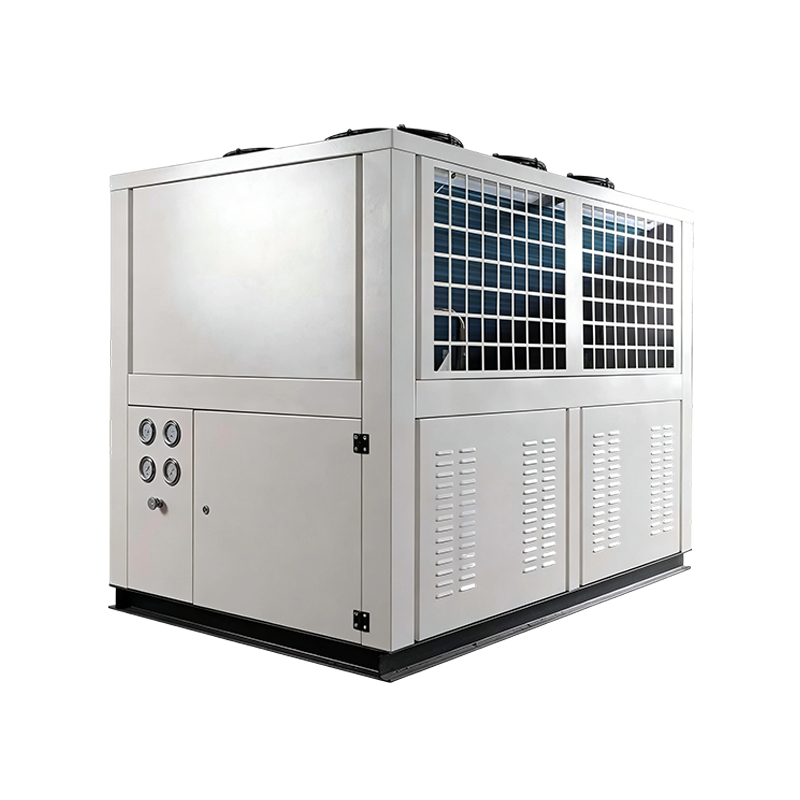
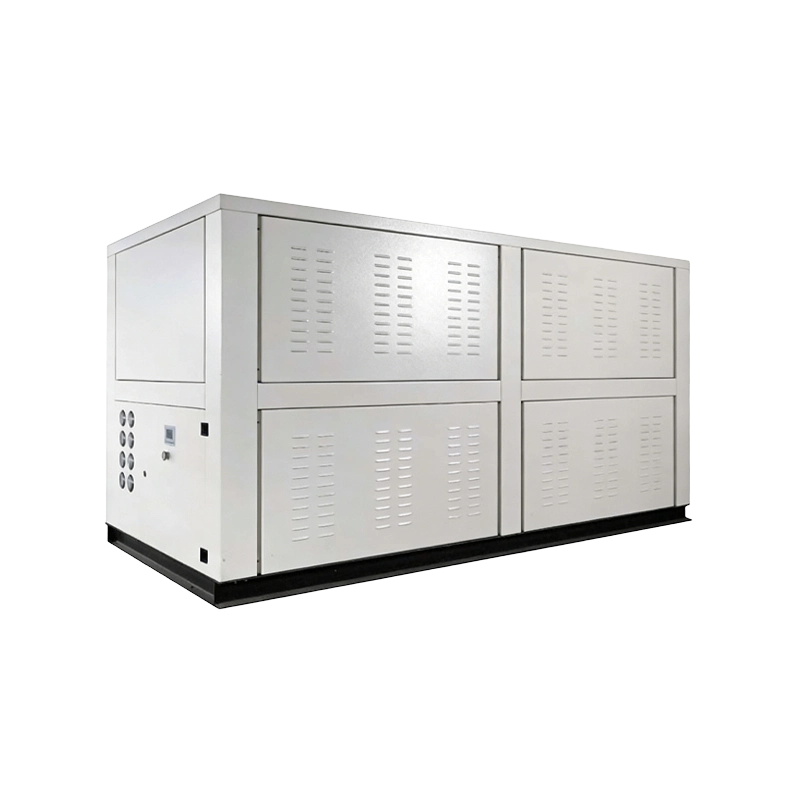
Air-cooled packages from Shanghai Soouney Refrigeration Equipment Co., Ltd. cover box and screw formats, including low-ambient and cryogenic variants that hold process temperatures at minus 20 Celsius and below. One package carries the refrigerant circuit, the condenser, and the controls, which keeps site work to a power feed, a water connection, and a slab.
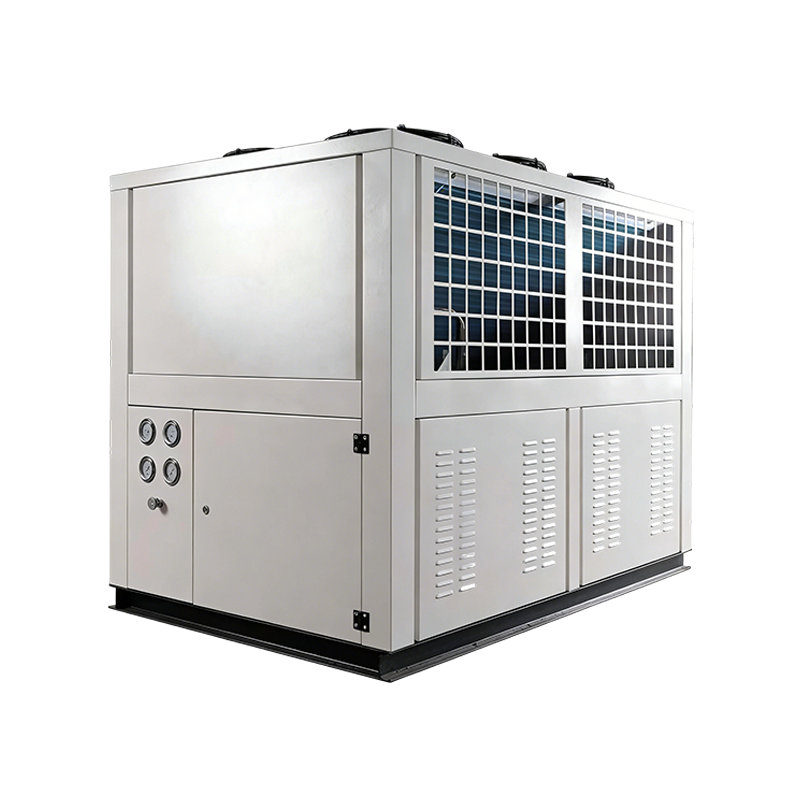 Ambient Temperature Cryogenic Air Cooled ChillerProduct Features ·Shanghai Shuni Industrial Chiller Series incorporates internationally renowned brands such as Copeland, Danfoss, Panasonic, and Daikin compressors, e...View Product →
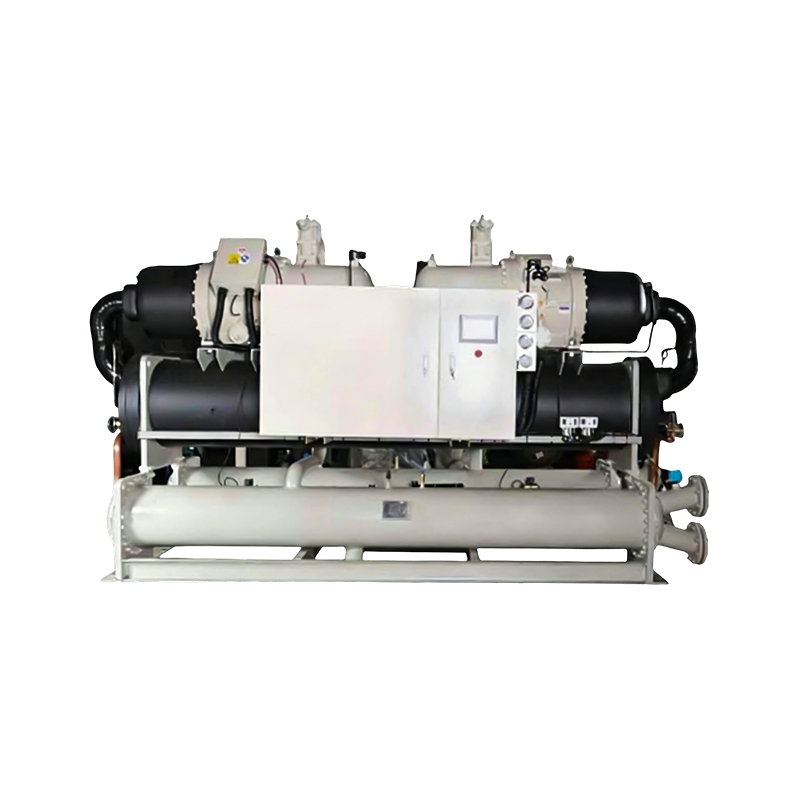
Water-cooled configurations stay compact indoors because condenser heat leaves through piping instead of a fan deck, and that lower condensing temperature is what produces the 30 to 40 percent power advantage. The trade-off is the tower, the condenser pumps, the water treatment, and the freeze protection.
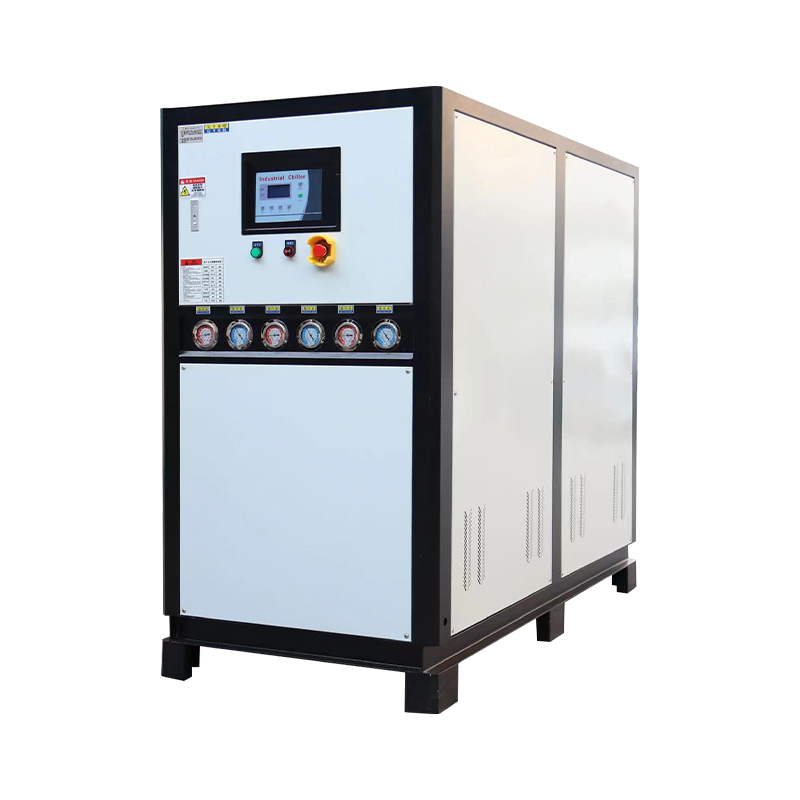 Water Cooled Cryogenic ChillerA water-cooled air chiller uses water as a cooling medium, producing chilled water through a vapor-compression refrigeration cycle. The chilled water is pumped to a re...View Product →
Where a catalog unit does not match the duty, both formats can be built to specification, including non-standard voltages, brine circuits, and control interfaces. Professional customization is the usual route when process temperatures fall outside normal catalog selection.
A Six-Step Selection Sequence
Run the selection in this order and the air-cooled versus water-cooled decision usually falls out of steps three and four without further argument.
- Fix the load profile. Record peak kW, minimum kW, and hours per year above 50 percent load. A plant at 300 kW peak and 4,500 run hours is a different project from one at 300 kW peak and 800 hours.
- Qualify the heat sink. Confirm whether process water is available, what the design wet-bulb is, and whether a tower can be sited and permitted. If the answer is no on all three, the choice is air-cooled.
- Compare power at the right conditions. Request full-load and part-load data at AHRI 550/590 conditions plus a correction curve for your actual ambient or wet-bulb. Nameplate kW per ton alone misleads at 50 percent load.
- Cost the auxiliaries. Add tower fans, condenser pumps, water treatment, and the 0.05 to 0.10 kW/ton parasitic load before comparing energy bills.
- Check the physical envelope. Allow 60 to 90 square meters of clear space for a 500 kW air-cooled package, plan for 80 to 95 dB(A) at one meter, and keep plume and drift clear of intakes and parking.
- Confirm redundancy and turndown. Two 50 percent units usually beat one 100 percent unit for maintenance flexibility, and screw or modular compressors hold efficiency at part load. Duty-by-duty guidance is covered in our overview of how to choose industrial chiller units for different industrial cooling duties.
Practical Questions From Plant Engineers
What is the typical break-even point between the two designs?
Below roughly 350 kW of cooling and 2,000 operating hours a year, air-cooled packages win on installed cost, and the energy penalty never repays a tower, a machine room, and a water treatment program. Above 700 kW and 3,000 to 4,000 run hours a year, a 0.45 kW/ton advantage on a 500 kW load saves about 256,000 kWh annually, which repays the tower and auxiliaries in roughly two to four years at USD 0.10 per kWh.
How much water does a water-cooled chiller actually consume?
Evaporation runs about 1.8 to 2.0 liters per hour for every kW of cooling capacity. A 500 kW chiller therefore evaporates roughly 0.9 to 1.0 cubic meter per hour, about 22 cubic meters per day. Blowdown at 25 to 30 percent of evaporation, driven by three to five cycles of concentration, brings total make-up water to approximately 1.2 cubic meters per hour, or about 29 cubic meters per day of continuous operation.
Can a water-cooled chiller run without a cooling tower?
Yes. Water-cooled condensers can be fed by once-through river or seawater, a dry cooler, or an evaporative condenser, which is standard practice for marine duty. Ratings change with the heat sink, though: AHRI 550/590 rates water-cooled machines at 29.4 Celsius entering condenser water with a 0.0001 fouling allowance, and deviating from that basis shifts both capacity and power.
Which design suits low-temperature or cryogenic process cooling?
Both formats handle low-temperature duty when they are built for it. Cryogenic packages using glycol or brine mixtures deliver process temperatures at minus 20 Celsius and below, and low-ambient air-cooled versions extend that range in cold climates. Air-cooled cryogenic units keep the refrigerant circuit and heat rejection in one package, while water-cooled cryogenic units stay compact indoors and push condenser heat to a tower, which suits plants that already run a central cooling water loop.