
 English
 Español
Content
- 1 Select on Two Numbers, Not One
- 2 Build a Heat Load Balance Before Choosing Hardware
- 3 Choose a Cooling Method the Site Can Support
- 4 Apply Ambient, Altitude and Water-Temperature Derating
- 5 Match the Compressor and Part-Load Curve to the Duty Cycle
- 6 Size the Condenser, Tower and Water Side on Rejection Load
- 7 Write the Operating Conditions Into the Purchase Specification
- 8 Questions That Decide the Final Order
A 480 kW process loop specified on its nameplate rating runs roughly 9 percent short on a 43 °C afternoon, because that rating was tested at 35 °C ambient. The shortfall shows up first as high condenser pressure, then as chilled water that will not hold setpoint, and finally as a production line that slows down in the hottest week of the year.
Selecting an industrial cooling system is a matching exercise between two measured numbers - continuous heat load and worst-case ambient or entering-water temperature - and a machine's real performance at those conditions. The sequence below covers the heat load balance, the cooling method the site can physically support, ambient and altitude derating, compressor and part-load choice, heat rejection sizing, and the clauses that belong in a purchase specification.
Select on Two Numbers, Not One
An industrial cooling system should be selected on the continuous heat load in kilowatts plus the worst-case ambient or entering-water temperature at the installed location, with a defined margin for start-up and process peaks. A nameplate capacity figure on its own is never a selection basis.
Working definitionIndustrial cooling system selection is the process of matching evaporator-side cooling capacity and condenser-side heat rejection to a facility's continuous heat load, its highest and lowest ambient temperatures, and its duty cycle, while keeping a documented safety margin.
Those four figures explain most selection failures. The AHRI 550/590 rating point exists so that machines can be compared fairly; it is not a description of any particular plant room. A unit rated at 35 °C ambient, installed where August afternoons reach 43 °C, spends its worst hours 8 K outside its rating point, and the capacity curve rather than the brochure decides what happens next.
Build a Heat Load Balance Before Choosing Hardware
A defensible heat load is a balance sheet of four measured streams - process heat, motor and drive losses, environmental gains, and transient heat - each quantified in kilowatts rather than estimated from connected power.
- Process heat: the energy a product or reaction releases inside the loop, taken from batch energy balances or product data sheets.
- Motor and drive losses: installed power multiplied by one minus efficiency, using the efficiency class declared under IEC 60034-30-1.
- Environmental gains: heat picked up by pipework, tanks and ducts, calculated from U-value, surface area and temperature difference using the methods in ISO 12241.
- Transient heat: warm product entering the loop or a cold-start pull-down, logged across a full production week rather than averaged away.
| Heat stream | How to quantify it | Reference basis |
| Process heat | Energy balance per batch or per hour of production | Product data sheets and process logs |
| Motor and drive losses | Installed kW x (1 minus efficiency), summed across the loop | IEC 60034-30-1 efficiency classes |
| Environmental gains | U-value x surface area x temperature difference | ISO 12241 insulation calculation |
| Transient load | Duty cycle logged across one full production week | Trend data from the process control system |
Two habits keep the balance honest. Count only heat that stays inside the loop, because a chiller does not remove heat from ventilation air unless it was given that duty. And keep transient loads separate from the continuous figure, since a 20-minute batch discharge and a steady process load place very different demands on the compressor.
Choose a Cooling Method the Site Can Support
Air-cooled chillers are the correct default when no cooling water is available; water-cooled and evaporative-condensing machines become the better economic choice once the design load passes roughly 300 kW and a cooling tower or cooling-water circuit already exists.
Air-cooled
- Rejects heat straight to outdoor air; no tower, no condenser pump, no water treatment.
- Capacity falls as dry-bulb temperature rises, and fan power rises with it.
- Larger footprint and higher sound level per kilowatt of cooling.
Water-cooled
- Rated at 29.4 °C entering condenser water, so output stays nearly flat through summer.
- Needs a tower, pumps, water treatment and blowdown management.
- Smaller machine room footprint and lower power input at part load.
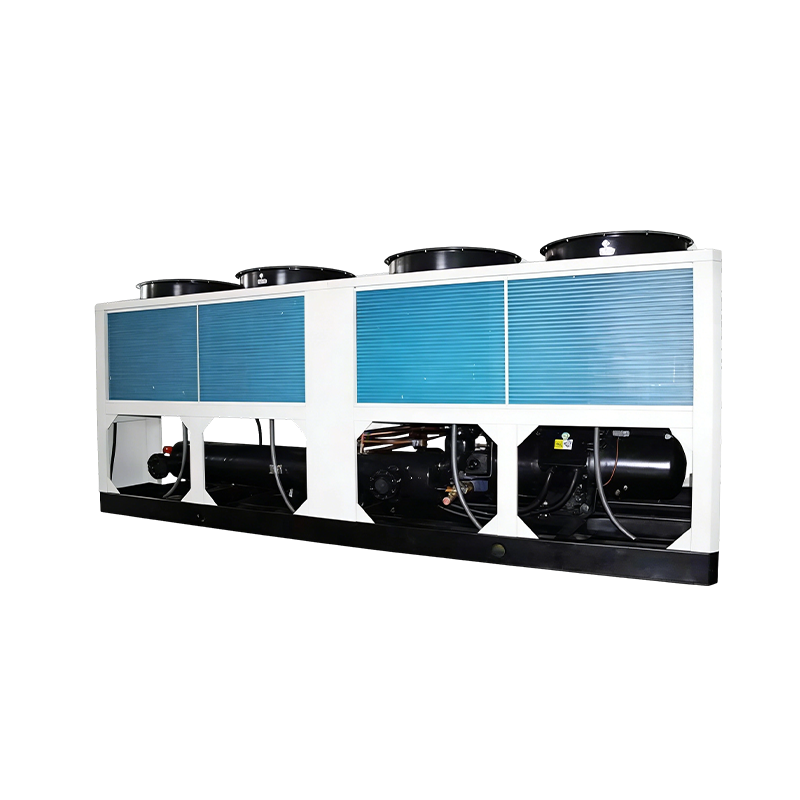
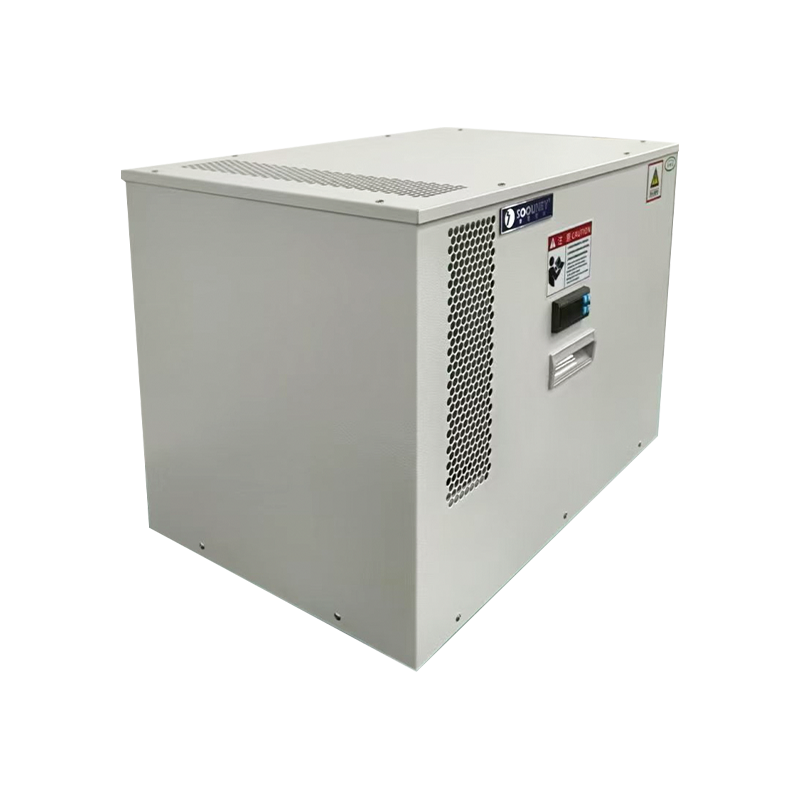
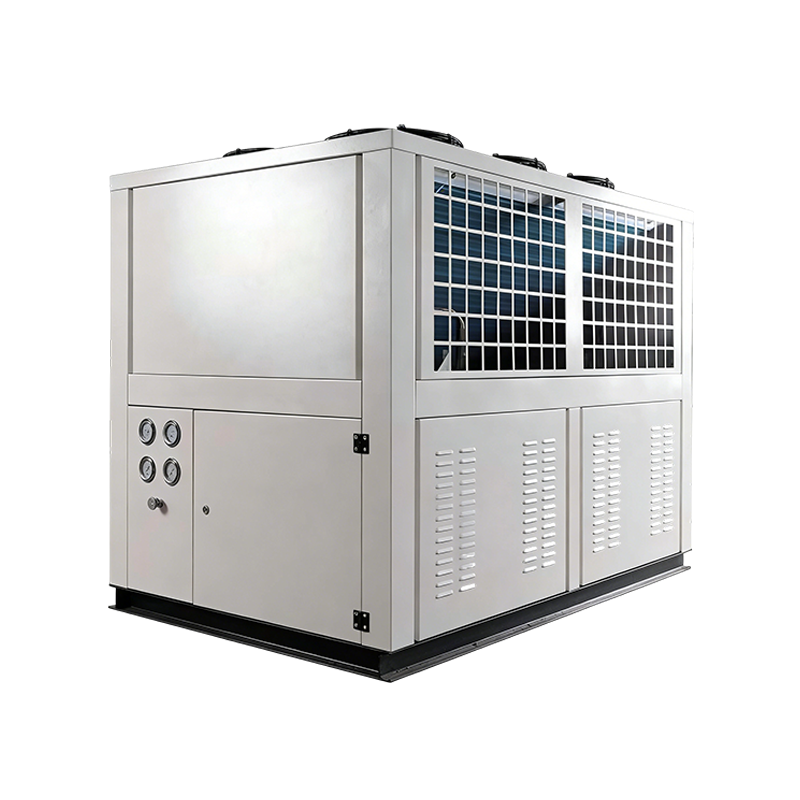 Air Cooled Box Chiller ManufacturersAir Cooled Box ChillerView Product →
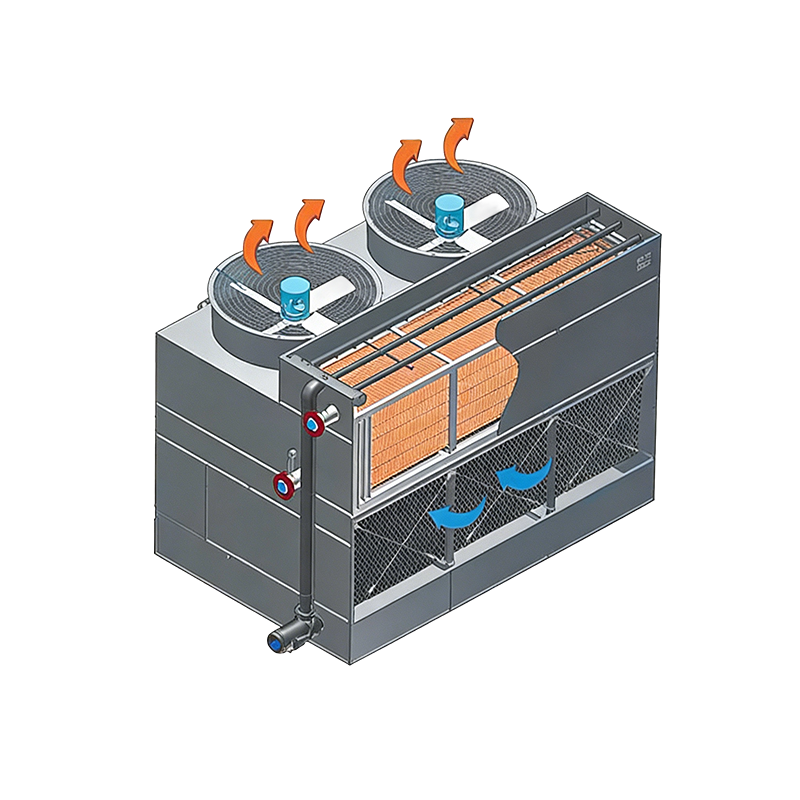
Heat rejection by a tower depends on wet-bulb temperature, not dry-bulb. At a 0.4 percent design wet bulb of about 28 °C, a tower with a 4 K approach supplies condenser water near 32 °C, roughly 3 K above the rating point and far below the 43 °C air an air-cooled condenser would face in the same week. That is the argument for water-cooled equipment in humid climates, and it is also why a packaged air-cooled box chiller remains the simplest specification for loads in the tens to low hundreds of kilowatts on sites with no water circuit.
A chiller rated at 35 °C ambient is not a chiller rated for your site. It is a chiller rated for a standard.
Apply Ambient, Altitude and Water-Temperature Derating
Between 35 °C and 45 °C ambient, a typical air-cooled chiller loses between 1 and 2 percent of rated capacity per kelvin, so a 43 °C site needs roughly 8 to 16 percent more machine than the rating point implies.
Air-cooled capacity index across ambient temperature
Indicative index normalised to 105 at 25 °C; actual curves vary by model, refrigerant and condenser design.
Derating checks that change the machine size
Altitude costs capacity because a fan moves a fixed volume of air, not a fixed mass: at 1,000 m, air density is about 9 percent lower and air-cooled capacity follows it down. On the water side, each kelvin added to entering condenser water raises compressor power by roughly 1.5 to 3 percent. Low ambient is the mirror problem - a machine rated to 45 °C that must also start at minus 10 °C needs fan speed control and refrigerant charge management, not just a bigger condenser.
| Parameter | Rating point | Site example | Effect on selection |
| Ambient dry bulb | 35 °C | 43 °C | 8-16 percent less air-cooled capacity |
| Altitude | 0 m | 1,000 m | About 9 percent lower air density |
| Entering condenser water | 29.4 °C | 32 °C | Compressor power up 1.5-3 percent per kelvin |
| Low ambient | 5 °C | Minus 10 °C | Fan speed control, low-ambient kit, charge management |
Match the Compressor and Part-Load Curve to the Duty Cycle
Above roughly 300 kW of design load, compressor type and part-load performance decide annual energy use more than full-load COP, because most industrial loops run between 40 and 75 percent of design capacity for most of the year.
Scroll compressors cover small packaged units, screw compressors dominate the 200 kW to 1,500 kW band, and centrifugal machines take over above roughly 800 kW where the load is steady. The number that matters in a quotation is the part-load value: AHRI 550/590 integrates performance across four load points and weights them into an integrated part-load value (IPLV) or a non-standard part-load value (NPLV) calculated at site conditions. Ask for the NPLV, because the standard IPLV assumes a condenser water temperature that your tower may never deliver. The comparison between screw and centrifugal machines, and the logic for matching chiller units to different industrial cooling duties, is set out in this guide to choosing industrial chiller units for different industrial cooling duties.
Full-load COP wins specifications. Part-load performance pays the electricity bill.
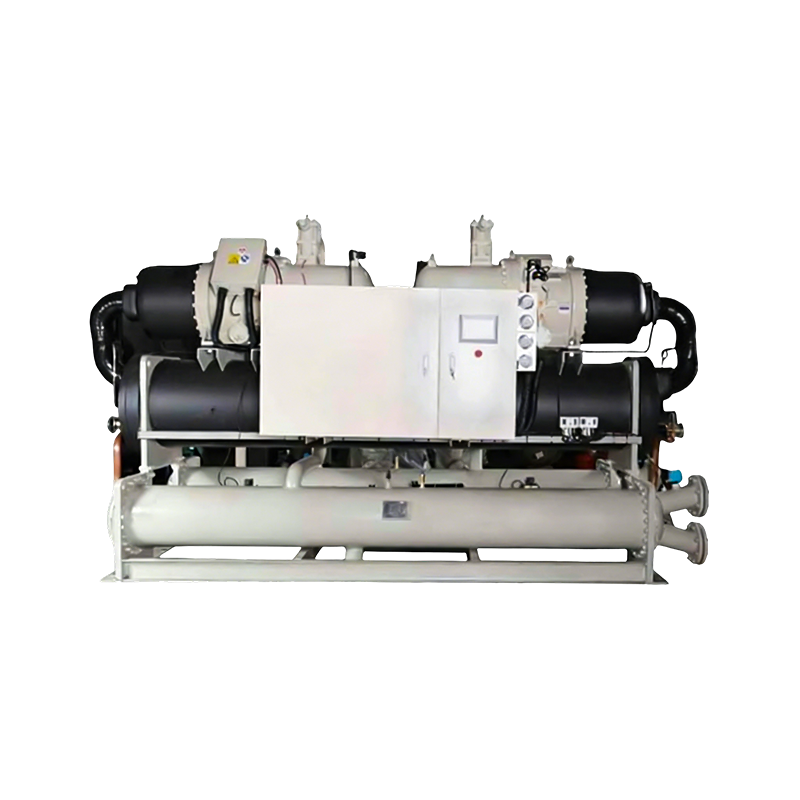 Water Cooled Screw Chiller ManufacturersWater Cooled Screw ChillerView Product →
Two mechanical details follow from the duty cycle. Machines with two independent compressor circuits keep producing chilled water when one circuit is off, which matters for plants that cannot accept a full stop. Flooded evaporators hold a closer approach temperature, so the compressor works against a lower lift and consumes less power at the same delivered capacity.
Size the Condenser, Tower and Water Side on Rejection Load
The condenser must reject the evaporator load plus the compressor power input, so a chiller with a full-load COP of 5.0 rejects about 1.2 times its cooling capacity, and every pump, tower and pipe downstream is sized on that larger number.
Condenser rejection = cooling load x (1 + 1 / COP)
| Load point | Cooling delivered (kW) | COP | Compressor input (kW) | Condenser rejection (kW) |
| 100 percent | 300 | 5.0 | 60 | 360 |
| 75 percent | 225 | 5.6 | 40 | 265 |
| 50 percent | 150 | 6.2 | 24 | 174 |
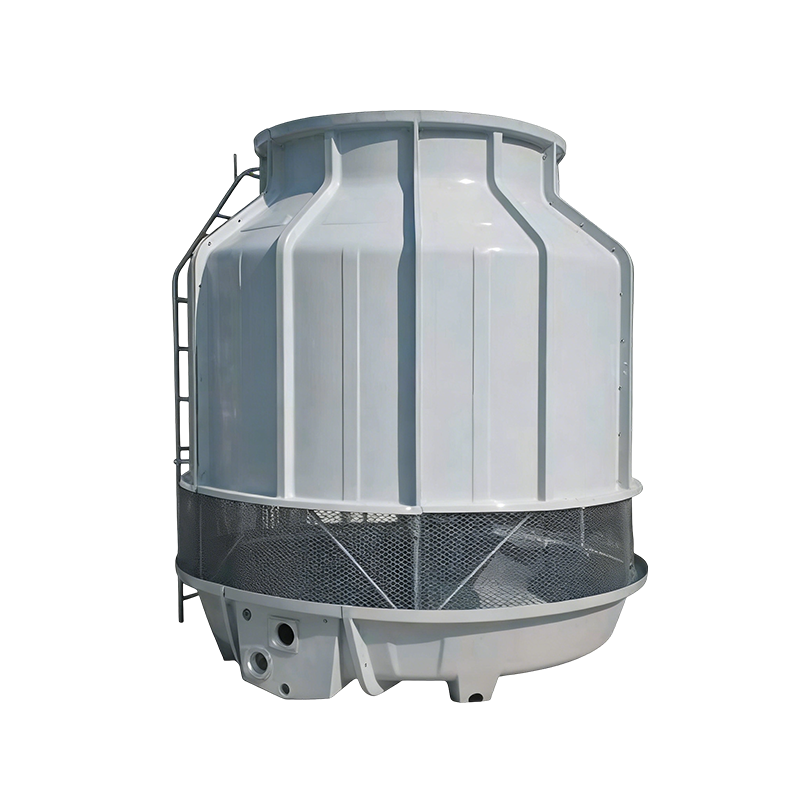
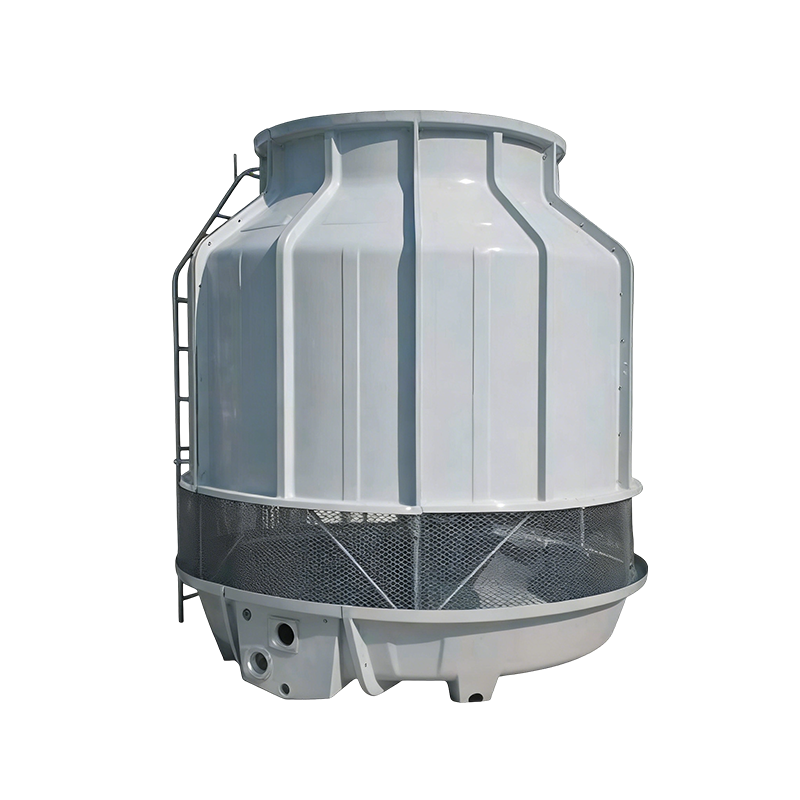 Corrosion Resistant High Efficient Industrial Standard Cooling TowerProduct options ·Optimisation of structure modelling, shape size is small, lightweight, and four weeks of the wind, less restricted by decorate venues. ·The tower body...View Product →
Tower sizing follows wet bulb and approach, not tonnage alone. Tightening the approach from 5 K to 3 K cuts condenser water temperature and chiller power, but it enlarges the tower and raises fan energy; below 3 K the trade stops paying. Water quality decides materials: a corrosion-resistant industrial tower with coated steel or FRP basins holds up where make-up water is hard or the air carries salt and process dust. Where the plant already has a cold water source, a maintenance-free water heat exchanger can carry part of the load without running the compressor at all.
Write the Operating Conditions Into the Purchase Specification
A selection is defensible only when the specification states the ambient range, altitude, protection rating, voltage tolerance, noise limit, control protocol and the test standard used to verify capacity.
- Ambient operating range, including the winter minimum that forces low-ambient control.
- Altitude and air quality: dust, salt and corrosive gas decide coil coating and filter class.
- Enclosure protection, commonly IP54 or IP55 for outdoor units under IEC 60529.
- Voltage and frequency window within the band defined by IEC 60038, plus the fault level at the point of connection under IEC 60364.
- Control interface, Modbus RTU or BACnet, if the machine reports to a building management system.
- Performance verification to AHRI 550/590, including the fouling factor used in the calculation.
Two quotations with the same tonnage are not the same quotation. Capacity is comparable only when ambient temperature, entering condenser water temperature, fouling factor and test standard are identical.
Enclosure cooling follows its own calculation
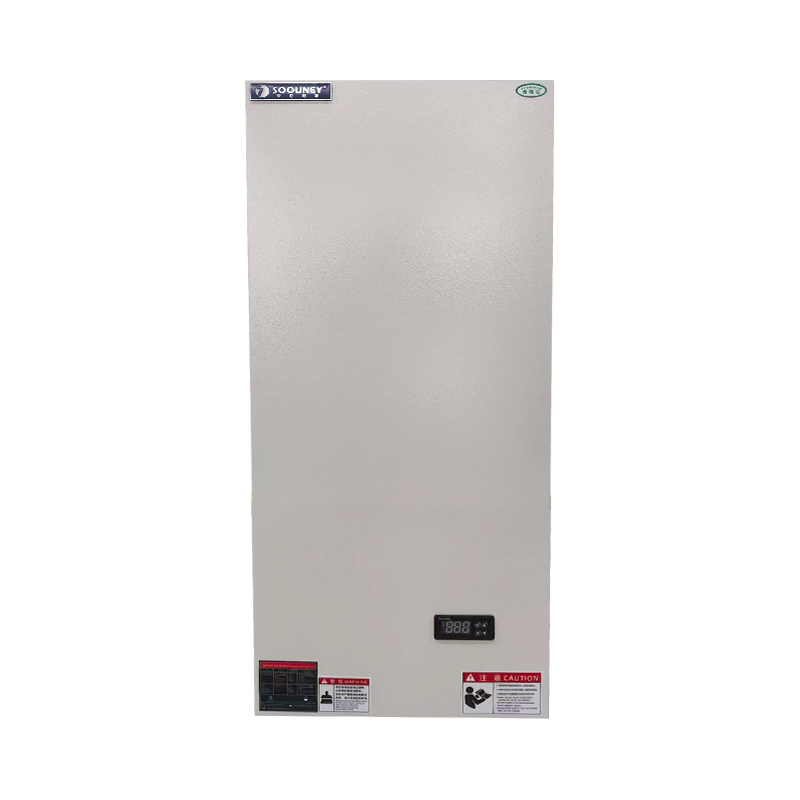
Control cabinets, drive panels and prefabricated equipment cabins inside the same plant need a separate thermal check. A cabinet air conditioner is sized on enclosure surface area, internal dissipation and solar gain, and outdoor units are selected on the full ambient range plus the ingress protection the cabinet itself carries. Sizing a cabinet cooler from the panel's connected load alone repeats the same mistake as sizing a chiller from connected motor power.
Questions That Decide the Final Order
How much margin should be added to the calculated heat load?
Add 10 to 20 percent to the balanced continuous load. Beyond 30 percent without a part-load control strategy, a chiller spends its life short cycling, which costs efficiency and compressor life rather than saving either.
Can one machine serve process cooling and comfort cooling?
Only when both circuits share a supply temperature and control logic. A 7 °C process loop and a 12 °C comfort loop should normally be separated, and a shared machine needs dual setpoints and independent pumps.
What leaving water temperature should be specified?
Specify the highest leaving water temperature the process tolerates. Each kelvin of higher evaporating temperature typically improves chiller efficiency by 2 to 3 percent, which is why a 12 °C loop often costs less to run than a 7 °C loop doing the same job.
How do I compare two quotations with different capacities?
Normalise both to identical conditions: site ambient, entering condenser water temperature, fouling factor and a stated test standard such as AHRI 550/590. A quotation that omits those four data points cannot be compared with anything.
The selection errors that reach commissioning stage share one cause: machines compared at a standard rating point while the plant runs at a different dry bulb, a different wet bulb and a different part-load profile. Shanghai Soouney Refrigeration Equipment Co., Ltd. builds air-cooled and water-cooled chillers, screw chillers, cooling towers and water heat exchangers, and its professional customization service exists for sites whose ambient, altitude or water conditions sit outside the standard curve - which is where operating plants usually sit.