
 English
 Español
Content
- 1 The Core Principle: Air As the Only Heat Sink
- 2 The Four Steps of the Cooling Cycle
- 3 Main Components and What They Actually Do
- 4 Air-Cooled vs. Water-Cooled: Where the Real Difference Is
- 5 Common Configurations of Air-Cooled Industrial Chillers
- 6 Selection Factors That Determine Real-World Performance
- 7 Where Air-Cooled Industrial Chillers Are Used
A plastics injection molding shop running three shifts produces more heat than the mold cooling circuits can naturally absorb. The machine that keeps those molds at a stable temperature is often an air-cooled industrial chiller, a self-contained refrigeration package that cools process water and discharges the captured heat into the surrounding air.
Put simply, an air-cooled industrial chiller works by running a refrigerant through a sealed vapor-compression loop. The refrigerant absorbs heat from process water in the evaporator, then releases that heat to ambient air in the condenser. The unit needs no cooling tower, no makeup water line, and no separate water treatment skid.
The Core Principle: Air As the Only Heat Sink
Every air-cooled chiller relies on four components working in sequence: the compressor, the condenser, the expansion valve, and the evaporator. Refrigerant circulates through them continuously, changing from liquid to vapor and back, to carry heat from the process water to the outside air.
The crucial difference is at the condenser. A water-cooled machine sends condenser heat to a cooling tower loop; an air-cooled machine blows ambient air across finned coils with axial fans. That removes the need for cooling water and simplifies installation, but performance then depends on the surrounding air temperature.
For many process loads this trade-off is acceptable. If you are checking whether an air-cooled package fits your cooling duty, an ambient-temperature cryogenic air-cooled chiller is a typical example of how manufacturers build this cycle for continuous industrial service.
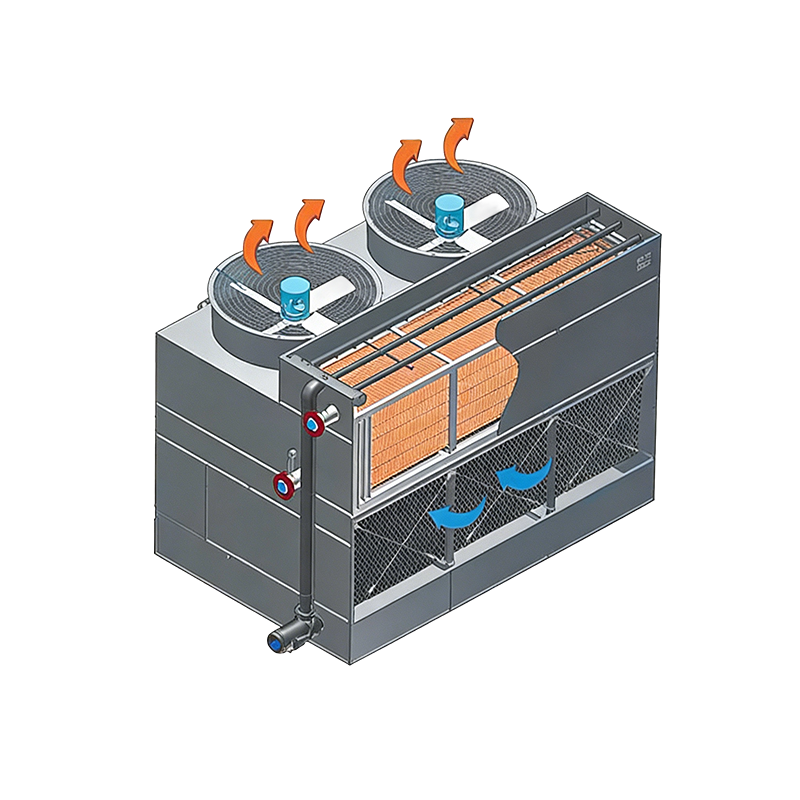
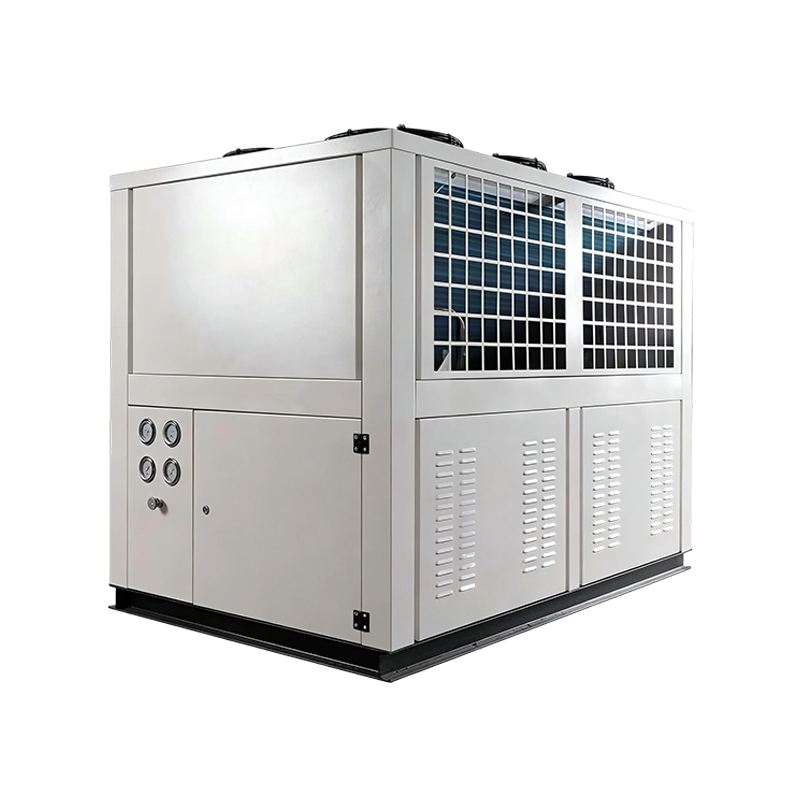 Wholesale Ambient Temperature Cryogenic Air Cooled Chiller Suppliers, Company, EShanghai Soouney Refrigeration Equipment Co., Ltd. Is China Wholesale Ambient Temperature Cryogenic Air Cooled Chiller Suppliers, Company...View Product →
The Four Steps of the Cooling Cycle
Although the cycle runs continuously, it helps to view it as four distinct steps:
- Heat absorption in the evaporator. High-pressure liquid refrigerant passes through the expansion valve, where its pressure drops sharply. At this low pressure, the refrigerant boils at a low temperature. Warm process water flowing over the evaporator gives up heat and is cooled to the required setpoint.
- Compression. The compressor draws low-pressure refrigerant vapor and raises its pressure and temperature, preparing it to condense at a temperature above the ambient air.
- Heat rejection in the condenser. Hot refrigerant vapor enters the air-cooled condenser coil. Condenser fans pull large volumes of ambient air across the coil, and the refrigerant condenses back to a liquid as its heat is carried away.
- Expansion and return. The liquid refrigerant flows back through the expansion valve, and the cycle starts again.
The cooled water is pumped to the process equipment, such as laser cutters, injection molding machines, chemical reactors or machine-tool spindles, and returns a few degrees warmer to be cooled again.
Main Components and What They Actually Do
Each component affects performance, reliability and operating cost in a specific way. The table below summarizes each part's role and the practical issues to watch.
| Component | Role in the cycle | Practical impact |
|---|---|---|
| Compressor | Pumps refrigerant vapor and raises its pressure and temperature. | Scroll and screw compressors are the most common industrial types; the compressor determines cooling capacity, efficiency and service life. |
| Condenser coil | Releases condenser heat to ambient air. | Finned air-side surfaces must be kept clean; dirty coils raise discharge pressure and reduce efficiency. |
| Condenser fans | Draw ambient air across the coil. | Air volume sets the maximum ambient temperature at which the chiller can operate; fans are also the main noise source. |
| Expansion valve | Controls refrigerant flow and pressure drop. | An electronic expansion valve handles part-load conditions better than a fixed orifice, improving stability. |
| Evaporator | Transfers heat from process water to the refrigerant. | Plate and shell-and-tube designs have different water pressure drops, which influence pump sizing. |
| Refrigerant | Carries heat between the evaporator and the condenser. | Refrigerant choice must match the required chilled-water temperature and current environmental regulations. |
Air-Cooled vs. Water-Cooled: Where the Real Difference Is
Once the cycle is clear, the practical comparison becomes simple:
- Air-cooled chillers reject condenser heat directly to the air. They have fewer plant interfaces, no cooling tower and no water treatment, and they are easy to relocate. The trade-off is higher fan energy and reduced performance on hot days.
- Water-cooled chillers use a cooling tower to supply condenser water, which typically lowers condensing temperature and improves energy efficiency, especially in warm climates. The cost is a more complex installation with a tower, water pumps and chemical treatment.
For plants without existing cooling-water infrastructure, air-cooled equipment avoids a large capital and maintenance burden. If you are planning a new chilled-water system, our guide on how to choose industrial chiller units for different industrial cooling compares the trade-offs in more detail. Should the application later shift to a water-cooled solution, read about what makes a cryogenic water-cooled box chiller ideal for low-temperature duty.
Common Configurations of Air-Cooled Industrial Chillers
Air-cooled chillers are built in several physical configurations, and the choice affects installation, maintenance and floor space.
Packaged box chillers
Box chillers integrate the compressor, evaporator, expansion valve, condenser, fans and circulating pump into a single steel frame. The unit arrives pre-piped and pre-charged, so the plant only connects power, chilled water and a drain. They suit medium process loads where a compact footprint matters. For processes needing lower chilled-water temperatures, manufacturers offer an ambient-temperature cryogenic air-cooled box chiller configured for a wider operating range.
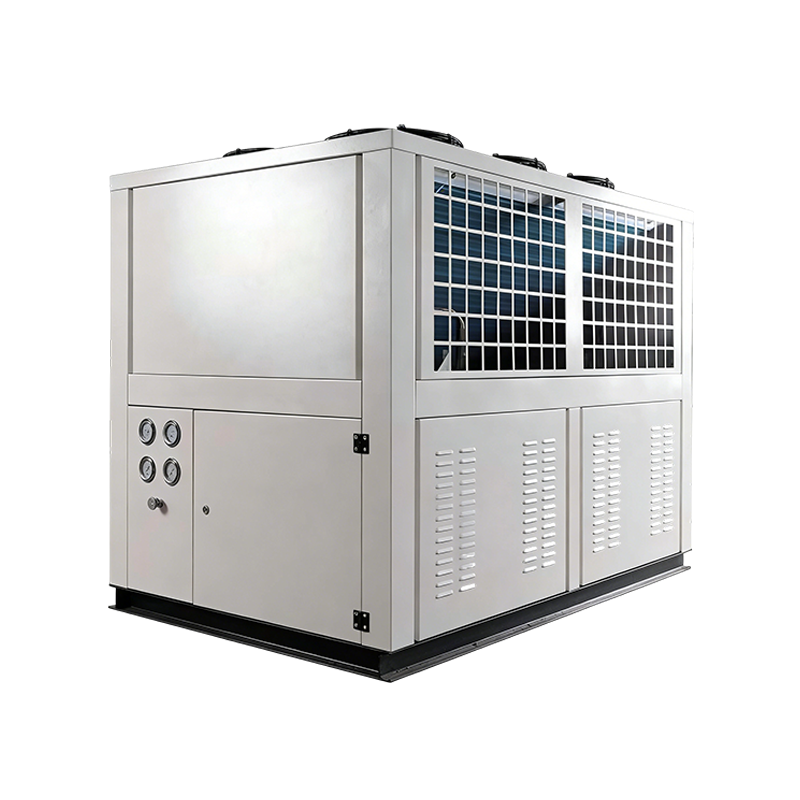
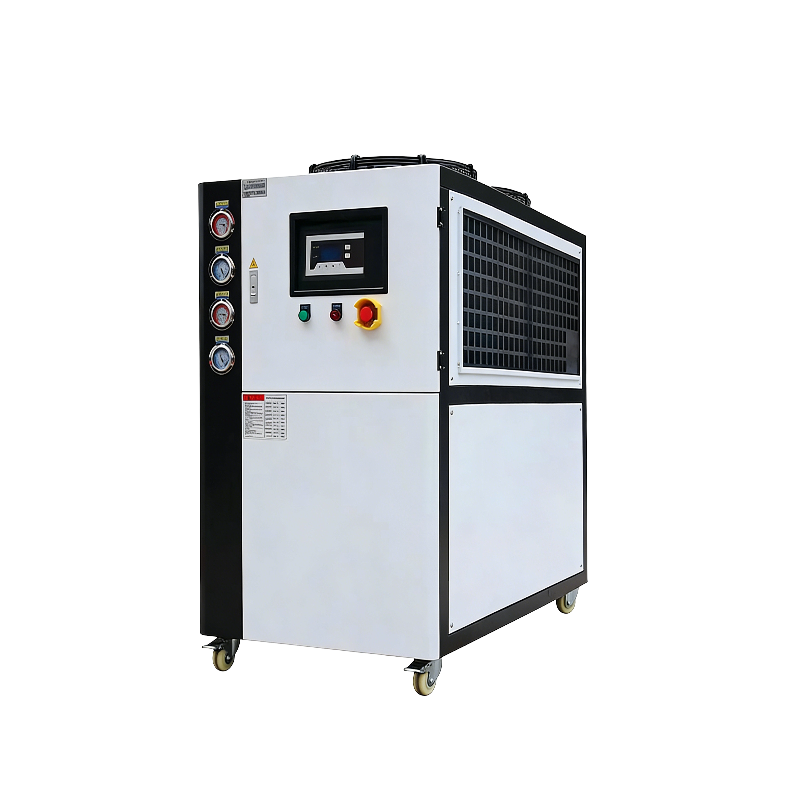
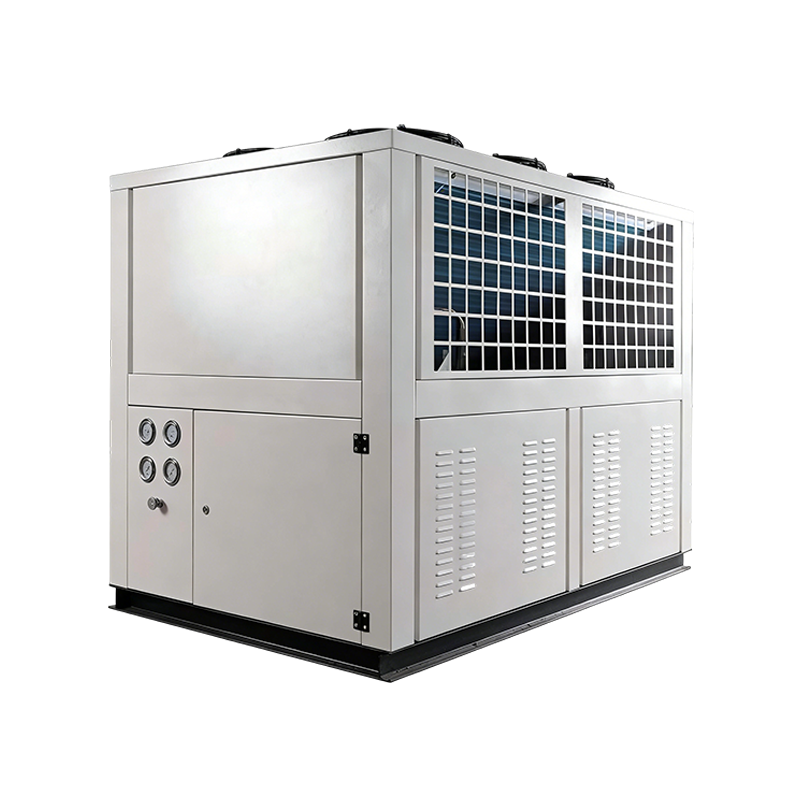 Wholesale Ambient Temperature Cryogenic Air Cooled Box Chiller Suppliers, CompanShanghai Soouney Refrigeration Equipment Co., Ltd. Is China Wholesale Ambient Temperature Cryogenic Air Cooled Box Chiller Suppliers, Com...View Product →
Screw chillers for larger loads
When cooling demand exceeds the practical range of a box chiller, screw compressors take over. Screw chillers run with less vibration, tolerate continuous duty well, and hold up under high compression ratios. A single- or dual-compressor heat-cryogenic air-cooled screw chiller is a common choice for loads in the hundreds of kilowatts. The compressor layout and part-load control strategy make a measurable difference in annual energy cost; you can compare the options in our guide on air-cooled screw chiller vs. centrifugal chiller selection.
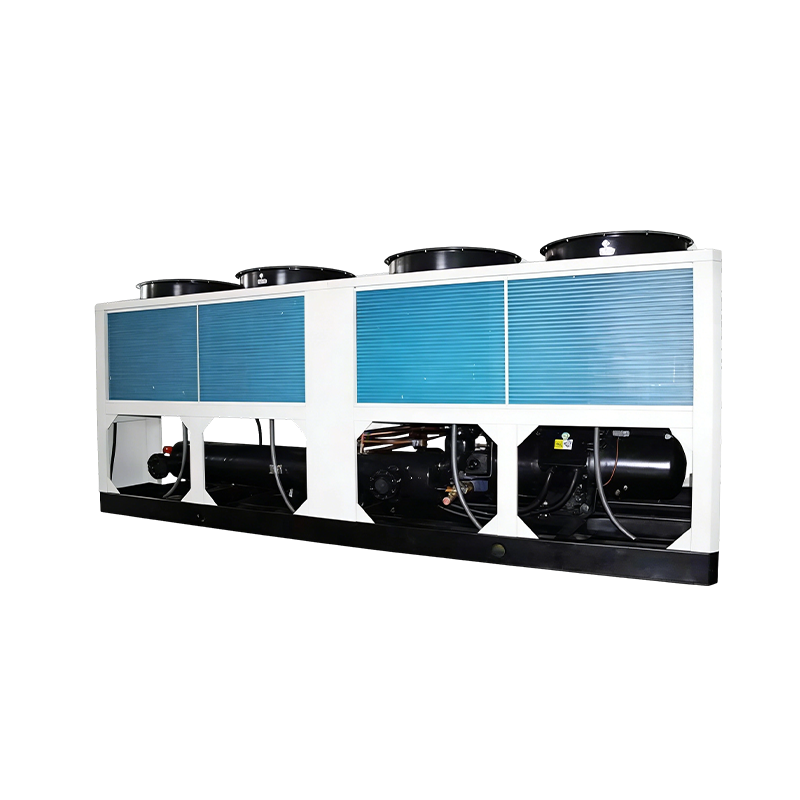
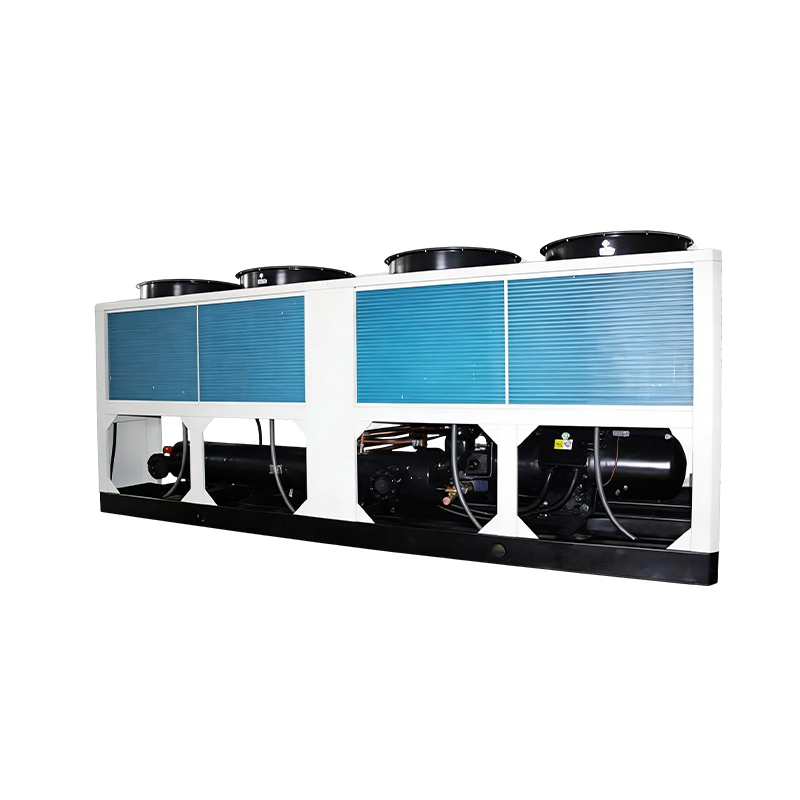 Wholesale Heat Cryogenic Single Compressor Double Compressors Air Cooled Screw CShanghai Soouney Refrigeration Equipment Co., Ltd. Is China Wholesale Heat Cryogenic Single Compressor Double Compressors Air Cooled Scre...View Product →
Integrated chillers
Integrated units combine the chiller, buffer tank, pump and control system on one skid. They reduce on-site installation hours and save floor space, which is valuable when the cooling package must fit into a tight machine room or a production line expansion.
Selection Factors That Determine Real-World Performance
The nameplate rating is only the start. Six factors usually decide how well a unit performs once installed:
- Cooling capacity and leaving water temperature. Determine the process load in kilowatts and the required water temperature before comparing models. Low-temperature or cryogenic duty changes the compressor, evaporator and refrigerant selection.
- Ambient temperature range. Air-cooled condensers are rated at a specific ambient temperature, often 35°C. Confirm the unit can still reject heat on the hottest day the site will see.
- Number of compressors. Two compressors provide partial redundancy and better part-load efficiency than one large unit.
- Noise level. Fan and compressor noise can be a problem near offices; place the unit away from occupied areas or choose a low-noise version.
- Clearance for airflow. Hot discharge air must not recirculate into the condenser intake, or capacity drops quickly. Follow the manufacturer's minimum clearance rules.
- Efficiency metrics. Compare IPLV or EER values, not only full-load COP, because most chillers run at partial load most of the time.
Where Air-Cooled Industrial Chillers Are Used
Air-cooled industrial chillers appear wherever a process generates continuous heat that cannot be rejected through city water or a dedicated cooling tower:
- Plastics injection molding, blow molding and extrusion lines
- Laser cutting and welding equipment
- Food and beverage process cooling
- Chemical and pharmaceutical reactor temperature control
- Machine-tool spindle and hydraulic oil cooling
- Industrial HVAC for factories, warehouses and cleanrooms
The common thread is a need for stable water temperatures with minimal plant infrastructure. Because the condenser rejects heat straight into the air, installation cost stays low and the system remains independent of water availability.
An air-cooled industrial chiller is, at its core, a vapor-compression refrigeration system scaled up for process duty. It cools the water that carries heat away from your equipment and pushes that heat into the outside air through a fan-driven condenser. The practical result is a self-contained cooling package: no cooling tower, no water treatment and no complex condenser loop. Just process water, airflow, and a dependable refrigerant cycle doing the work.