
 English
 Español
Content
An injection mold cooling loop running 8 L/min of water leaves the process at 15 deg C and returns at 8 deg C. The required cooling capacity is 3.92 kW, calculated as 8 x 7 / 14.3. Add a 15% safety margin and the specification becomes 4.5 kW. Every correctly sized industrial chiller starts with this exact arithmetic, and the same calculation serves laser cooling, reactor jackets, hydraulic oil circuits, and extrusion barrel cooling.
The Core Formula: Q = V x rho x c x dT
Chiller cooling capacity is the rate at which a chiller removes heat from a process fluid, expressed in kilowatts (kW), tons of refrigeration (TR), or BTU/hr. The same heat-transfer equation governs every application, from mold temperature control and laser power supplies to chemical reactor jackets and hydraulic oil circuits.
The full equation is Q (kW) = V x rho x c x dT / 3600. V is the volumetric flow rate, rho is the fluid density, c is the specific heat capacity, and dT is the temperature difference between the water entering and leaving the process. For water, this collapses to Q = V (L/min) x dT (deg C) / 14.3. In imperial units, Q (BTU/hr) = GPM x dT (deg F) x 500.
| Variable | Meaning | Common unit |
| Q | Cooling capacity | kW or BTU/hr |
| V | Volumetric flow rate | L/min or m3/h |
| rho | Fluid density | kg/m3 |
| c | Specific heat capacity | kJ/(kg K) |
| dT | Temperature difference | deg C or deg F |
Definition: Chiller cooling capacity is the total rate of heat extraction from the process fluid at stated flow and temperature conditions. It is always expressed as a power value (kW, TR, or BTU/hr), never as a temperature alone.
Step-by-Step Capacity Calculation
The five steps below produce a dependable capacity value for any process loop, and you can repeat them whenever production conditions change.
- Confirm the process fluid. Water, glycol mixtures, and oils have different density and specific heat values that change the final number.
- Measure the flow rate at the chiller return line with a calibrated flowmeter, or read it from the pump curve at the operating pressure.
- Record the temperatures entering and leaving the process with the same pair of probes to keep measurement error consistent.
- Apply the simplified water formula, or use the general equation when the fluid is not water.
- Multiply the result by a safety factor of 1.10 to 1.20 before selecting a machine.
Working the opening example: 8 L/min of water with a 7 deg C temperature difference gives Q = 8 x 7 / 14.3 = 3.92 kW. At 115%, the design capacity becomes 3.92 x 1.15 = 4.5 kW. Compare this number against the rated capacity of any candidate chiller.
Unit discipline matters more than the formula itself. Mixing L/min with deg F, or GPM with deg C, produces errors larger than the safety factor can absorb. Write the units into every step and convert before you multiply.
Heat Load Components You Cannot Ignore
Total plant demand is almost always higher than the process heat alone. Pump and motor energy enters the water loop as heat, uninsulated pipe runs radiate into the space, and production lines tend to expand over time. A realistic heat load estimate breaks down as follows.
Typical split of heat load components in an industrial process cooling loop.
For loads that vary by shift or season, size to the maximum sustained load instead of the average. How load type and plant conditions interact with machine architecture is covered in our guide to selecting industrial chiller units for different cooling applications.
Estimation rule: when full measurement is not yet possible, estimate total heat load as process heat divided by 0.75. This single multiplier covers pump heat, radiation, and future margin.
From Capacity Value to Machine Selection
Once the capacity target is fixed, the dominant decision shifts from calculation to heat rejection architecture. Review the full industrial chiller product range first, then narrow down by cooling method.
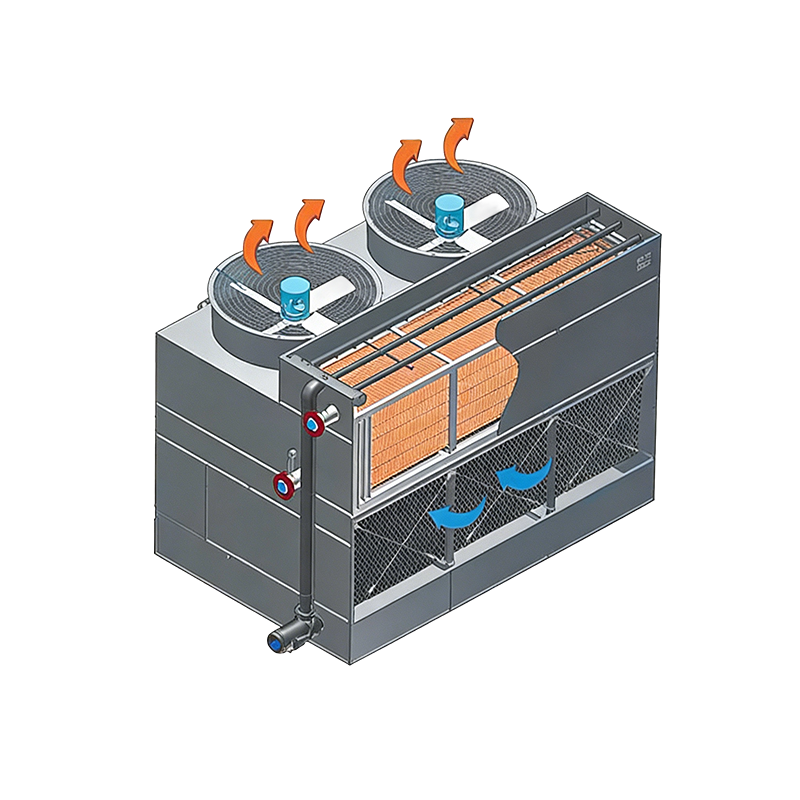
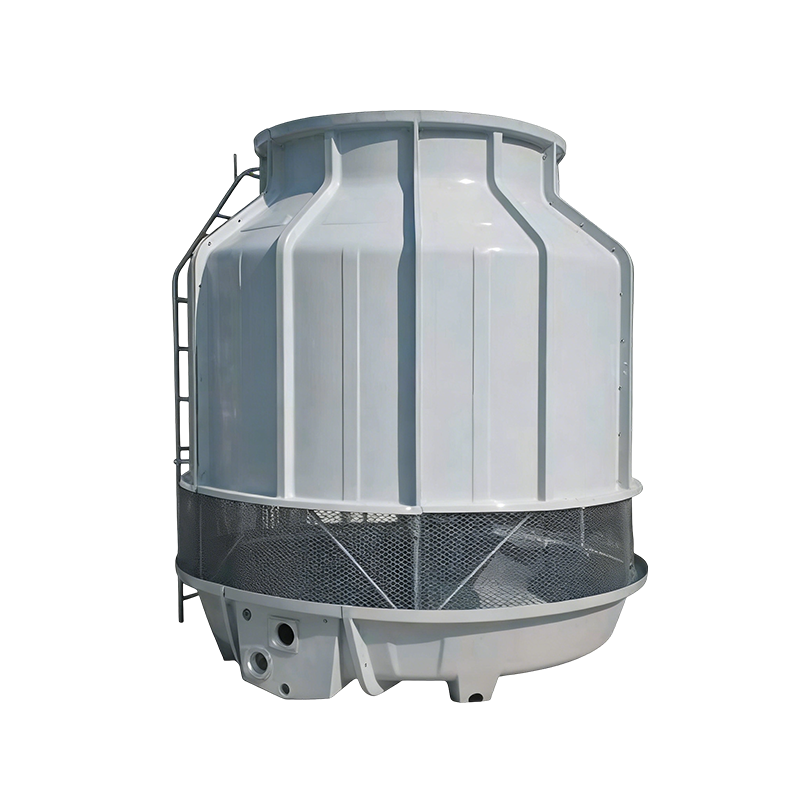
An air-cooled chiller rejects heat directly to ambient air and needs no cooling tower or water treatment loop; it suits small and medium loads and sites without cooling-water infrastructure. A water-cooled chiller rejects heat through a cooling tower, keeps higher efficiency under continuous high load, and fits plants with existing cooling-water systems. For very large sustained loads, screw-type machines carry the duty better than scroll or reciprocating compressors.
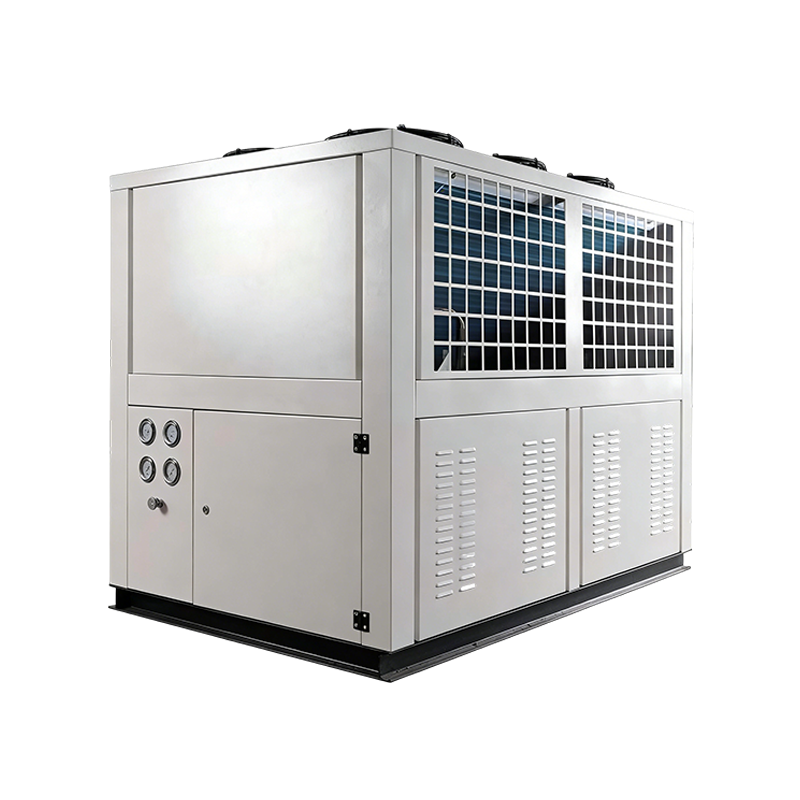
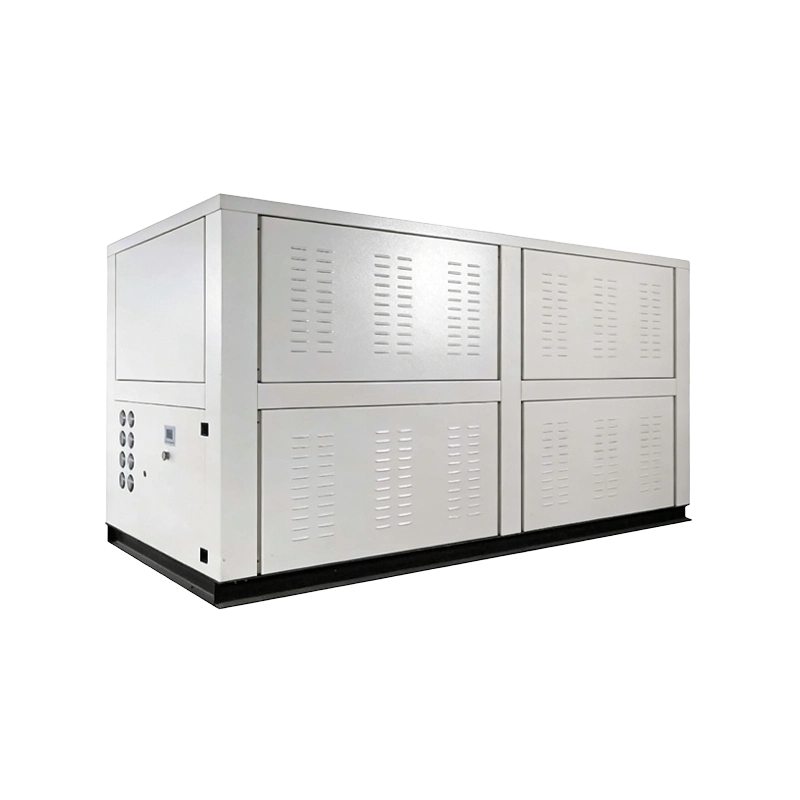
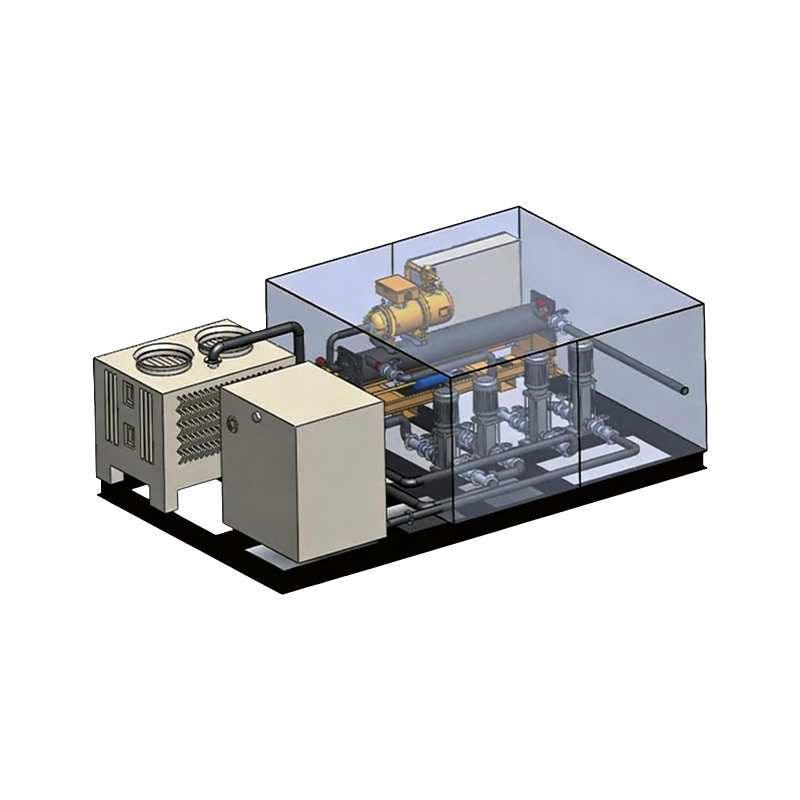
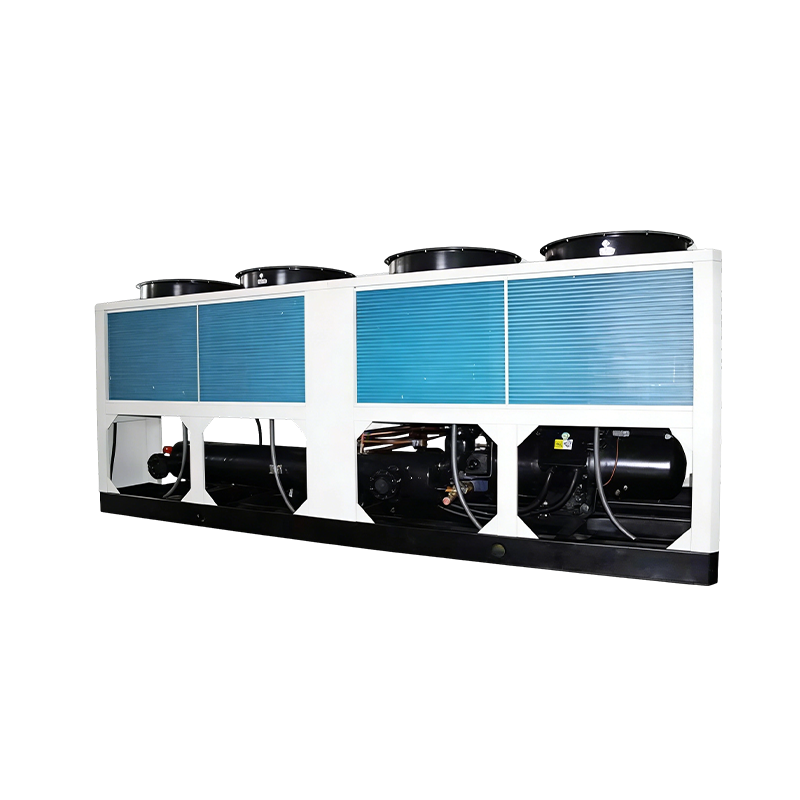
These distinctions map to specific machines. A plant with restricted space can use an ambient-temperature cryogenic air-cooled box chiller as a self-contained package. Where a cooling tower already exists, an ambient-temperature cryogenic water-cooled box chiller reduces compressor work during steady operation. For high-tonnage continuous duty, a water-cooled screw flooded chiller provides stable evaporator performance over long operating windows. In every case, the machine's rated capacity must exceed the calculated design value by the margin set in step five.
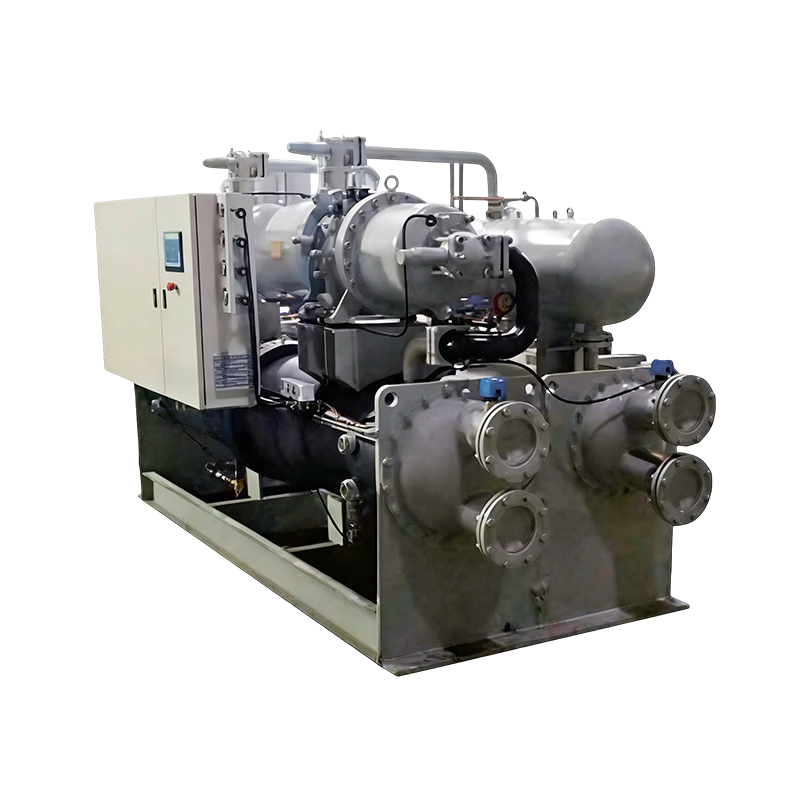 Wholesale Water Cooled Screw Flooded Chiller Suppliers, Company, ExporterShanghai Soouney Refrigeration Equipment Co., Ltd. Is China Wholesale Water Cooled Screw Flooded Chiller Suppliers, Company, Exporter, Pr...View Product →
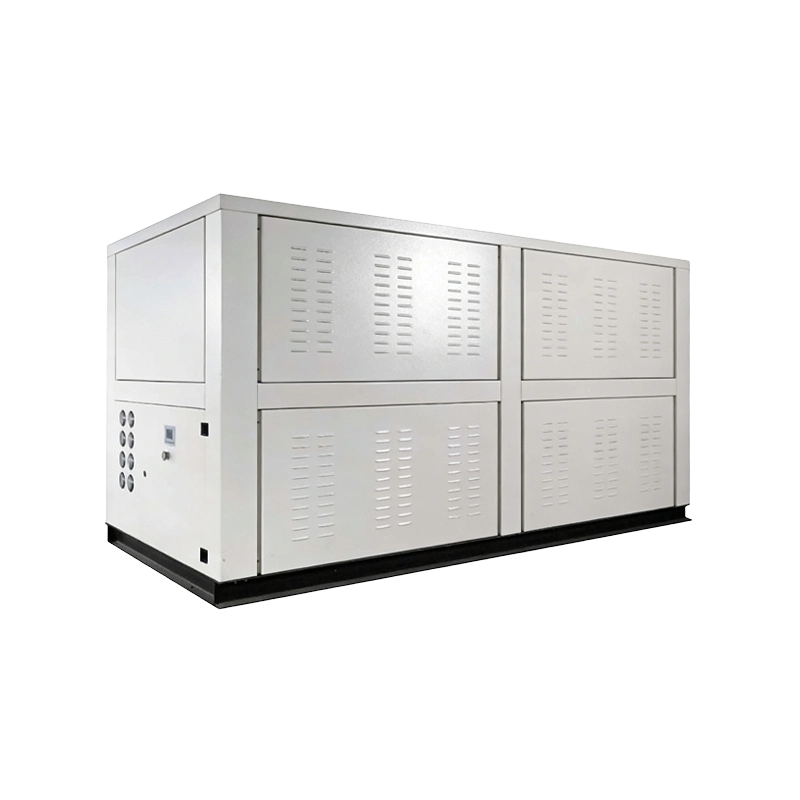 Wholesale Ambient Temperature Cryogenic Water Cooled Box Chiller Suppliers, CompShanghai Soouney Refrigeration Equipment Co., Ltd. Is China Wholesale Ambient Temperature Cryogenic Water Cooled Box Chiller Suppliers, C...View Product →
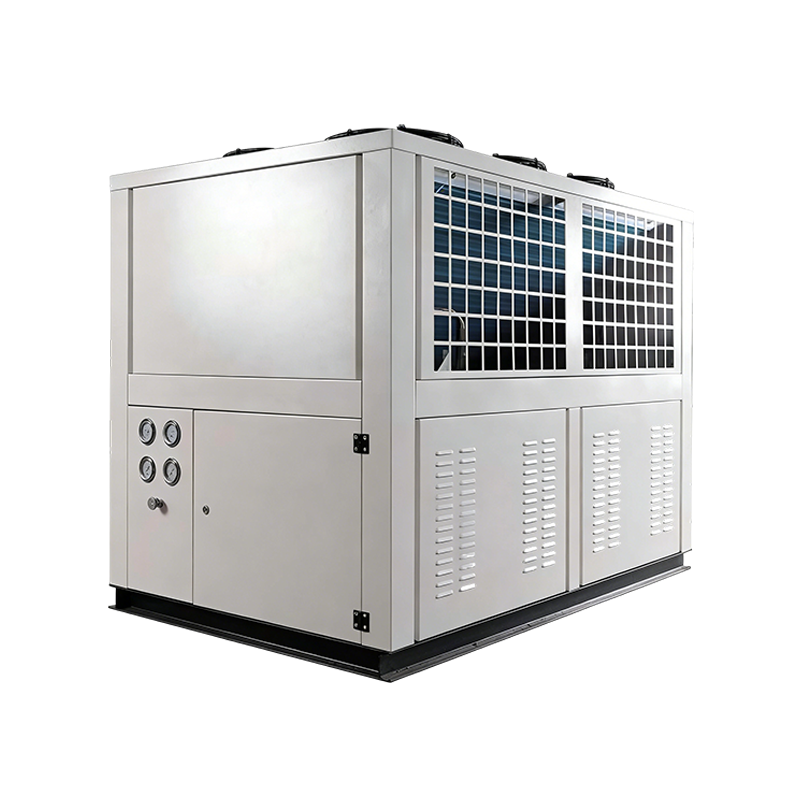 Wholesale Ambient Temperature Cryogenic Air Cooled Box Chiller Suppliers, CompanShanghai Soouney Refrigeration Equipment Co., Ltd. Is China Wholesale Ambient Temperature Cryogenic Air Cooled Box Chiller Suppliers, Com...View Product →
| Criterion | Air-cooled | Water-cooled |
| Heat rejection path | Direct to ambient air | Through cooling tower water loop |
| Installation | Self-contained, simpler | Requires tower and water treatment |
| Part-load efficiency | Drops as ambient rises | Stable under high load |
| Best fit | Small to medium loads | Large or continuous loads |
Selection rule: match the machine's rated capacity at its official rating conditions to your calculated value at your real ambient temperature. A chiller rated at 35 deg C ambient delivers less inside a 45 deg C plant room.
Five Common Sizing Mistakes
Most capacity errors trace back to a short list of repeatable failures, and correcting them prevents the majority of undersized and oversized installations.
- Ignoring pump and motor heat, which can add 10 to 15% to the measured load.
- Sizing to the average load instead of the peak sustained load.
- Mixing metric and imperial units inside the same formula.
- Skipping the margin for process expansion, fouled heat exchangers, or future lines.
- Selecting a machine by floor area or pipe size instead of the calculated kW value.
Quick conversion facts: 1 kW = 3,412 BTU/hr and 1 TR = 12,000 BTU/hr, so 1 kW equals approximately 0.284 TR. A 50 kW machine provides about 14.2 tons of refrigeration.
On large plant rooms, compressor architecture becomes part of the decision; our air-cooled screw chiller versus centrifugal chiller comparison explains when each design justifies its capital cost.
Frequently Asked Questions
What is the standard formula for chiller cooling capacity?
For water, Q (kW) = V (L/min) x dT (deg C) / 14.3, or Q (BTU/hr) = GPM x dT (deg F) x 500 in imperial units. The general equation for any fluid is Q = V x rho x c x dT / 3600.
What safety factor should I apply when sizing an industrial chiller?
Use 15% as the default margin. Increase it to 20% when the process may expand, when the cooling water supply is warm, or when heat exchangers are prone to fouling. Never go below 10% for a production-critical system.
How do I convert kilowatts to tons of refrigeration?
Multiply the capacity in kilowatts by 0.2843 to obtain tons of refrigeration. A 100 kW chiller therefore delivers approximately 28.4 TR.
Why does accurate flow measurement matter so much?
Flow and temperature difference multiply directly, so a 10% flow error produces a 10% capacity error. Measure with a calibrated flowmeter or a verified pump curve, and confirm the reading against the actual plant pressure drop.
Still uncertain about a value? Send the measured flow rate, inlet and outlet temperatures, and fluid type to the manufacturer and ask for a corroborating calculation before committing to a machine size.