English
 Español
0
Site Area


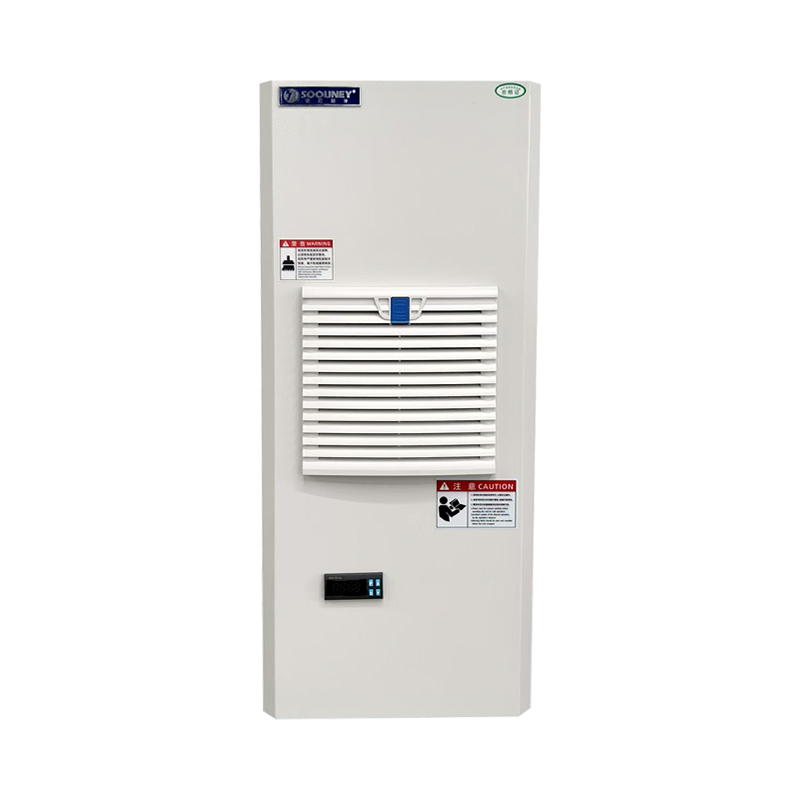
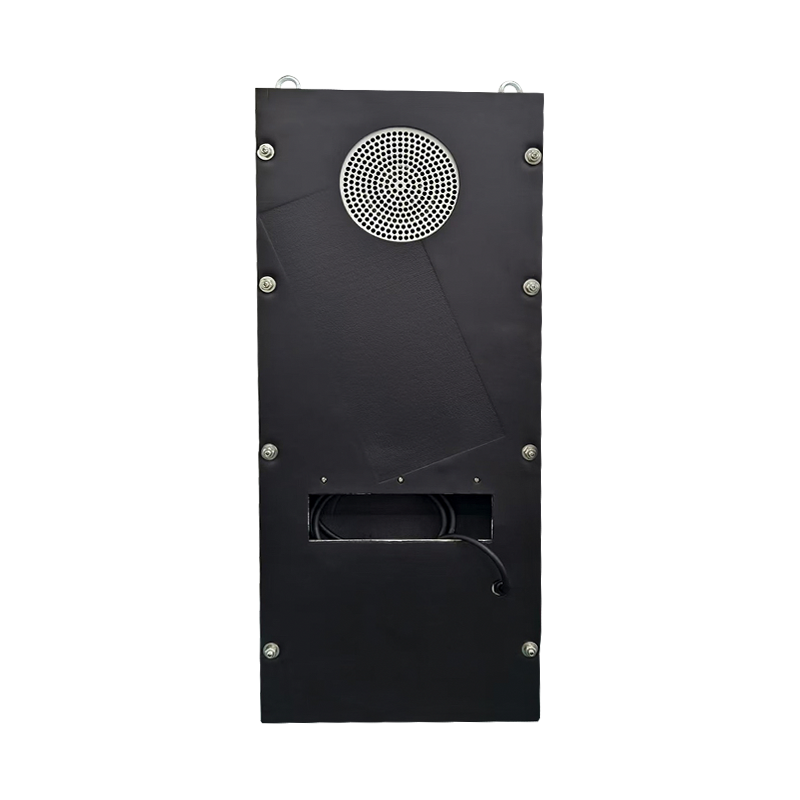
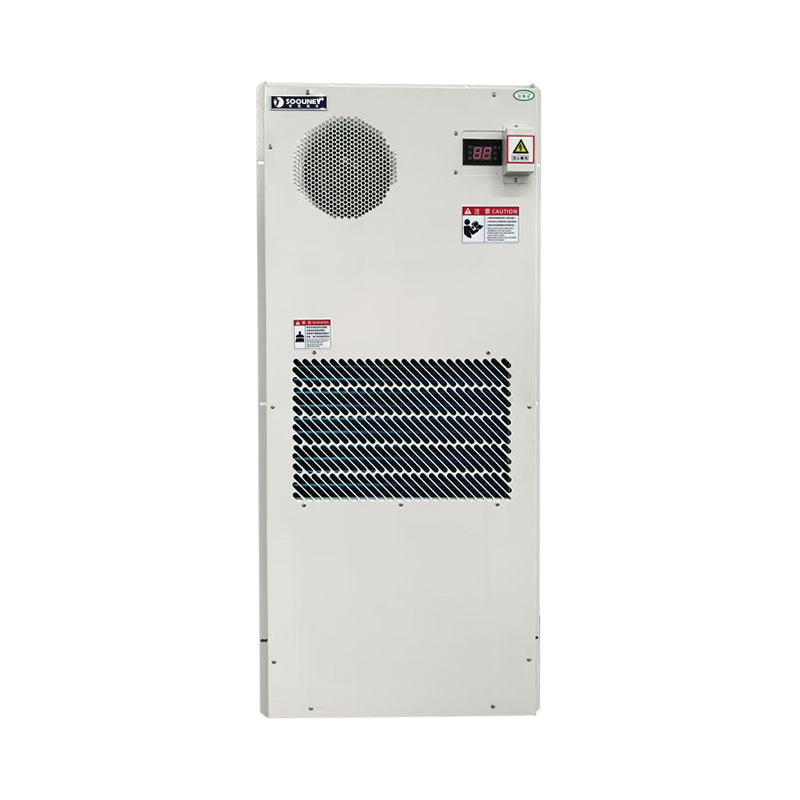
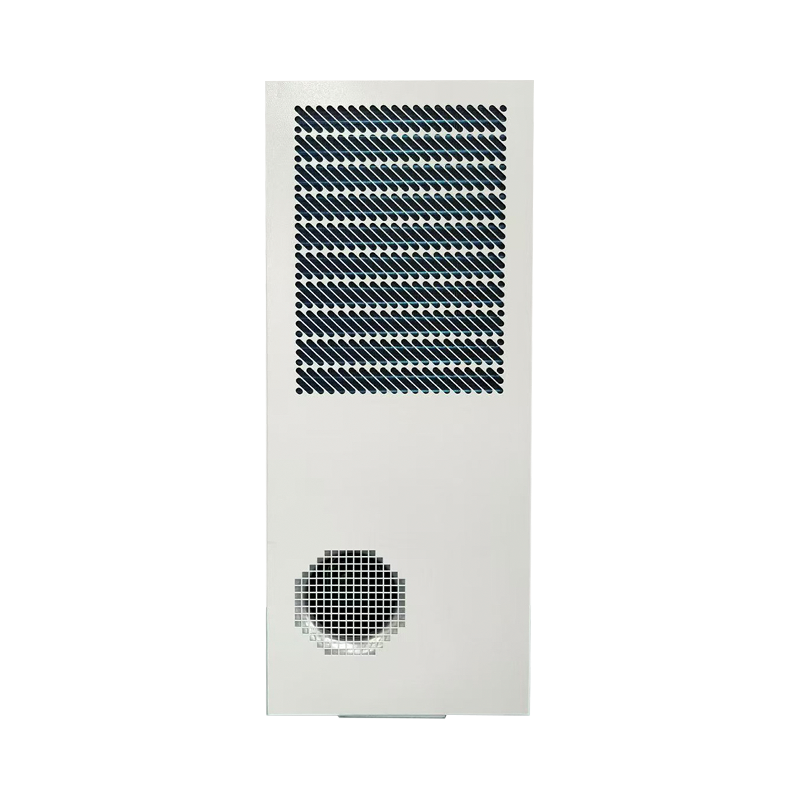
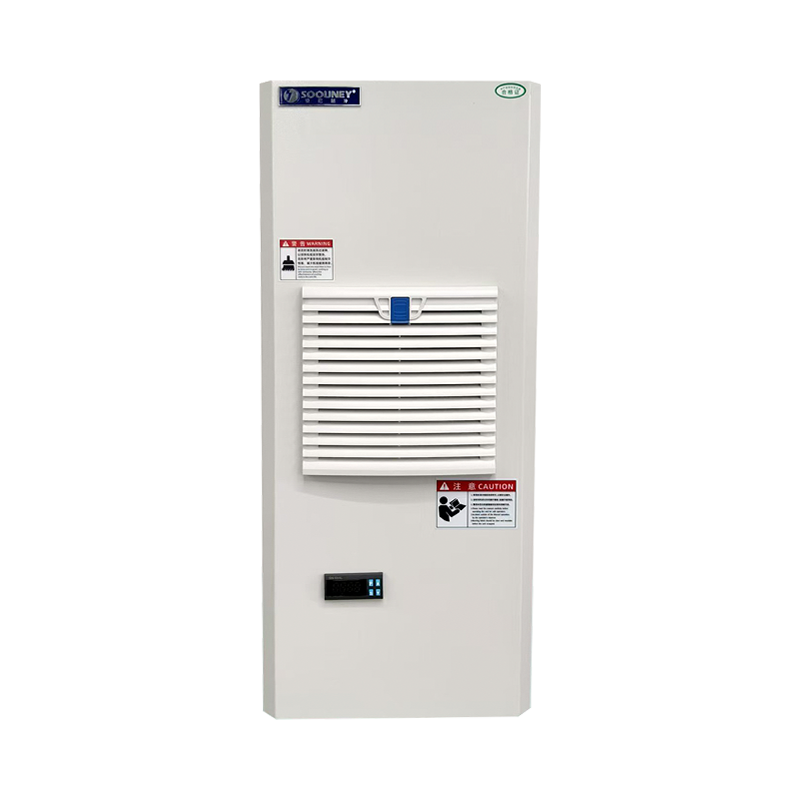
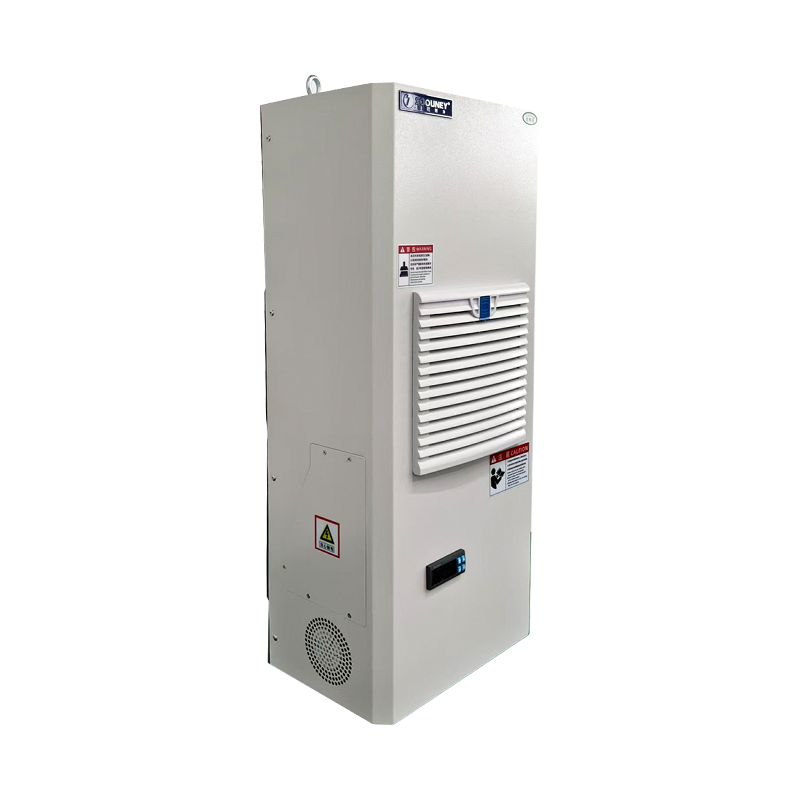
Indoor Cabinet Air Conditioner
Product Features
· Features temperature regulation and dehumidification functions to ensure optimal temperature and humidity conditions inside electrical control cabinets;
· Utilizes high-efficiency scroll rotary compressors for superior reliability, low energy consumption, and consistent performance;
· Prevents air-to-air heat exchange between cabinet interior and ambient air, maintaining clean internal air quality;
· High-volume, high-static-pressure centrifugal fan delivers substantial air circulation and efficient heat exchange;
· Rational intake and exhaust design prevents short-circuiting of internal airflow;
· Full-touchscreen controller with alarm and dehumidification functions enables real-time monitoring of unit operation;
· Compact size and lightweight construction facilitate easy installation, operation, and maintenance.
Product Advantage
· Premium components: All major parts of the electrical cabinet air conditioner utilize products from renowned domestic and international brands, with components certified to international and domestic quality standards. For instance, compressors are sourced from Shanghai Hitachi Electric, fans from Germany's EBM, while heat exchangers and sheet metal components are manufactured by certified, well-known domestic air conditioner suppliers;
· Advanced inspection methods and assembly line operations employ German Leybold halogen leak detectors and fully automatic pressure-holding instruments for real-time monitoring, ensuring product quality. High-precision laboratories rigorously guarantee all performance metrics of electrical cabinet air conditioners.
· Comprehensive service system: Our company has established multiple after-sales service centers nationwide to ensure timely protection of customer interests, more attentive service, and greater customer satisfaction.
· All major components are CE-certified and comply with EU RoHS requirements.
Application
Widely deployed across machine tools, data processing, telecommunications, finance, metallurgy, petrochemicals, construction materials, automotive, and defense sectors. Currently adopted by major domestic data processing centers and CNC machining facilities. The superior efficacy and performance of electrical cabinet air conditioners are gaining recognition from an increasing number of high-end domestic and international clients.
Selection Formula
△T = T0 - Ti
Qr = 5.5 × A × △T
Qt = 1.2 × (Qi + Qr)
T0: Ambient temperature
Ti: Internal cabinet temperature
△T: Temperature differential between cabinet interior and exterior
Qr: Heat transfer through cabinet structure
Qi: Heat generated within cabinet
A: Cabinet surface area
Qt: Required cooling capacity
Selection Example
Control cabinet surface area: 8m² (A=8m²), Ambient temperature: 35°C (T0=35°C), Total heat generated inside cabinet: 150W. To maintain an internal temperature of 28°C, the calculation method for selecting the electrical cabinet air conditioner is as follows:
△T=T0-Ti=35-28=7°C
Qr = 5.5 × A × ΔT = 5.5 × 8 × 7 = 308 W
Qt = 1.2 × (Q = Q1) = 1.2 × (180 + 308) = 585.6 W
Therefore, the air conditioner model SAS600 should be selected.


Derived from authentic European technology.
Ensuring the core technological prowess of our products.



Shanghai Soouney Refrigeration Equipment Co., Ltd. is a large-to-medium-sized high-tech enterprise within Shanghai's refrigeration sector, integrating research, development, production and sales. We are China Side Mounted Cabinet Air Conditioner Suppliers and Wholesale Side Mounted Cabinet Air Conditioner Company. Upholding the quality principles of 'integrity, quality, service and innovation', the company pursues a development philosophy centred on humanisation and technological advancement, driving product R&D and manufacturing with high starting points and stringent standards. It has now grown into a renowned brand in the domestic and international markets for cabinet air conditioners and industrial chillers, earning high recognition from industry professionals and a broad customer base. Rooted in the Chinese market, it provides reliable refrigeration solutions to clients worldwide. We focus on international trade and B2B business, providing tailored solutions to global clients. We ensure the smooth, stable, and long-term operation of your projects with a comprehensive research and development, production, sales, and after-sales service system. We have nearly 20 years of experience in providing one-stop solutions for overseas projects.

Site Area

Established

Employees
In industrial environments where electrical control cabinets operate continuously, thermal management is essential to ensure system stability and component longevity. The side mounted cabinet air conditioner is designed specifically to regulate temperature and humidity within enclosed cabinets, preventing overheating and condensation-related failures. These systems integrate temperature control and dehumidification functions, ensuring that sensitive electronic components remain within safe operating conditions.
A side-mounted enclosure cooling unit typically incorporates high-efficiency compressors and centrifugal fans to maintain consistent airflow and heat exchange. By isolating internal cabinet air from ambient air, contamination risks are minimized, which is particularly important in industries such as telecommunications, CNC machining, and data processing. As industrial requirements evolve, understanding installation configurations becomes critical, especially when comparing internal and external side-mount designs.
Internal and external side-mount installations refer to how the cooling unit is positioned relative to the cabinet wall. In an internal configuration, the evaporator section is placed inside the cabinet while the condenser remains partially external. Conversely, in an external installation, the majority of the cooling system is mounted outside the cabinet, with only airflow interfaces penetrating the enclosure.
The side mounted cabinet air conditioner in internal configurations prioritizes compact integration, making it suitable for controlled environments where space inside the cabinet is sufficient. External mounting, on the other hand, is designed for applications requiring minimal internal interference and easier maintenance access. Both configurations rely on rational intake and exhaust design to prevent airflow short-circuiting and ensure efficient heat dissipation.
The structural distinction between internal and external installations lies in component distribution and airflow pathways. Internal installations integrate more components within the cabinet, which may influence available space for electrical equipment. External installations keep most mechanical components outside, preserving internal volume while simplifying maintenance procedures.
| Aspect | Internal Installation | External Installation |
|---|---|---|
| Component Placement | Partially inside cabinet | Mostly outside cabinet |
| Space Utilization | Reduces internal space | Preserves internal space |
| Maintenance Access | Limited access | Easier access |
| Cooling Efficiency | Direct internal cooling | Indirect but stable cooling |
From a design perspective, both configurations use high-static-pressure centrifugal fans to ensure adequate air circulation. However, external systems often provide better accessibility for inspection and servicing, which is advantageous in high-duty industrial settings.
Thermal performance is a critical factor when selecting between installation types. A side mounted cabinet air conditioner is engineered to maintain a consistent temperature differential between the internal cabinet environment and ambient conditions. Internal installations may achieve faster localized cooling due to proximity, while external installations provide more stable long-term thermal control by minimizing internal heat accumulation.
The use of high-efficiency compressors ensures reliable operation under varying load conditions. Additionally, well-designed intake and exhaust systems prevent recirculation of hot air, which is essential for maintaining efficiency. Dehumidification functions further enhance reliability by preventing condensation, particularly in humid environments.
Different industries require tailored installation solutions. Internal side-mount configurations are often used in compact control cabinets where environmental exposure is minimal. External configurations are preferred in harsh environments such as metallurgy, petrochemical processing, and outdoor telecommunications installations.
The side-mounted cabinet cooling solution demonstrates versatility across multiple sectors, including finance, automotive manufacturing, and defense applications. External mounting is particularly beneficial where cabinet space is limited or where frequent maintenance is required.
Shanghai Soouney Refrigeration Equipment Co., Ltd. has developed adaptable installation designs to meet diverse industrial conditions. By integrating research, production, and application expertise, Shanghai Soouney Refrigeration Equipment Co., Ltd. ensures that both internal and external configurations meet strict operational requirements while maintaining consistent cooling performance.
Reliability is determined by component quality and manufacturing standards. A side mounted cabinet air conditioner utilizes premium components such as high-efficiency compressors and precision heat exchangers to ensure long-term operation. Advanced inspection methods, including leak detection and pressure monitoring, contribute to consistent product quality.
Shanghai Soouney Refrigeration Equipment Co., Ltd. emphasizes strict adherence to international design and testing standards. The company integrates advanced research and development processes with digital traceability systems to ensure each unit meets performance expectations. This comprehensive approach extends from component selection to final assembly, ensuring stable and reliable operation across various industrial environments.
Operational efficiency is closely linked to maintenance accessibility. Internal installations may require partial cabinet disassembly for servicing, which can increase downtime. External installations allow technicians to access components directly without interfering with internal equipment.
The industrial cabinet cooling unit in external configurations often features modular designs that simplify replacement and repair. This reduces maintenance time and enhances operational continuity. Furthermore, real-time monitoring systems provide alerts for abnormal conditions, allowing proactive maintenance.
Shanghai Soouney Refrigeration Equipment Co., Ltd. supports customers with a comprehensive service system, including multiple after-sales service centers. This ensures rapid response and consistent support, enhancing the overall reliability of both internal and external installation systems.
Choosing between internal and external side-mount installation depends on several practical factors. These include cabinet size, environmental conditions, maintenance requirements, and thermal load characteristics. A careful assessment ensures optimal system performance and longevity.
| Selection Factor | Recommended Installation Type |
|---|---|
| Limited internal space | External installation |
| Clean indoor environment | Internal installation |
| Frequent maintenance required | External installation |
| Compact system design | Internal installation |
The side mounted cabinet air conditioner should be selected based on a balanced evaluation of these factors. Proper selection ensures efficient heat removal, stable operation, and reduced lifecycle costs.
Internal and external side-mount installations each offer distinct advantages depending on application requirements. Internal configurations provide compact integration and direct cooling, while external configurations offer improved accessibility and flexibility. Both approaches rely on advanced design principles, high-quality components, and precise airflow management to ensure effective thermal control.
With continuous innovation and adherence to international standards, Shanghai Soouney Refrigeration Equipment Co., Ltd. continues to refine its solutions to meet evolving industrial demands. By understanding the differences between installation types, users can make informed decisions that enhance system performance and operational reliability.
External installation provides easier maintenance access and preserves internal cabinet space, making it suitable for complex or densely populated control systems.
Internal installation is ideal for clean indoor environments where compact integration and direct cooling are required.
Both installation types offer effective cooling, but internal systems may respond faster while external systems provide more stable long-term performance.
Proper intake and exhaust design prevents hot air recirculation, ensuring consistent heat exchange and maintaining optimal cooling efficiency.
Yes, especially external installations, which are designed to withstand challenging industrial conditions while maintaining reliable operation.
 Email: [email protected]
 Whatsapp: +86 18921753771
 Mobile Phone : +86-18921753771
 Telephone: +86-021-58223918
 No. 128 Hui'an Road, Fengxian District, Shanghai, China