
 English
 Español
Content
- 1 What Should Be Measured as Cooling Efficiency
- 2 Where the Efficiency Gain Actually Comes From
- 3 Air-Cooled Versus Water-Cooled: An Honest Comparison
- 4 Real-World Factors That Decide Whether Savings Materialize
- 5 Where Air-Cooled Chillers Deliver the Strongest Return
- 6 A Selection Checklist for Efficiency-Focused Buyers
- 7 The Bottom Line
Consider a plant manager who must add process cooling for a new injection molding line. The building has no cooling tower, the water authority charges heavily for make-up water, and maintenance is already stretched cleaning strainers and dosing chemicals on an existing water-cooled system. The direct answer is simple: an air-cooled chiller eliminates the water-side heat-rejection system entirely. Instead of pushing heat from refrigerant into a water loop and then into a cooling tower, it rejects heat straight to the outdoor air. That structural change lowers total electrical load, shortens the maintenance list, and often produces lower operating costs than a water-cooled plant that runs pumps and tower fans around the clock.
What Should Be Measured as Cooling Efficiency
Before comparing designs, it helps to define what efficiency means in an industrial cooling context. The machine-level figure is the energy efficiency ratio (EER), which is the useful cooling output in kilowatts divided by the compressor and controls input at a stated ambient condition. The system-level figure adds condenser fan power and any water-side equipment to the same equation. A chiller with an impressive full-load COP can still be an inefficient installation if it forces a fixed-speed water pump and a cooling tower fan to run for 8,000 hours per year. The fair way to compare air-cooled and water-cooled options is to calculate total site energy for the expected load profile, not just the compressor nameplate rating.
Where the Efficiency Gain Actually Comes From
One heat-rejection step instead of two
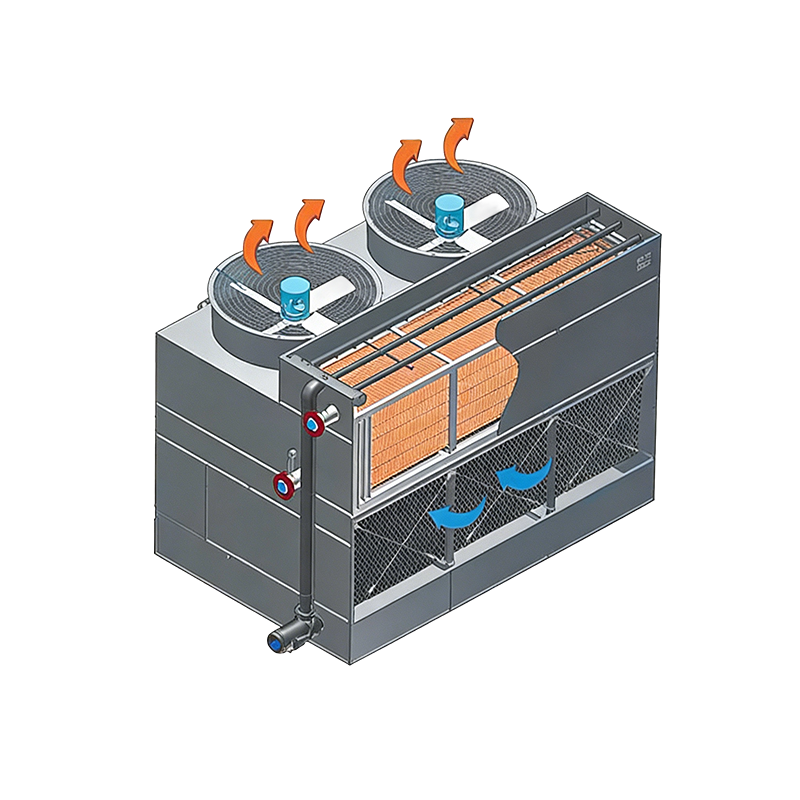
Water-cooled systems reject heat in two stages. The condenser transfers heat from refrigerant to condenser water, and a cooling tower then rejects that water's heat to the atmosphere. Each stage consumes energy: the condenser water pump must overcome pipe friction and tower height, while the tower fan moves a large volume of air. An air-cooled chiller compresses the process into a single stage. Hot refrigerant gas enters an air-cooled condenser, fans draw ambient air through the coil, and heat leaves the system directly. With the water loop gone, so are the pump, the tower fan, the make-up water valve, and the chemical dosing equipment.
The water loop that no longer exists
The practical effect shows up in the electricity bill. A condenser water loop is not free to operate. A typical installation serving a 300 kW cooling load includes a condenser pump in the range of 5 to 10 kW and a tower fan of similar size. Together those auxiliaries can add 10 to 20 percent to the compressor's energy draw across a cooling season. The same chiller with an air-cooled condenser replaces all of that with condenser fans that draw meaningful power only when ambient temperature and head pressure call for them. Even when the two machines have a similar full-load COP, the air-cooled solution frequently records less total site consumption.
Part-load matching that saves energy all year
Production loads change by shift, season, and product mix, and a fixed water loop does not change with them. That is why energy waste accumulates outside of peak conditions. Air-cooled chillers can be built with multiple refrigerant circuits, staged compressors, and variable-speed fans. When the process heat load drops, the control system switches off a circuit, unloads a compressor, or slows the fans to hold condensing pressure. This staged response prevents short-cycling and keeps the chilled water supply temperature stable, which is exactly what process engineers care about.
Air-Cooled Versus Water-Cooled: An Honest Comparison
The choice is not about which technology is better in the abstract; it is about which one fits the site. The table below summarizes the efficiency-related differences that should drive the decision.
| Factor | Air-cooled chiller | Water-cooled chiller |
|---|---|---|
| Heat rejection steps | Refrigerant to air in one stage | Refrigerant to water, then water to air through a tower |
| Auxiliary energy | Condenser fans only | Condenser pump, tower fan, and dosing equipment |
| Water consumption | None for normal operation | Continuous make-up and blowdown |
| Maintenance load | Coil cleaning and fan inspection | Tower fill cleaning, chemical dosing, pump seals |
| Full-load efficiency at high ambient | Falls as air temperature rises | Holds better because tower water stays near wet-bulb temperature |
| Part-load behavior | Staged circuits and variable-speed fans | Depends on tower control and pump strategy |
| Siting flexibility | Rooftop or yard, close to the process | Needs tower location, pipe runs, and water supply |
When a water-cooled system still makes sense
Water-cooled chillers earn their keep in large plants where the cooling load is heavy and continuous, where a tower already exists, and where high summer ambient temperatures reduce an air-cooled condenser's performance. In those conditions the compressor may draw a few percentage points less power, which can pay for the water-side equipment. The decision changes quickly if water quality is poor, the tower is undersized, or the water loop keeps running while the chiller is idle. An air-cooled system has no equivalent hidden loss.
Real-World Factors That Decide Whether Savings Materialize
Design ambient temperature
Air-cooled condensers are normally rated at a 35°C outdoor ambient condition in common industry references such as AHRI 550/590. Many industrial regions see summer peaks above 38°C. Because the air-cooled condenser rejects heat against that air temperature, the compressor works harder and capacity falls at the very moment the process may need it most. A responsible selection specifies the required capacity at the local summer design temperature and adds a small margin for coil fouling. This is the most common cause of undersized air-cooled installations.
Condenser coil condition and placement
Air that does not move through the coil cannot remove heat. Dust, lint, pollen, and exhaust from nearby drying equipment blanket the fins and raise condensing pressure. Coils with wider fin spacing and corrosion-resistant coatings are worth the extra cost in coastal or industrial environments. Placement matters just as much. A condenser inlet located close to a wall, or in a courtyard where hot discharge air recirculates, sees rising entering air temperature, and every additional degree of entering air temperature cuts both efficiency and capacity.
Compressor technology for the capacity range
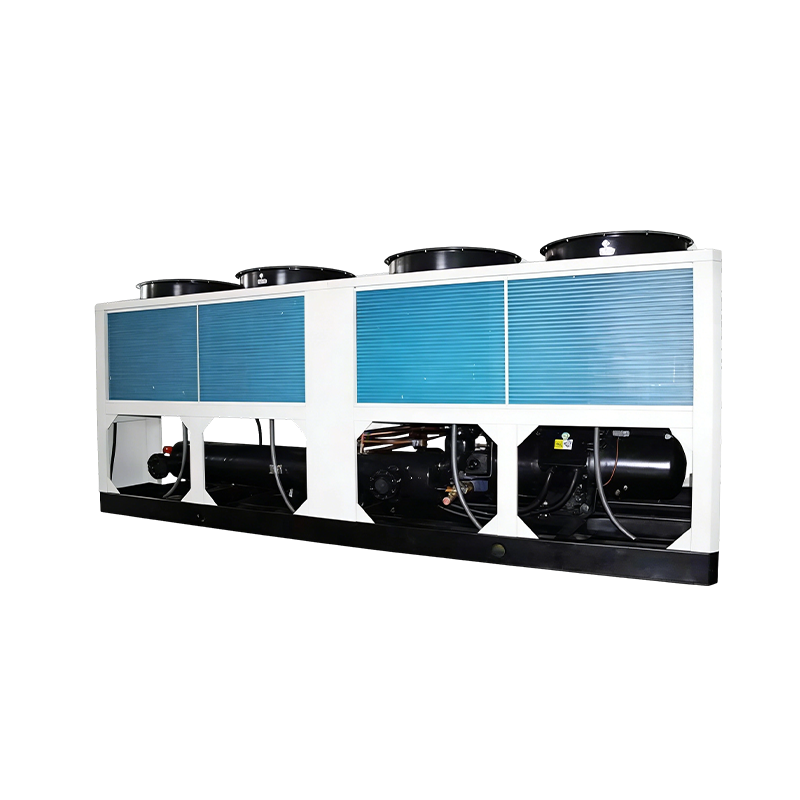
Smaller chillers generally use scroll compressors because they tolerate cycling and handle varying loads well. Above roughly 150 to 200 kW of cooling, screw compressors become the better match because they run continuously for long periods, offer multi-step or stepless capacity control, and hold high efficiency under steady load. For a plant running injection molding, chemical reactors, or laser sources, the practical choice is often an air-cooled screw chiller with single or dual compressors. Buyers who want to understand the boundary between machine types can read our comparison of an air-cooled screw chiller versus a centrifugal chiller.
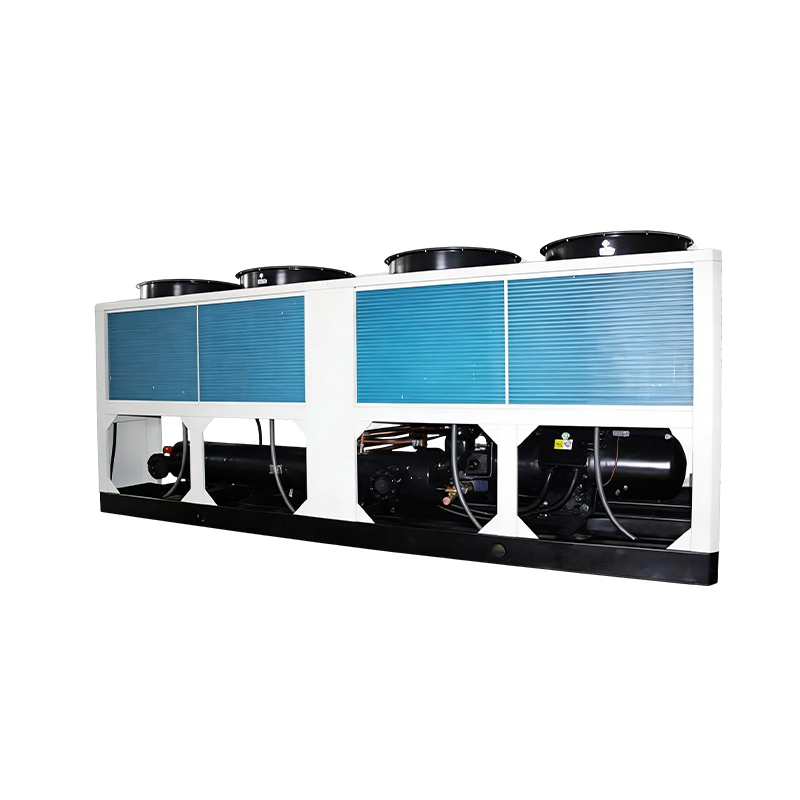 Wholesale Heat Cryogenic Single Compressor Double Compressors Air Cooled Screw CShanghai Soouney Refrigeration Equipment Co., Ltd. Is China Wholesale Heat Cryogenic Single Compressor Double Compressors Air Cooled Scre...View Product →
Where Air-Cooled Chillers Deliver the Strongest Return
The efficiency advantages of air-cooled designs turn into real savings under specific site conditions:
- Sites with no cooling tower, no space for one, or a water authority that restricts blowdown and make-up water.
- Plants where water treatment downtime interrupts production; air-cooled systems have no tower fill, no chemical dosing, and no water quality monitoring.
- Outdoor or rooftop installations where the condenser has unobstructed airflow and the chilled water lines run straight to the process area.
- Processes that need supply water below standard comfort-cooling temperatures and would otherwise require an elaborate water-side arrangement.
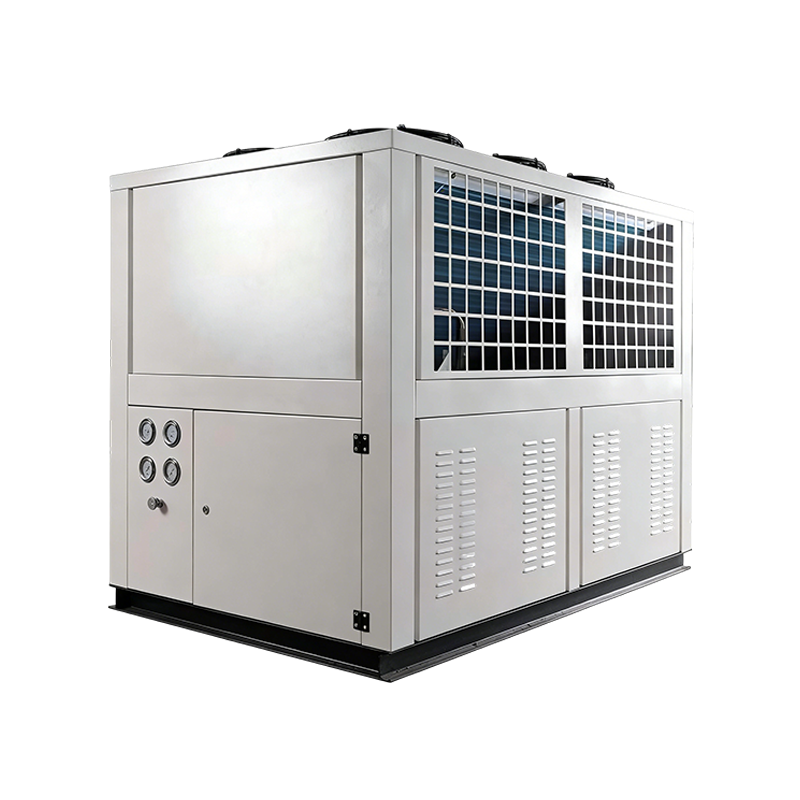
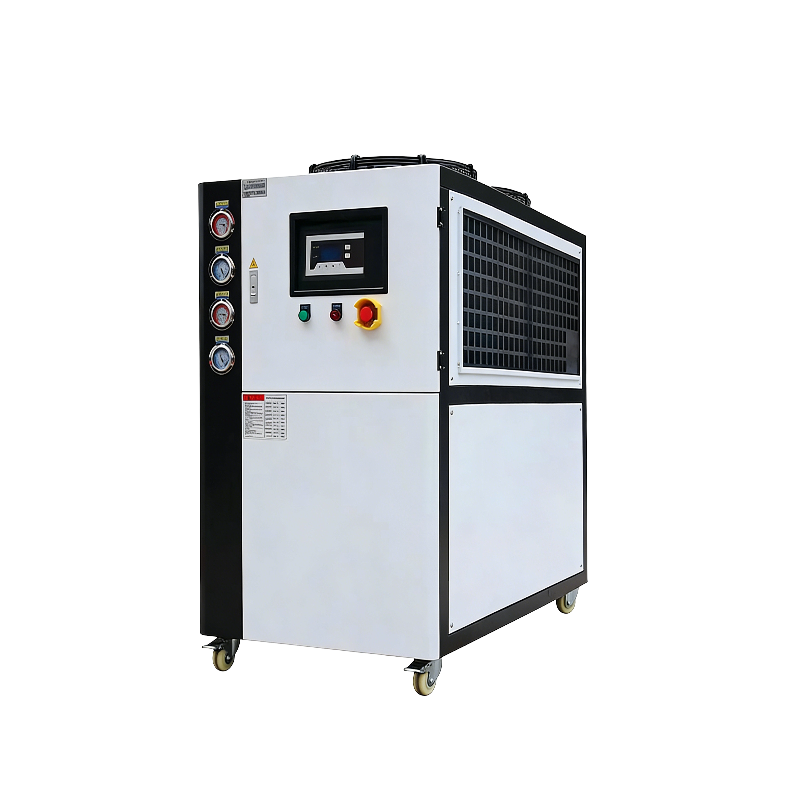
For processes that need lower supply temperatures, an ambient-temperature cryogenic air-cooled chiller extends the same single-stage heat rejection to lower setpoints without adding a separate water loop. Where floor space is limited, a compact air-cooled box chiller packages the compressor, evaporator, and condenser in one frame, which shortens installation time and reduces the external connections a contractor has to make on site.
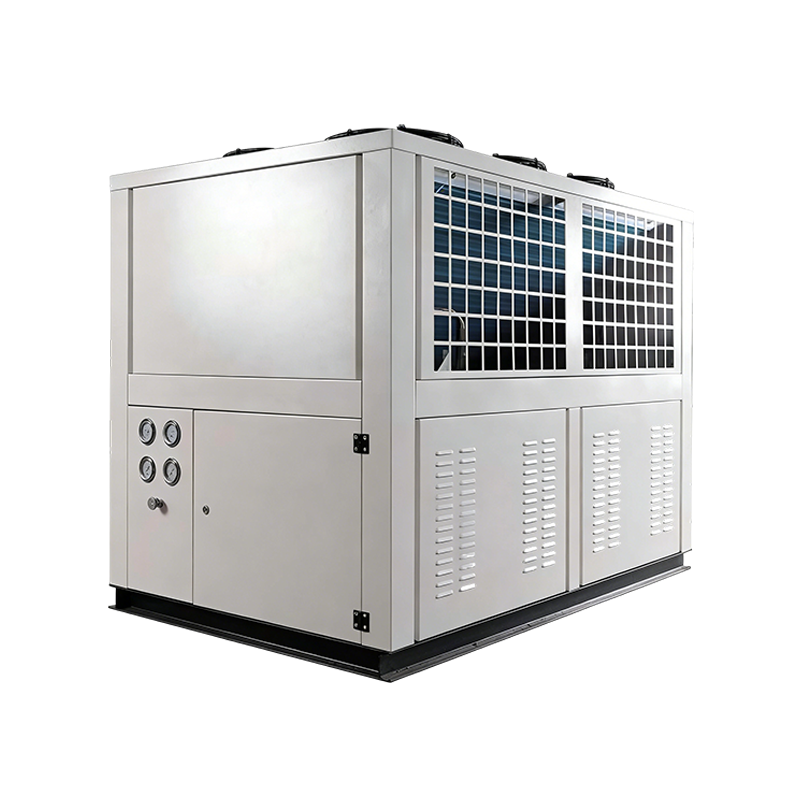 Wholesale Ambient Temperature Cryogenic Air Cooled Box Chiller Suppliers, CompanShanghai Soouney Refrigeration Equipment Co., Ltd. Is China Wholesale Ambient Temperature Cryogenic Air Cooled Box Chiller Suppliers, Com...View Product →
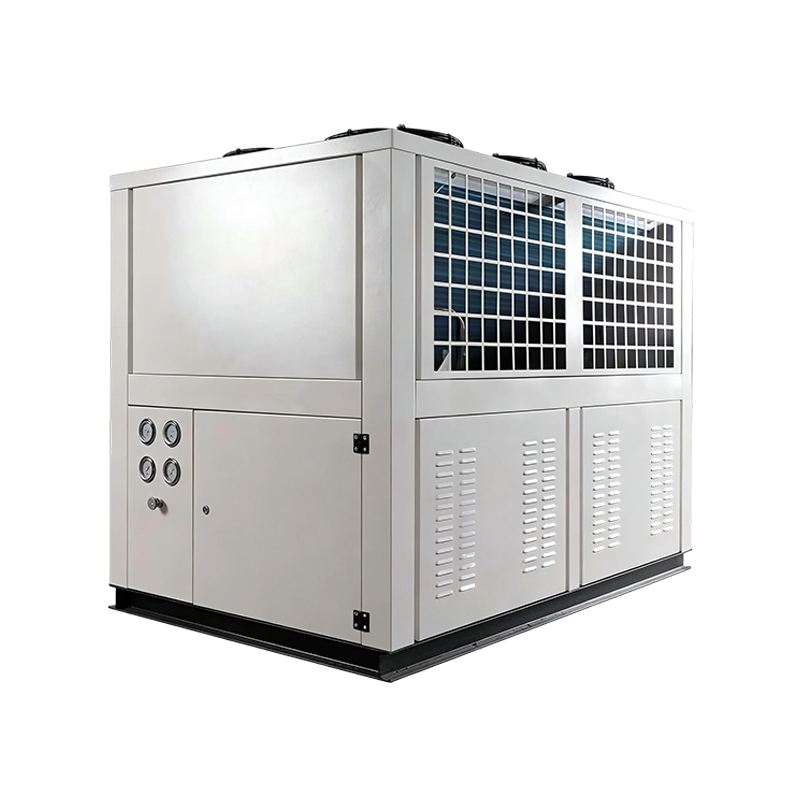 Wholesale Ambient Temperature Cryogenic Air Cooled Chiller Suppliers, Company, EShanghai Soouney Refrigeration Equipment Co., Ltd. Is China Wholesale Ambient Temperature Cryogenic Air Cooled Chiller Suppliers, Company...View Product →
Plants that need several hundred kilowatts of dependable process cooling should examine the full industrial chiller range, including screw-type packages for continuous duty.
A Selection Checklist for Efficiency-Focused Buyers
Use these six checks when comparing quotes. They separate a machine that performs in the field from one that only performs on paper.
- Verify the cooling capacity at the local summer design ambient temperature, not at the catalogue rating point.
- Compare EER and IPLV; the integrated part-load value is the better predictor of annual energy use.
- Count the refrigerant circuits and compressor steps; more steps mean finer part-load control.
- Check the condenser fan type; EC fans with pressure-based speed control save energy in cool weather.
- Inspect the physical layout, including coil clearance, service access, and a position that keeps hot discharge air away from the inlet.
- Confirm the required chilled water temperature range with the manufacturer before quoting, because low-temperature duties change compressor selection and evaporator sizing.
For a broader view of how cooling loads and site conditions interact across industries, read our guide on how to choose industrial chiller units for different industrial cooling applications.
The Bottom Line
An air-cooled chiller improves cooling efficiency for a practical reason: it removes the water loop with its pumps, fans, make-up water, and chemical treatment, and rejects heat directly to the ambient air. On top of that structural saving, staged compressors and variable-speed fans let the machine track the process load instead of cycling against a fixed water circuit. The remaining variables, local summer temperature, coil cleanliness, and realistic part-load evaluation, determine how much of that benefit appears on the monthly electricity bill.
Start the selection with the required capacity and the actual ambient profile of the site. From there, the decision is mostly about matching the right compressor and condenser configuration to the process.