
 English
 Español
Content
- 1 Why Air Cooled Chiller Efficiency Demands Attention
- 2 Read the Right Efficiency Metrics Before Changing Anything
- 3 Six Operational Measures That Cut Energy Use Immediately
- 4 When Retrofit Stops Making Sense, Upgrade the Equipment
- 5 Operate a Maintenance Schedule That Protects the Efficiency Gains
- 6 Frequently Asked Questions
A food processing plant in Shanghai saw its July electric bill jump 18% year over year. The air cooled chillers ran longer, cycled more often, and process water temperature kept drifting. Inspection found condenser coils caked with dust and a chilled water setpoint untouched since commissioning. That combination alone can add 10% to 20% to chiller plant energy use. This guide explains how to improve air cooled chiller energy efficiency with operational corrections, targeted equipment upgrades, and a maintenance schedule that protects the gains.
Why Air Cooled Chiller Efficiency Demands Attention
Chiller plants are the largest electricity consumer in most industrial facilities, and air cooled chillers carry a structural efficiency penalty of 10% to 15% compared with equivalent water cooled systems.
Air cooled chillers reject heat directly to ambient air, so condensing temperature follows the dry-bulb temperature instead of the lower wet-bulb temperature available to cooling towers. Every 1°C rise in condensing temperature increases compressor power consumption by roughly 2%. On a 250 kW unit running 4,000 hours per year, a permanent 5% efficiency loss wastes about 50,000 kWh annually, enough to power five average households.
The practical consequence is that small operating problems, not equipment age, drive most efficiency loss. Coil fouling, refrigerant undercharge, and control misconfigurations appear before any mechanical failure occurs. Identifying these issues costs little and pays back in weeks.
Read the Right Efficiency Metrics Before Changing Anything
You cannot improve what you do not measure, and the useful efficiency number for an air cooled chiller is not the nameplate EER but the operating profile captured by IPLV or kW/ton.
EER and COP describe performance at a single full-load point. Real chiller plants run near full load only a few hundred hours per year; most hours sit in part load. IPLV weights performance across a typical part-load profile, while kW/ton tracks actual operating cost because it converts directly to energy spend.
| Metric | What it measures | Typical air cooled range | Best used for |
| EER | Cooling output in BTU per watt-hour | 9.0-12.0 | Full-load comparison |
| COP | Cooling output divided by electrical input | 2.6-3.5 | Thermodynamic comparison |
| IPLV | Weighted average across part-load profile | 12.0-17.0 | Part-load operation |
| kW/ton | Input kilowatts per ton of refrigeration | 1.1-1.6 | Operating cost tracking |
Track kW/ton daily and compare it with the commissioned baseline. If the value climbs more than 8%, the cause is usually coil fouling, refrigerant loss, or setpoint drift.
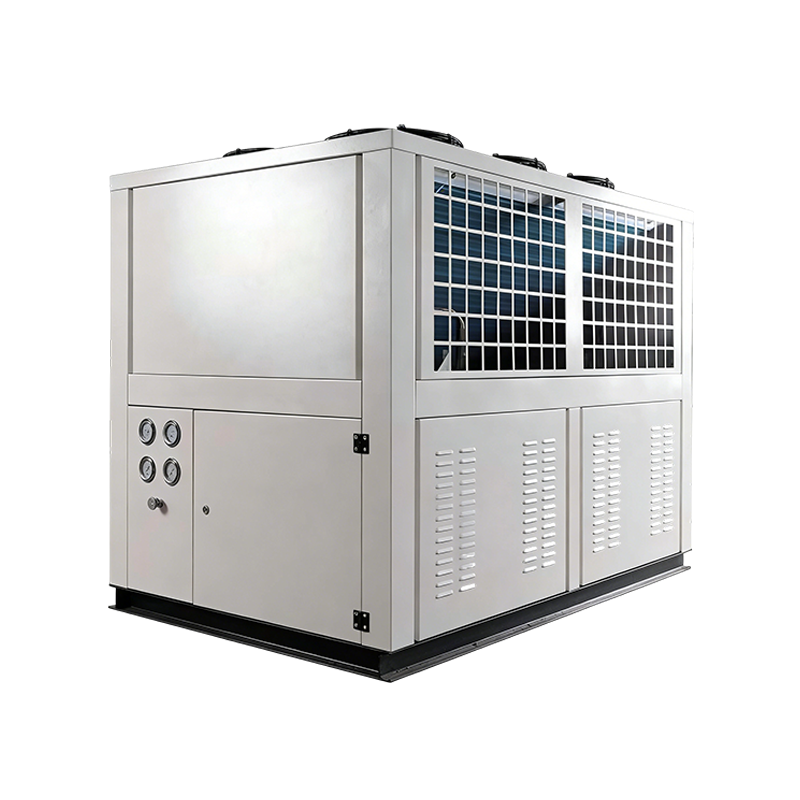
Well-built modern units are engineered against these metrics. For example, an ambient temperature cryogenic air cooled chiller from Shanghai Soouney Refrigeration Equipment Co., Ltd. is designed to hold stable performance under high ambient conditions, which keeps the measured EER close to its nameplate value.
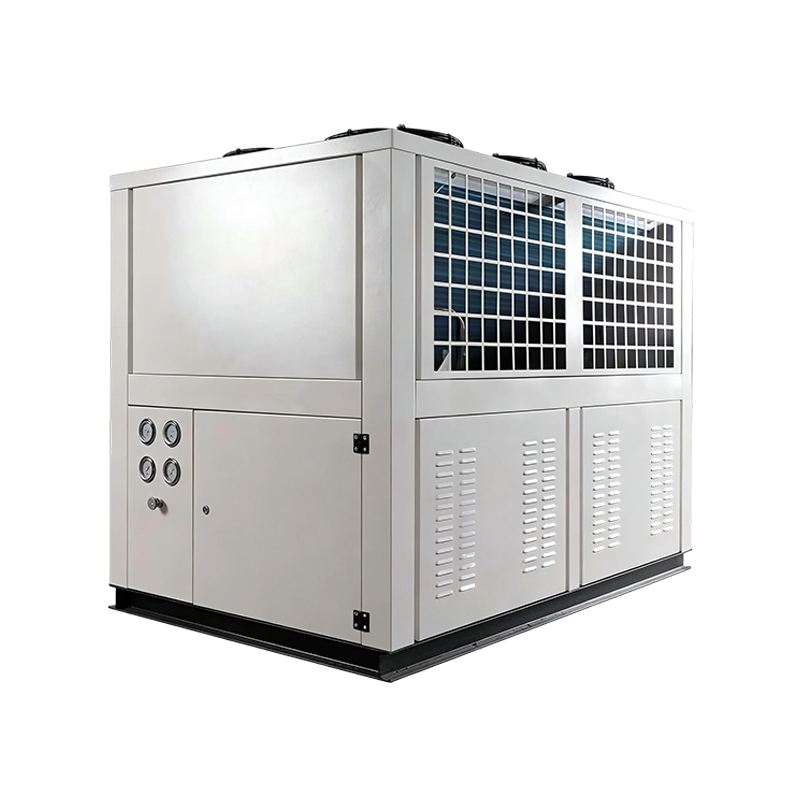 Wholesale Ambient Temperature Cryogenic Air Cooled Chiller Suppliers, Company, EShanghai Soouney Refrigeration Equipment Co., Ltd. Is China Wholesale Ambient Temperature Cryogenic Air Cooled Chiller Suppliers, Company...View Product →
Six Operational Measures That Cut Energy Use Immediately
The fastest efficiency gains come from operational corrections, not capital purchases. On a typical air cooled chiller, these six measures deliver between 5% and 30% savings depending on current operating conditions.
-
Clean the condenser coils first
Fouled coils raise condensing pressure and force the compressor to work harder. Restoring coil heat transfer with a proper wash can improve efficiency by 10% to 15%. In dusty industrial zones, inspect coils monthly and clean at least twice a year.
-
Raise the chilled water setpoint to the highest acceptable value
Each 1°C increase in chilled water temperature reduces chiller energy use by 2% to 3% if the process accepts the warmer water. One plant raising its setpoint from 7°C to 8°C cut chiller energy consumption by about 8% over a season.
-
Add variable speed drives to condenser fans
Fixed-speed fans cycle on and off, causing pressure swings and compressor cycling. Variable speed drives modulate fan speed against ambient temperature, typically cutting fan energy by 20% to 30% while stabilizing head pressure.
-
Recover heat rejected by the condenser
An air cooled chiller rejects 15% to 25% more heat than the cooling effect it delivers. A desuperheater or heat recovery loop can preheat process water or building heating water, turning a waste stream into usable energy.
-
Balance water flow and eliminate over-pumping
Most chilled water circuits are over-pumped by 10% to 20% because control valves were oversized during design. Trimming the pump impeller or rebalancing valves reduces pump power with minimal impact on load control.
-
Verify refrigerant charge and superheat
Undercharge and overcharge both degrade efficiency. A 10% refrigerant undercharge reduces capacity by 6% to 9% and increases energy per ton by as much as 6%. Log superheat and subcooling at least quarterly.
When Retrofit Stops Making Sense, Upgrade the Equipment
If the chiller is older than 15 years, runs on a discontinued refrigerant, or shows steady efficiency decay despite clean coils and correct charge, replacement usually beats another round of retrofits.
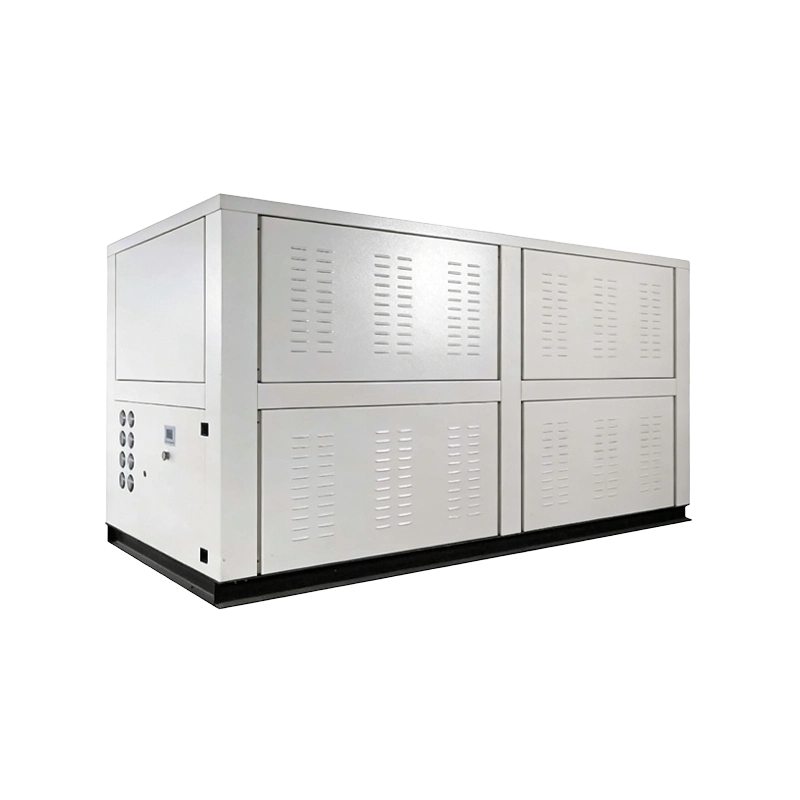
Modern air cooled chillers with scroll or screw compressors, microchannel coils, and variable-speed fans reach IPLV values 20% to 30% better than a 15-year-old fixed-speed unit. In a high-load plant, the payback on replacement typically lands between 3 and 5 years.
Before choosing a replacement, work through a guide to sizing industrial chillers for different cooling applications, because oversizing destroys efficiency even with a modern unit.
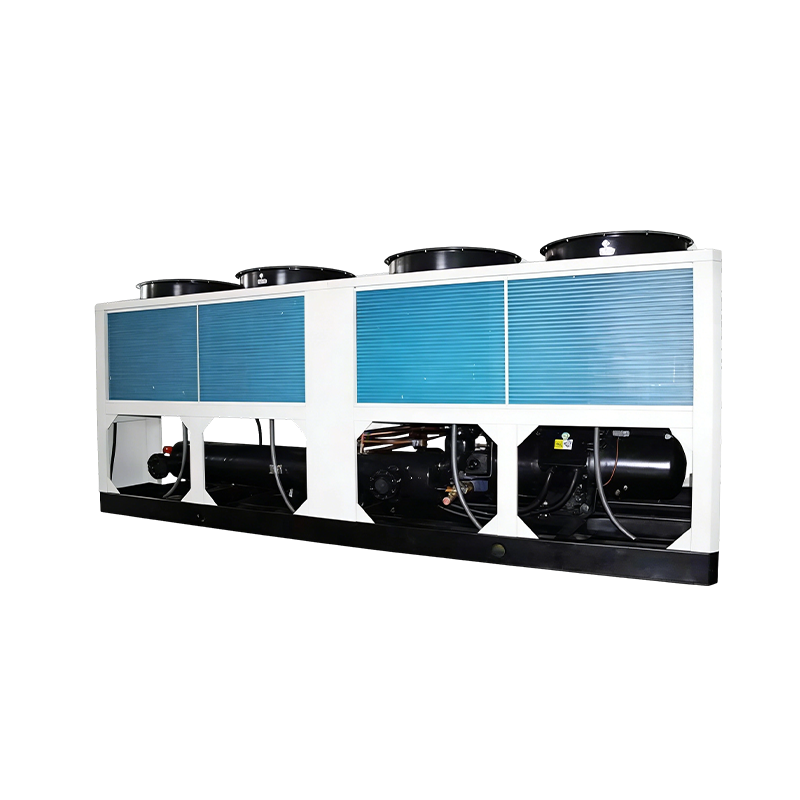
For continuous loads above roughly 100 kW, a heat-cryogenic air cooled screw chiller with dual compressors is a strong choice: each compressor stages independently, so part-load efficiency stays high when demand drops. An air cooled screw chiller versus centrifugal chiller trade-off analysis helps confirm which configuration fits your load profile.
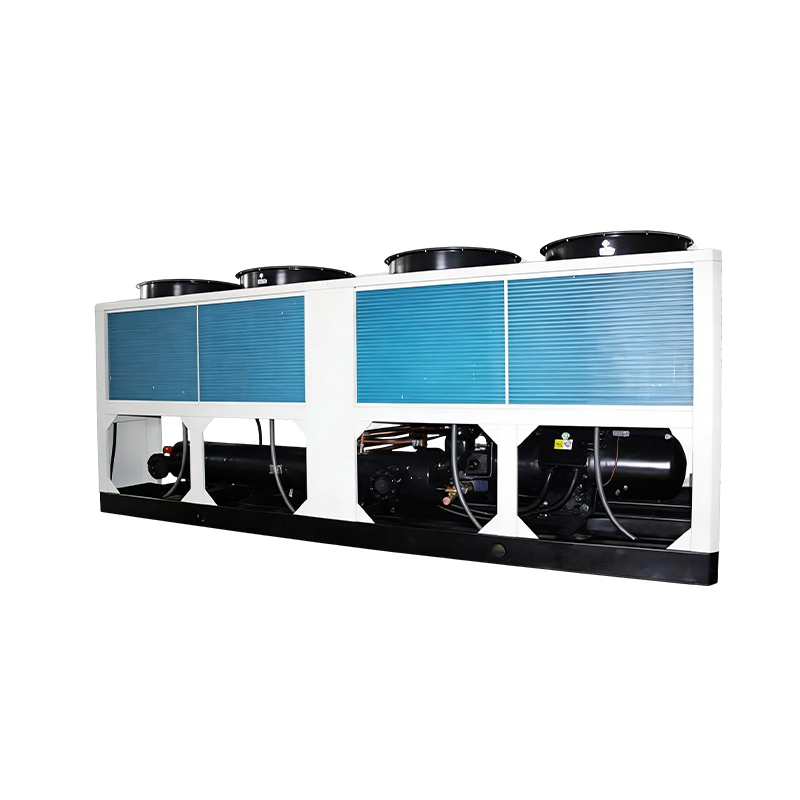 Wholesale Heat Cryogenic Single Compressor Double Compressors Air Cooled Screw CShanghai Soouney Refrigeration Equipment Co., Ltd. Is China Wholesale Heat Cryogenic Single Compressor Double Compressors Air Cooled Scre...View Product →
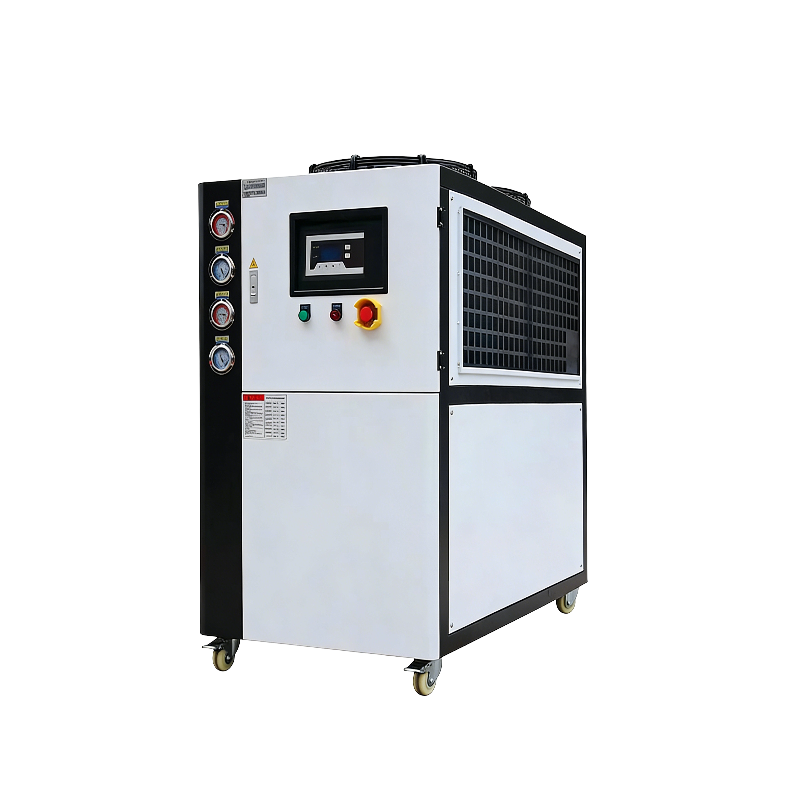
For compact process lines with limited floor space, an ambient temperature cryogenic air cooled box chiller integrates the pump, tank, and controls into one frame, which reduces secondary pumping losses and shortens commissioning time.
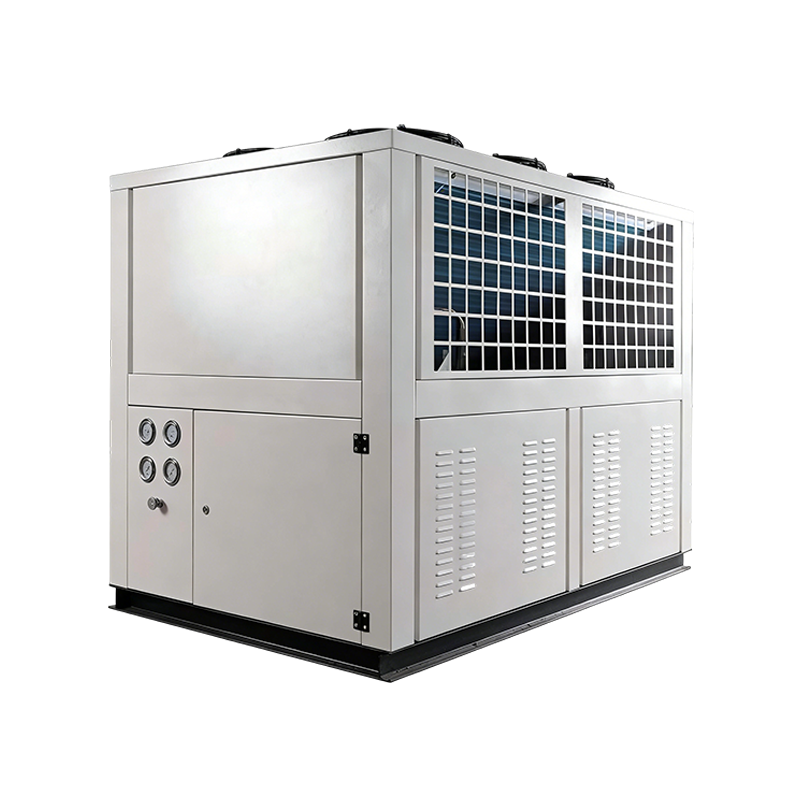 Wholesale Ambient Temperature Cryogenic Air Cooled Box Chiller Suppliers, CompanShanghai Soouney Refrigeration Equipment Co., Ltd. Is China Wholesale Ambient Temperature Cryogenic Air Cooled Box Chiller Suppliers, Com...View Product →
Operate a Maintenance Schedule That Protects the Efficiency Gains
The savings from any upgrade disappear within months if the maintenance schedule does not protect them.
Preventive maintenance on an air cooled chiller is cheap relative to the energy it protects. A quarterly inspection that catches coil fouling or charge loss before it compounds is one of the highest-return activities in a plant.
| Task | Frequency | Efficiency impact |
| Condenser coil cleaning | Quarterly to semi-annually | Restores up to 15% |
| Refrigerant charge and superheat check | Quarterly | Prevents up to 6% loss |
| Fan and bearing inspection | Quarterly | Avoids 5-10% drift |
| Water flow and valve verification | Semi-annually | Cuts pump waste 5-10% |
| Performance log review | Annually | Detects 3-5% creep |
Frequently Asked Questions
How much energy can condenser coil cleaning save on an air cooled chiller?
On a fouled unit, restoring coil heat transfer can reduce energy consumption by 10% to 15%. Plants in dusty environments that clean twice per year typically recover 8% to 12%, with cleaning costs paid back in weeks.
Should I raise the chilled water setpoint on my air cooled chiller?
Only if the process accepts it. Every 1°C increase in chilled water temperature cuts chiller energy use by 2% to 3%. Confirm the maximum allowable process water temperature with production engineers before changing the setpoint.
Are variable speed drives worth the investment on condenser fans?
For a chiller running more than 3,000 hours per year, yes. Variable speed drives cut fan energy by 20% to 30%, stabilize head pressure, and reduce compressor cycling. Typical payback is two to three years.
How often should an air cooled chiller be serviced?
Inspect condenser coils and refrigerant charge at least quarterly. Dusty industrial sites require monthly coil inspection. Log performance data annually and compare it against the commissioned baseline to catch slow efficiency drift.