
 English
 Español
Content
- 1 1. Introduction: What is a Cabinet Air Conditioner Unit
- 2 2. Working Principle of Cabinet Air Conditioner Unit
- 3 3. Main Types of Cabinet Air Conditioner Units
- 4 4. Application Scenarios of Industrial Control Cabinet Cooling
- 5 5. How to Select a Suitable Cabinet Air Conditioner Unit
- 6 6. Installation Guidelines
- 7 7. Maintenance and Service Life Management
- 8 8. Common Problems and Solutions
- 9 9. Energy Optimization and System Collaboration
- 10 10. Intelligent Development Trends: Cabinet Thermal Management System
- 11 11. Conclusion
1. Introduction: What is a Cabinet Air Conditioner Unit
In modern industrial automation and electrical control systems, equipment operational stability increasingly depends on environmental temperature control. Especially with the continuous integration of high-density electronic components, heat dissipation inside control cabinets has become a key factor affecting system lifespan and reliability.
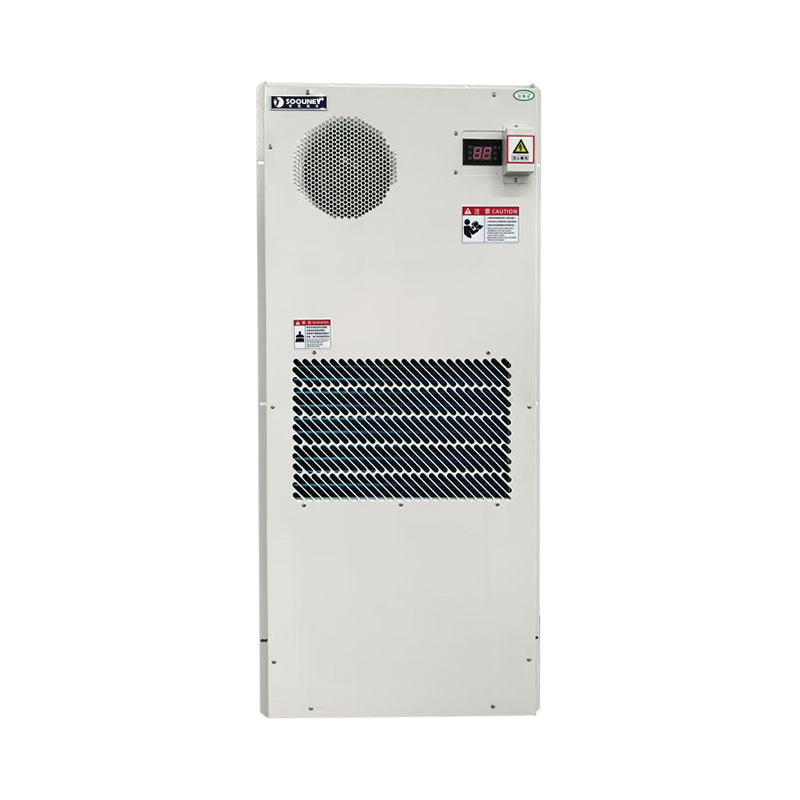
A Cabinet Air Conditioner Unit is a professional thermal management device developed in response to this demand. It is mainly used to provide stable cooling for electrical control cabinets, industrial enclosures, and communication equipment boxes. Through active refrigeration, it continuously removes internal heat, ensuring equipment operates within a safe temperature range.
Unlike traditional fan-based cooling or natural ventilation, a Cabinet Air Conditioner Unit belongs to a closed-loop thermal management system. It can operate reliably in high-temperature, high-humidity, and even dusty environments. Therefore, it is widely used in power systems, rail transportation, automation production lines, and outdoor communication equipment.
In an electrical cabinet cooling system, the Cabinet Air Conditioner Unit typically plays the central heat exchange role and is a critical component ensuring long-term system stability.
2. Working Principle of Cabinet Air Conditioner Unit
The working principle of a Cabinet Air Conditioner Unit is similar to a traditional air conditioner, based on a vapor-compression refrigeration cycle, but optimized for industrial applications.
A typical system includes: a compressor, a condenser, an evaporator, an expansion device, and a fan system.
The process is as follows:
The compressor compresses refrigerant into high-temperature, high-pressure gas. The gas then enters the condenser, where it is cooled into a liquid through external air heat exchange. The liquid refrigerant passes through an expansion device, reducing pressure before entering the evaporator. During evaporation, it absorbs heat from inside the cabinet, achieving cooling. Finally, the fan circulates cooled air back into the enclosure.
This process fully isolates internal and external air, which is fundamentally different from fan cooling systems. Fans only circulate air without reducing temperature, while a Cabinet Air Conditioner Unit actively lowers it.
In a cabinet thermal management system, it is often integrated with temperature controllers, sensors, and alarm systems to achieve automated thermal regulation.
3. Main Types of Cabinet Air Conditioner Units
Based on installation method, structure, and application scenarios, Cabinet Air Conditioner Units can be divided into several types.
3.1 Wall-mounted Cabinet Air Conditioner Unit
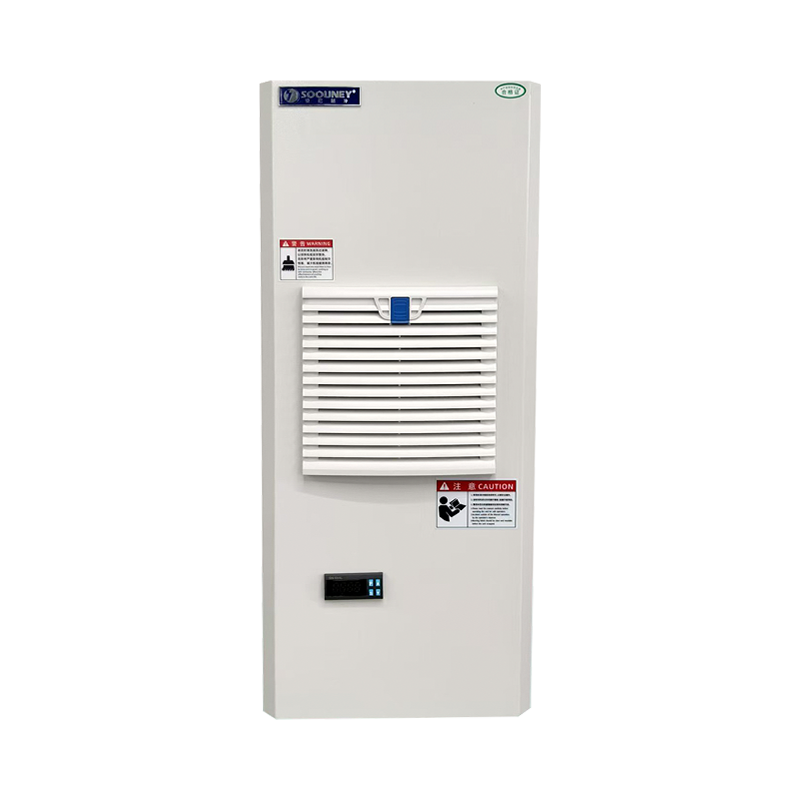
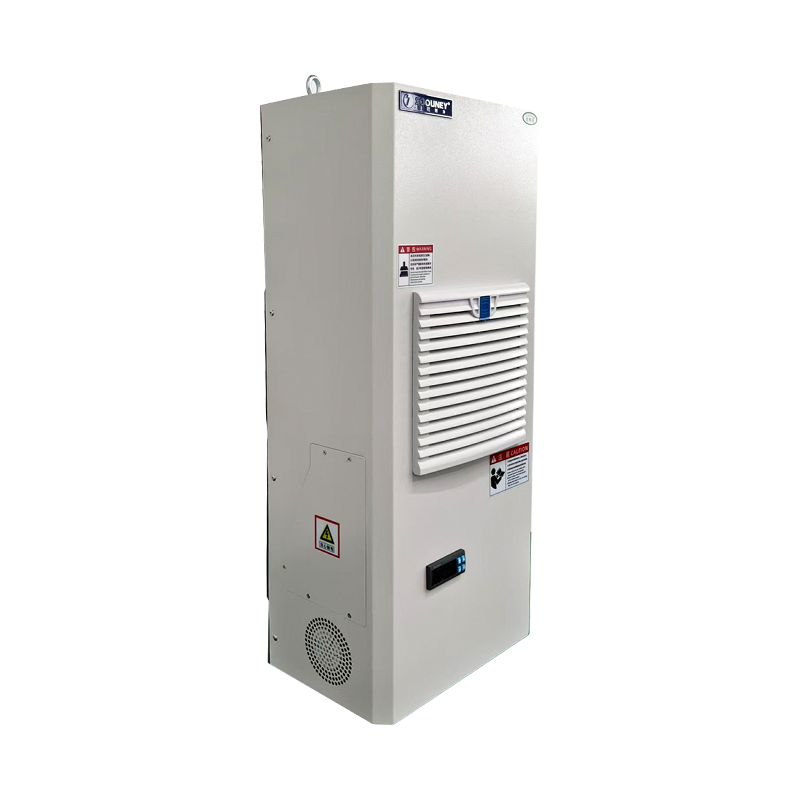
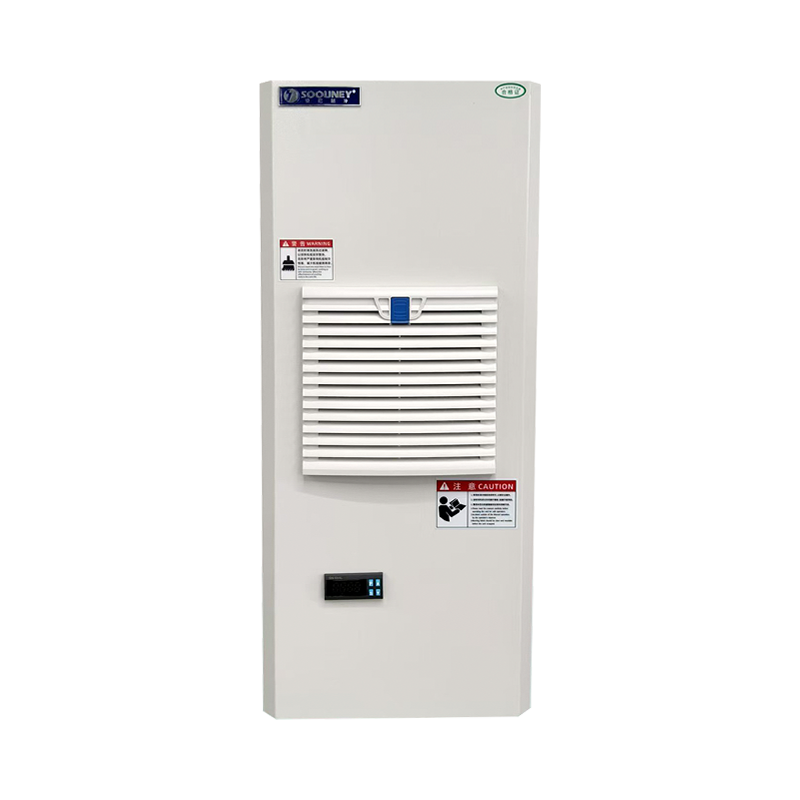
This is the most common type, installed on the side or rear wall of a cabinet. It is compact and flexible, suitable for small to medium control cabinets.
3.2 Top-mounted enclosure air conditioner unit
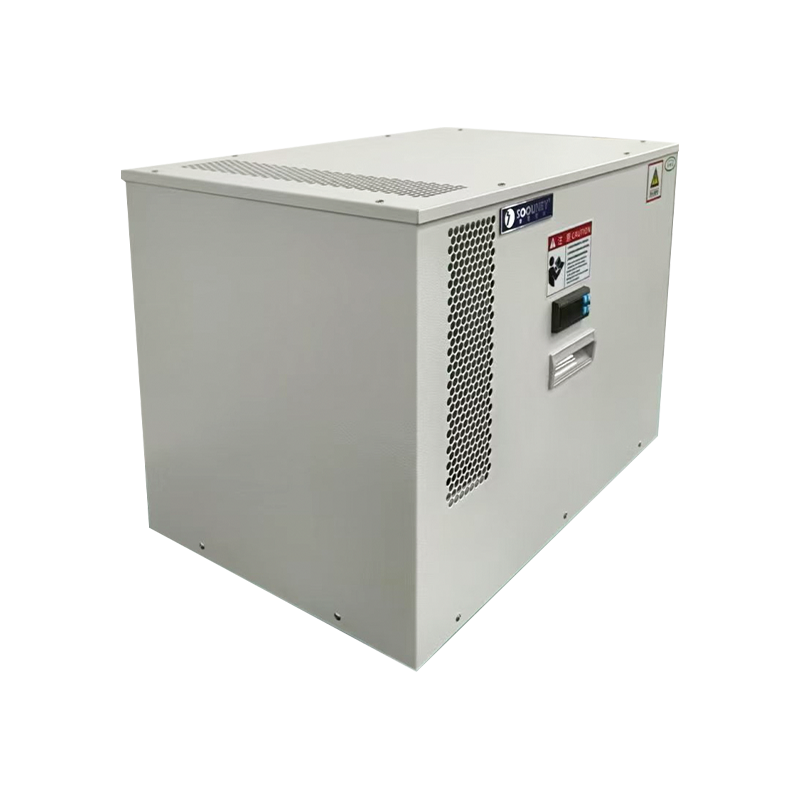
Installed on the top of the cabinet, this type saves side space and is suitable for enclosures where vertical space is sufficient. It improves cooling efficiency by utilizing natural hot air rising behavior.
3.3 Integrated vs Split Structure
Integrated units combine compressor and cooling components in one housing, simplifying installation and maintenance. Split systems separate heat-generating and cooling sections, making them suitable for high-load or special environments.
Table 1: Comparison of Cabinet Air Conditioner Unit Types
| Type | Installation | Advantages | Applications |
| Wall-mounted | Side installation | Easy installation, compact structure | Small and medium control cabinets |
| Top-mounted | Top installation | High cooling efficiency | Outdoor or sealed environments |
| Integrated | All-in-one | Easy maintenance | General industrial environments |
| Split type | Separated structure | High cooling capacity | High thermal load systems |
4. Application Scenarios of Industrial Control Cabinet Cooling
Industrial Control Cabinet Cooling has become a fundamental requirement in modern industrial systems. Cabinet Air Conditioner Units play a key role across multiple industries.
4.1 Automation Production Lines
PLC systems, inverters, and control modules generate continuous heat. Without proper cooling, overheating may cause malfunctions or shutdowns. Cabinet Air Conditioner Units ensure stable temperature control and production continuity.
4.2 Power Systems and Distribution Cabinets
Power distribution cabinets operate under high load conditions. The temperature sensitivity of components requires reliable cooling to prevent insulation aging or failure.
4.3 Communication and Network Equipment
Base stations and server cabinets require strict thermal control. A stable thermal management system ensures data transmission reliability and equipment longevity.
4.4 Outdoor Industrial Environments
In high-temperature, dusty, or humid environments, traditional cooling methods are ineffective. Cabinet Air Conditioner Units provide sealed and stable operation in such conditions.
5. How to Select a Suitable Cabinet Air Conditioner Unit
Choosing the right Cabinet Air Conditioner Unit requires multiple considerations beyond cooling capacity alone.
5.1 Cooling Capacity and Heat Load Matching
The cooling capacity must match the heat generated inside the cabinet. Under-sizing leads to overheating, while over-sizing causes energy waste.
5.2 Protection Rating (IP Rating)
In industrial environments, IP54 or higher is recommended to prevent dust and moisture ingress.
5.3 Environmental Temperature Conditions
High-temperature regions require units with enhanced thermal resistance, especially for outdoor enclosure air conditioner unit applications.
5.4 Installation Space and Structure
Available space determines whether wall-mounted or top-mounted structures are suitable.
Table 2: Key Selection Parameters
| Parameter | Description | Recommended Range |
| Cooling capacity | Cooling performance | Based on heat load calculation |
| IP rating | Protection level | IP54 or higher |
| Operating temperature | Environmental range | -20°C to 55°C |
| Noise level | Operational noise | ≤ 70 dB |
6. Installation Guidelines
Proper installation significantly affects performance. Even a well-selected Cabinet Air Conditioner Unit may perform poorly if installed incorrectly.
The installation position should avoid heat sources and ensure proper airflow. The condenser side must be fully isolated from internal cabinet air. Power stability and grounding must also be ensured.
Airflow design should follow “bottom-in/top-out” or side circulation principles to prevent heat accumulation.
6.1 Importance of Airflow Design
The performance of a Cabinet Air Conditioner Unit depends heavily on internal airflow organization.
Ideal airflow ensures:
- Cooling air covers all heat-generating components
- Hot air returns efficiently to the evaporator area
- No localized heat accumulation zones
A common mistake is placing the unit based on convenience rather than thermal distribution, which leads to inefficient cooling.
6.2 Condensation Management
Condensation is often overlooked but critical.
Improper drainage may cause:
- Water backflow into the cabinet
- Moisture damage to electronics
- Long-term corrosion of circuits
Proper design requires continuous drainage slope and avoidance of water traps.
6.3 Electrical Safety Requirements
Cabinet Air Conditioner Units operate at relatively high power and must follow industrial electrical standards.
Requirements include:
- Independent power supply circuit
- Reliable grounding
- Overload and short-circuit protection
- Isolation between control and main circuits
7. Maintenance and Service Life Management
Long-term operation requires systematic maintenance strategies.
7.1 Cleaning Importance
Dust accumulation significantly reduces efficiency.
Consequences include:
- Reduced heat exchange efficiency
- Continuous compressor overload
- Increased energy consumption
Recommended cleaning intervals:
- General environments: 3–6 months
- Dusty environments: 1–3 months
7.2 Refrigeration System Inspection
Refrigerant leakage is a common issue.
Symptoms include:
- Reduced cooling performance
- Frequent compressor cycling
- Lower temperature difference
Regular pressure checks are necessary.
7.3 Fan and Compressor Management
Key components require monitoring:
- Fan bearing condition
- Compressor start frequency
- Vibration and noise levels
Table 3: Maintenance Schedule
| Component | Maintenance | Interval |
| Condenser | Cleaning | 1–6 months |
| Fan | Lubrication & noise check | 6 months |
| Refrigeration system | Pressure inspection | 12 months |
| Drainage system | Blockage cleaning | 3 months |
8. Common Problems and Solutions
8.1 No Cooling or Weak Cooling
Possible causes:
- Refrigerant leakage
- Condenser blockage
- Compressor failure
- Excessive ambient temperature
Solutions include system inspection, cleaning, and load evaluation.
8.2 Excessive Noise
Causes:
- Fan bearing wear
- Compressor vibration
- Loose installation structure
8.3 High Energy Consumption
Causes:
- Dirty condenser
- High ambient temperature
- Incorrect unit sizing
9. Energy Optimization and System Collaboration
Modern systems integrate Cabinet Air Conditioner Units into broader thermal management systems.
9.1 Temperature Control Integration
Automatic control allows:
- Startup/shutdown based on temperature thresholds
- Dynamic cooling adjustment
- Reduced energy consumption
9.2 Multi-System Cooling Coordination
Often combined with:
- Ventilation systems
- Heat exchangers
- Structural thermal design
9.3 Optimization Strategies
- Improve cabinet sealing
- Optimize internal layout
- Use zoned cooling design
- Apply variable-speed compressors
10. Intelligent Development Trends: Cabinet Thermal Management System
10.1 Remote Monitoring
Modern systems provide:
- Real-time temperature monitoring
- Remote status tracking
- Alarm notifications
- Historical data analysis
10.2 Predictive Maintenance
Data analysis enables early detection of:
- Compressor degradation
- Fan wear
- Cooling efficiency decline
10.3 Energy Optimization Algorithms
Advanced systems include:
- Adaptive cooling control
- Optimized startup strategies
- Industrial energy system integration
Table 4: Traditional vs Intelligent Systems
| Feature | Traditional Unit | Intelligent System |
| Control method | Manual/simple control | Data-driven automation |
| Energy efficiency | Lower efficiency | Optimized efficiency |
| Maintenance | Periodic inspection | Predictive maintenance |
| Data capability | None | Full monitoring system |
11. Conclusion
The Cabinet Air Conditioner Unit is no longer just a cooling device; it is a critical component ensuring the stable operation of modern industrial systems.
From electrical cabinet cooling systems to advanced cabinet thermal management systems, its role continues to evolve from a single-function device into an intelligent system node.
Whether in automation production lines, power systems, or communication infrastructure, it ensures safe and stable operation of critical equipment.
With increasing industrial complexity and stricter energy efficiency requirements, Cabinet Air Conditioner Units will continue to develop toward intelligence, high efficiency, and system integration, becoming an indispensable part of industrial infrastructure.