
 English
 Español
Content
- 1 SEC. 01Why Chillers Are Essential for Modern Manufacturing
- 2 SEC. 02Applications in Manufacturing Industries
- 3 SEC. 03Applications in Plastic Processing
- 4 SEC. 04Applications in Food Processing Industries
- 5 SEC. 05How to Choose the Right Industrial Chiller
- 6 SEC. 06Why Reliable Suppliers Matter
- 7 Frequently Asked Questions
Every production line generates heat somewhere — a mold, a machine spindle, a batch tank — and what happens to that heat determines product quality as much as any other single variable. Industrial Chiller Machines give manufacturers a way to control that heat precisely, keeping temperature-sensitive processes stable across manufacturing, plastics, and food production.
SEC. 01Why Chillers Are Essential for Modern Manufacturing
Precise Temperature Control
Stabilizes process temperature and reduces thermal fluctuations across plastic molding, industrial machinery, and food processing equipment.
Equipment Protection
Prevents overheating, reduces mechanical stress, and supports continuous operation without unplanned shutdowns.
Production Efficiency
Faster cycle times and reduced downtime translate directly into more consistent manufacturing output.
SEC. 02Applications in Manufacturing Industries
In machining environments, chillers keep CNC machines, laser cutting equipment, grinding machines, and hydraulic systems within their operating temperature range — protecting machining accuracy and extending equipment lifespan. Across full production lines, chillers support process cooling and automated manufacturing systems, keeping continuous production stable from shift to shift.
SEC. 03Applications in Plastic Processing
Plastic manufacturing is one of the most temperature-sensitive processes in industry, which makes cooling performance a direct driver of part quality.
Injection Molding
Chillers regulate mold temperature during injection molding, reducing part deformation, improving dimensional accuracy, and shortening cooling cycles between shots.
Extrusion and Blow Molding
Plastic extrusion, film production, and blow molding all depend on stable, consistent cooling performance to hold product quality across long production runs.
Molding Cycle Time With and Without Dedicated Chilling (Seconds)
Illustrative comparison; actual cycle times depend on part geometry and material.
Shorter, more consistent cooling cycles reduce scrap rate, improve process control, and increase overall production output.
SEC. 04Applications in Food Processing Industries
Temperature control in food production is as much a safety requirement as a quality one.
| Application | Typical Equipment | Primary Benefit |
| Beverage & Liquid Food | Process tanks, mixers | Product quality and hygienic production |
| Packaging & Storage | Packaging lines, cold rooms | Stable cold-chain conditions |
| Food Safety Processing | Processing lines | Reduced contamination risk |
SEC. 05How to Choose the Right Industrial Chiller
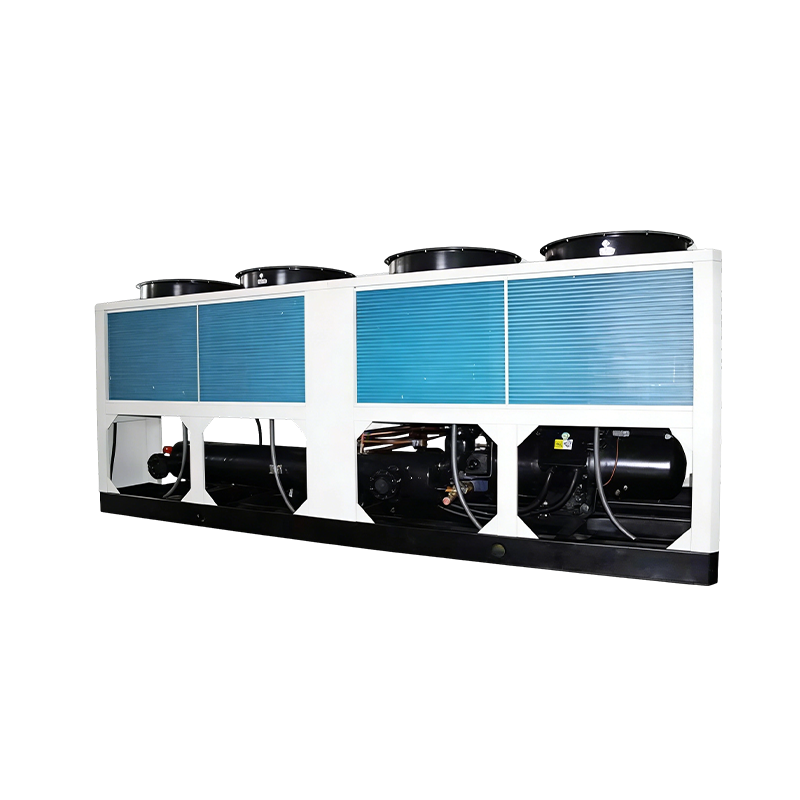
Air Cooled Chillers
- Simpler installation, no water source needed
- Well suited to moderate cooling loads
- Performance affected by ambient temperature
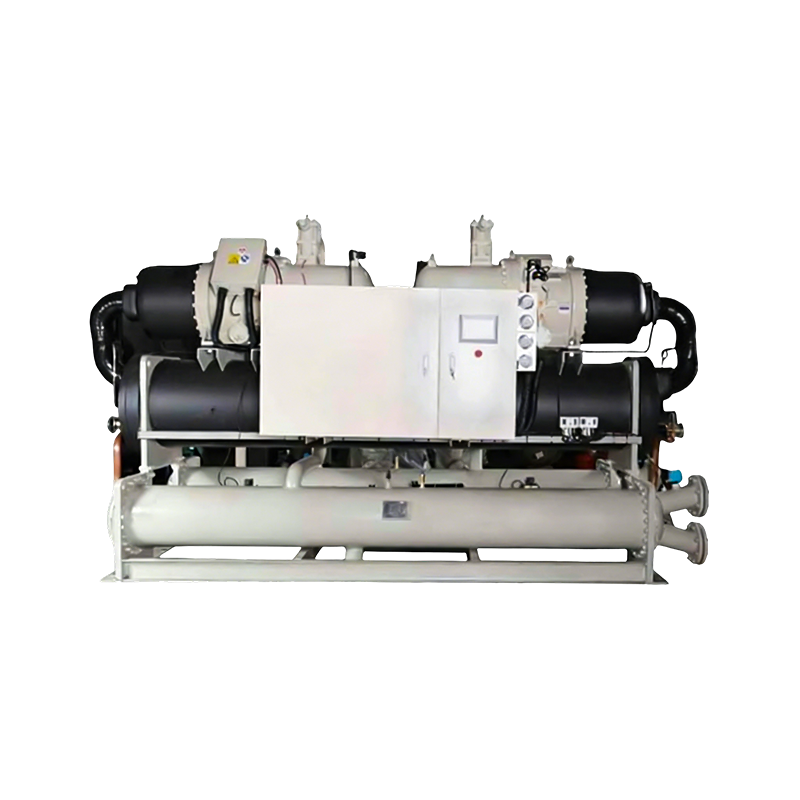
Water Cooled Chillers
- Higher efficiency for large cooling loads
- More stable performance in hot environments
- Requires water supply and treatment system
Relative Energy Consumption by Cooling Type (Index)
Illustrative index only; actual consumption depends on load, climate, and system design.
Beyond cooling type, match cooling capacity to actual heat load and production scale, weigh long-term energy costs against upfront price, and confirm the supplier can provide customized system integration and after-sales technical support.
Cooling capacity should be sized to peak heat load, not average load — undersizing is the most common cause of chiller underperformance in the field.
SEC. 06Why Reliable Suppliers Matter
Stable cooling performance depends on more than the unit itself. A dependable industrial chiller machines supplier brings consistent product quality control, customized solutions for non-standard processes, proper installation support, and long-term technical service — factors that determine total cost of ownership as much as the equipment specification does.
Frequently Asked Questions
What size chiller does a typical injection molding line need?
Sizing depends on mold heat load, cycle speed, and ambient conditions, so it's best confirmed through a cooling load calculation rather than a generic rule of thumb.
Is a water cooled chiller always more efficient than air cooled?
Generally yes for larger loads and hotter climates, but air cooled units remain simpler to install and are often sufficient for smaller or moderate cooling needs.
Can one chiller system serve multiple production lines?
Yes, centralized chiller systems can serve multiple lines when capacity and distribution piping are sized correctly for combined peak loads.
How does chiller reliability affect food safety compliance?
Consistent temperature control reduces contamination risk and helps maintain the processing conditions required for food safety compliance.