
 English
 Español
Content
- 1 Choosing Between Air Cooled and Water Cooled Chillers
- 2 How an Air Cooled Chiller Rejects Heat
- 3 How a Water Cooled Chiller Rejects Heat
- 4 Key Differences at a Glance
- 5 Efficiency and Operating Cost: Where Water Cooling Gains Ground
- 6 Water Use, Installation, and Site Constraints
- 7 A Practical Decision Framework
Choosing Between Air Cooled and Water Cooled Chillers
Your plant needs a process chiller with a cooling capacity near 200 kW. One supplier quotes an air cooled unit that can sit on an open pad outside the building. Another proposes a water cooled chiller with a cooling tower on the roof, a condenser water pump, and connecting pipework. The air cooled price is lower and the delivery date is shorter. The water cooled supplier argues that lower condensing temperatures will reduce electricity consumption for as long as the machine runs. Both arguments can be valid at the same time.
The practical conclusion is this: a water cooled chiller usually justifies its higher installation cost when the plant runs many hours per year, has a reliable cooling water source, or already operates a cooling tower. An air cooled chiller is the better fit when water is scarce or expensive, when the chiller runs only part of the year, or when the project needs a self-contained machine that can be installed quickly. The rest of this article explains the physical differences behind those rules and gives you a checklist for applying them to your site.
How an Air Cooled Chiller Rejects Heat
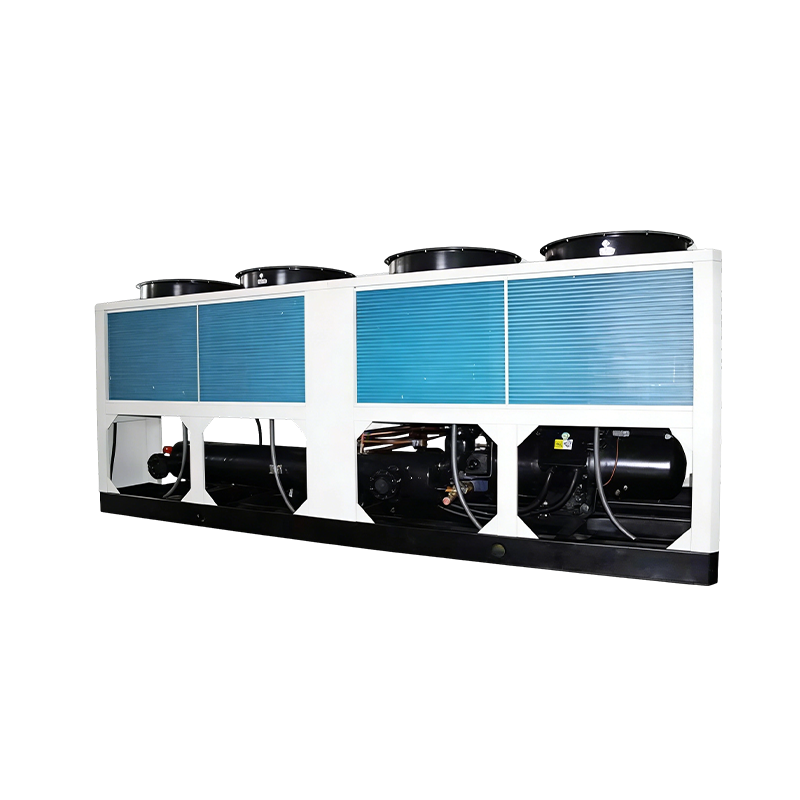
An air cooled industrial chiller rejects heat from its condenser directly to the surrounding air. The condenser is a finned coil, and one or more axial fans pull ambient air through the fins. As the refrigerant passes through the coil, it condenses and releases heat into that air stream. The rejected heat never touches another water system, so there is no cooling tower, no condenser water pump, and no water treatment loop.
The important design constraint is that condensing pressure tracks ambient dry-bulb temperature. Most manufacturers rate air cooled chillers at a 35°C ambient condition. When the temperature at a project site reaches 40°C or higher, the condenser works harder, the compressor draws more power, and the delivered cooling capacity at the evaporator falls. The machine still operates, but its efficiency drops exactly when the site needs cooling the most.
For plants that can live with this relationship, an air cooled chiller range offers a straightforward way to add process cooling without expanding the mechanical room or adding external water infrastructure.
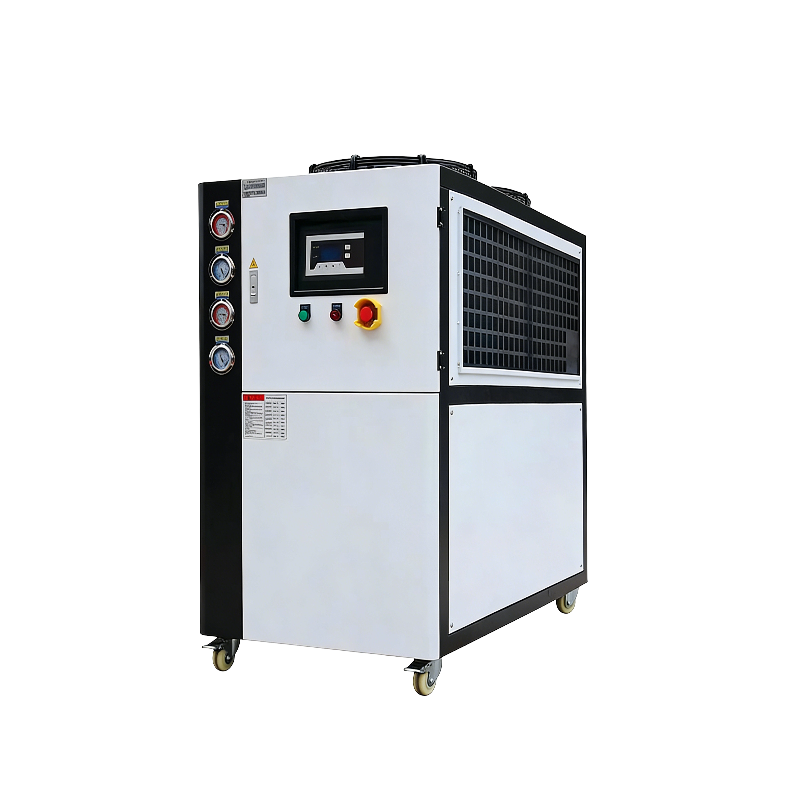 Custom Industrial Air Cooled Water Chiller Manufacturers, FactoryShanghai Soouney Is China Industrial Air Chiller, Air Cooled Industrial Chiller Manufacturers, Factory,We Offer Custom Industrial Air Coo...View Product →
How a Water Cooled Chiller Rejects Heat
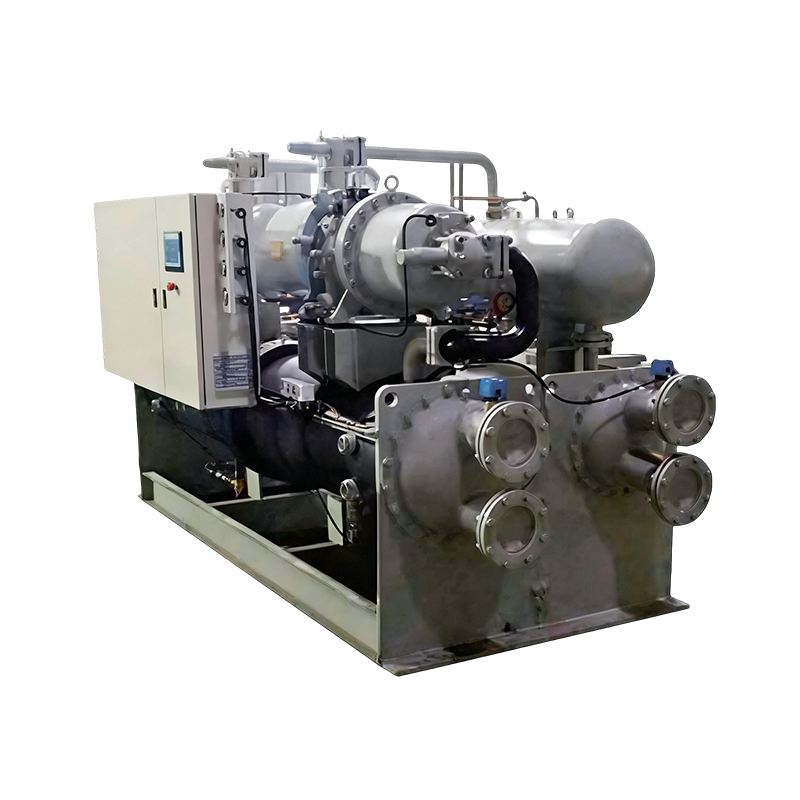
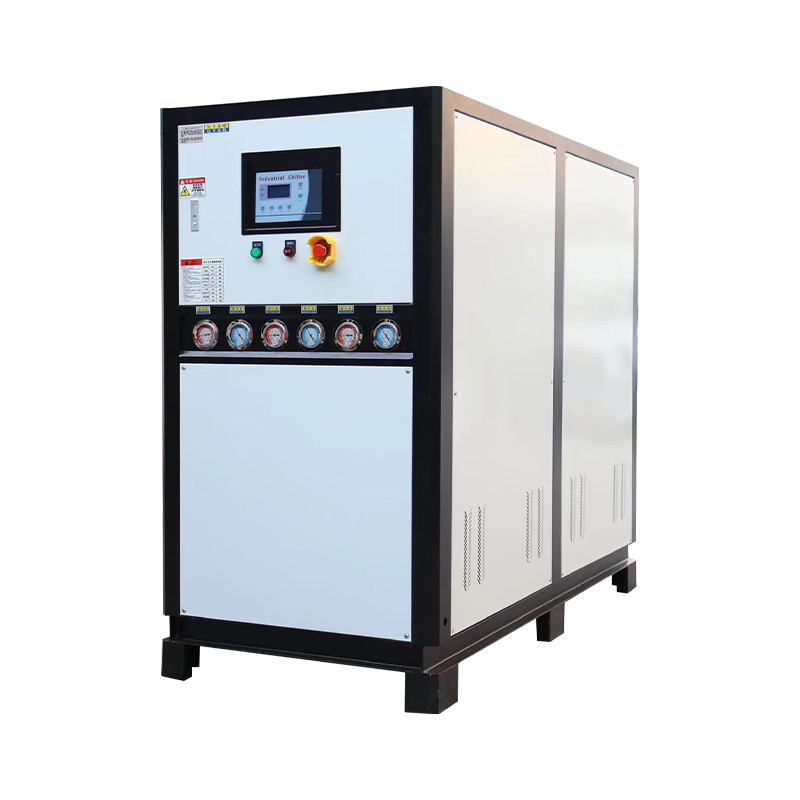
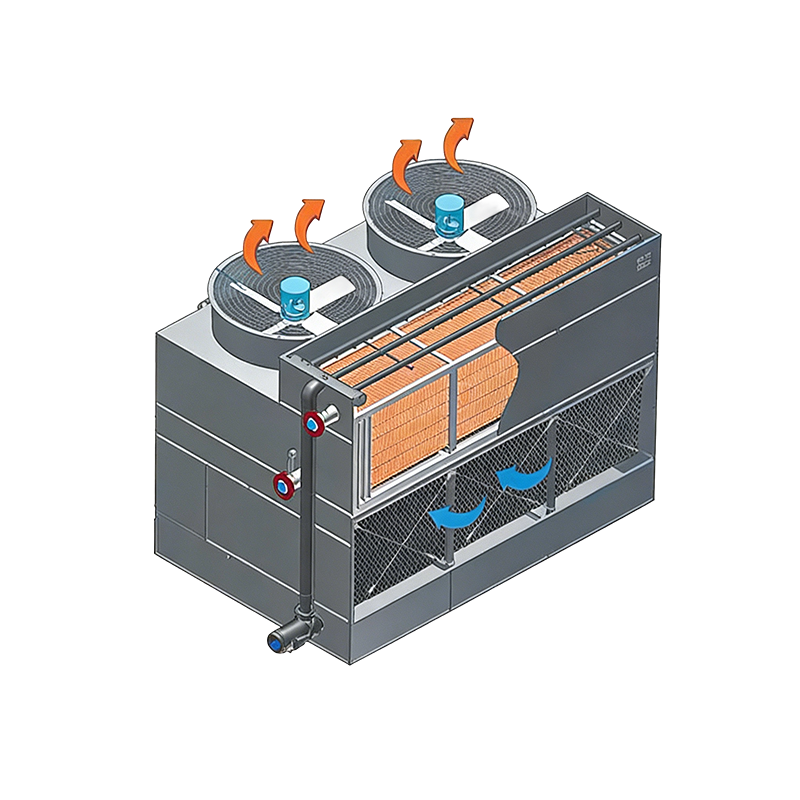
A water cooled industrial chiller rejects heat in two stages. First, refrigerant gives up heat inside a water-cooled condenser, typically a shell-and-tube or brazed plate heat exchanger. Cooling water carries that heat away. Second, the warm water is pumped to a cooling tower, where it is sprayed over fill media and cooled by evaporation. The cooled water returns to the condenser and the cycle repeats.
The benefit of this two-stage arrangement is that the condenser temperature is governed by the wet-bulb temperature of the air entering the tower, not the dry-bulb temperature. Since wet-bulb temperature is almost always lower, a water cooled system can operate at lower condensing pressure even in the middle of summer. For a typical tower with 30°C supply water and 35°C return water, the refrigerant condenses near 40°C. On the same day, an air cooled condenser might run 5 to 10 K hotter, and every kelvin of extra condensing temperature increases compressor work.
Water cooled chiller models therefore appeal to plants that already have a tower, or that want to minimise electricity consumption over a long operating season.
Key Differences at a Glance
The table below condenses the practical differences into the items that usually appear in a technical comparison before purchase. Values are typical ranges, not promises for any specific machine, because the final numbers depend on compressor type, heat exchanger sizing, ambient conditions, and control strategy.
| Parameter | Air Cooled Chiller | Water Cooled Chiller |
|---|---|---|
| Condensing medium | Ambient air (dry-bulb) | Cooling tower water (wet-bulb) |
| Condensing temperature | Higher and varies with climate | Lower and more stable |
| Energy efficiency | Lower, especially above 35°C ambient | Higher; 10 to 30% less compressor power typical |
| Water consumption | None for heat rejection | Makeup water plus chemical treatment |
| Installation scope | Single package, set on pad | Chiller plus tower, pump, and piping |
| Outdoor space | Requires clear air flow around unit | Tower needs outdoor location; chiller footprint can be smaller |
| Maintenance focus | Coil cleaning and fan motors | Water treatment, tower fill, drift eliminators |
| Noise | Fan noise at the unit location | Pump and tower noise, can be located away |
| Best fit | Dry sites, seasonal use, simple installation | Continuous loads, hot climates, energy-sensitive plants |
Efficiency and Operating Cost: Where Water Cooling Gains Ground
Why Condenser Temperature Matters
Refrigeration efficiency depends on the pressure lift between the evaporator and the condenser. The higher the condensing pressure, the more work the compressor must do for the same refrigeration effect. On a hot afternoon, an air cooled condenser may sit at 45 to 50°C because it must reject heat to air that may already be at 35°C or above. A water cooled tower, by contrast, can deliver 30°C water even when the air temperature is 35°C, because evaporation cools the water below the dry-bulb temperature. The resulting condensing temperature near 40°C reduces the pressure lift and the compressor power.
Put directly: for the same cooling capacity and the same evaporator conditions, a well-designed water cooled chiller typically draws 10 to 30 percent less power than a comparable air cooled machine, with the larger savings appearing in hot climates and at high load factors.
The Annual Energy Calculation
The efficiency difference becomes visible in the annual electricity bill. Consider a 200 kW chiller operating 4,000 hours per year at 80 percent average load. If water cooling saves 15 percent of compressor power, the saving is 200 × 0.8 × 4,000 × 0.15 = 96,000 kWh per year. At an industrial electricity price of 0.12 USD/kWh, that is more than 11,000 USD annually. In many plants, the difference covers the cost of the cooling tower and condenser water pump within two to four years.
If the site already has a tower from an older system, the payback is even shorter. If the site has no water infrastructure, the investment in the tower, pumps, pipes, and water treatment can be substantial, and the simple payback period may extend beyond the useful horizon of the project. That is why the operating-hour assumption matters more than any single efficiency number. For more detail on how load profiles affect chiller selection, see this guide to selecting chiller units for different industrial processes.
Water Use, Installation, and Site Constraints
The Water System Is Not Free
Water cooled chillers consume water, and that cost is easy to underestimate. A cooling tower evaporates part of the recirculating water on every pass. It also requires make-up water, blowdown to control dissolved solids, and chemical treatment to prevent scale, corrosion, and biological growth. In regions where water is expensive or heavily regulated, the operating cost of a water cooled system can offset a significant share of the energy savings.
An air cooled chiller avoids this entire subsystem. There is no condenser water, no tower, no water bill, and no cooling tower maintenance obligation. For a site that has never maintained a cooling tower, this also reduces the range of skills required from the maintenance team.
Installation and Layout Constraints
Air cooled chillers are easier to install. The machine arrives as a single package with condenser, fans, controls, and refrigerant charge already assembled. You place it on a level pad, connect chilled water pipes and electrical supply, and commission the unit. Relocation is also simpler, which matters for leased buildings, temporary plants, or modular production lines.
The main constraint is air circulation. The heat rejected by the condenser needs to move away from the coil. If several units are packed too closely, or if walls and fences block the discharge path, hot air recirculates back into the inlet and condensing pressure rises. Leave enough clearance around the unit, and consider the prevailing wind direction when you position the intake.
Water cooled systems make the chiller itself more compact but add space requirements elsewhere. The cooling tower needs outdoor space, a water supply, drainage, and winterization in cold climates. If the plant has no spare area for a tower, a water cooled scheme may require structural work before it can proceed. If the plant does have space, the tower can often be placed on a roof or in a remote yard, moving the noise away from work areas.
When indoor floor area is limited, a different air cooled option helps: an air cooled box chiller can be installed inside a plant room with ducted ventilation, giving you the simplicity of air cooling without sacrificing valuable indoor space.
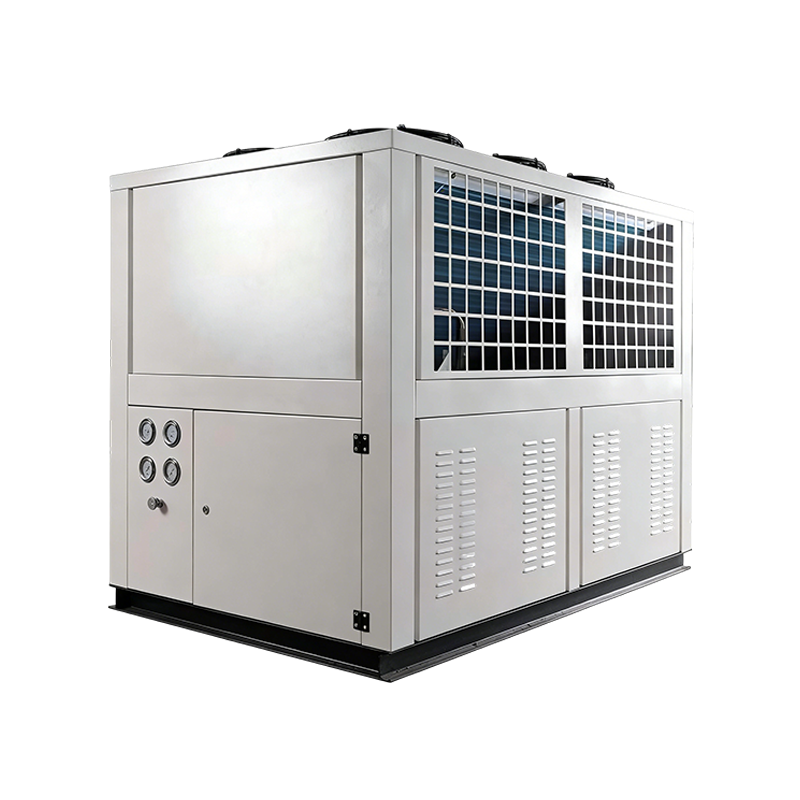 Custom Air Cooled Box Chiller Manufacturers, FactoryWe Are China Air Cooled Box Chiller Manufacturers, Factory, Shanghai Soouney Refrigeration Equipment Co., Ltd. Offer Custom Air Cooled Bo...View Product →
A Practical Decision Framework
The following questions will not replace a detailed engineering review, but they will point you to the right general family of machines before you invite detailed quotations.
- Confirm your summer design conditions. Air cooled performance depends on dry-bulb temperature; tower performance depends on wet-bulb temperature. In hot dry climates, the difference between dry-bulb and wet-bulb is large, which widens the efficiency gap in favor of water cooling.
- Check whether cooling water already exists. A plant with an existing tower, a river water source, or a process cooling loop can host a water cooled chiller at modest extra cost. A site with no water infrastructure must budget for tower, pumps, piping, water treatment, and installation.
- Estimate annual running hours and load profile. As a rough rule of thumb, water cooled chillers usually become cost-effective when the plant runs more than 2,500 to 3,000 hours per year at a meaningful load factor. For seasonal or intermittent duty, the lower first cost of an air cooled machine often wins.
- Compare total installed cost, not equipment price. Include foundations, electrical connections, water connections, the tower, pumps, piping, commissioning, and the value of the space occupied. A water cooled chiller can look better on energy per unit of cooling capacity, but it must still pass a reasonable payback test for your plant.
- Review the maintenance capability of your team. Air cooled units need periodic coil cleaning and fan maintenance. Water cooled systems require water treatment, tower inspections, and winterization in freezing climates. If the site has limited staff, the air cooled route reduces that burden.
For high-capacity plants, the same condenser trade-off also interacts with compressor selection. Our comparison of air cooled screw chillers and centrifugal chillers explains how these choices combine at the upper end of the power range.
The Role of Process Temperature
Process temperature does not change the basic comparison. Whether the chiller produces 7°C chilled water or a lower-temperature fluid, the condenser still works at the same pressure levels, and the logic of dry-bulb versus wet-bulb heat rejection remains the same. Soouney offers both air cooled and water cooled machines, including cryogenic-rated models, so the decision between the two should be driven by your site conditions and operating profile, not by product availability.
If your plant has water, runs long hours, and wants to minimise energy consumption, a water cooled system usually repays the additional installation cost through lower electricity demand. If water is scarce, the installation must stay simple, or the chiller runs only for part of the year, an air cooled machine is frequently the smarter first investment. Either way, verify capacity and power draw at your actual design conditions, and ask suppliers to quote the complete system so the comparison is fair.