
 English
 Español
Content
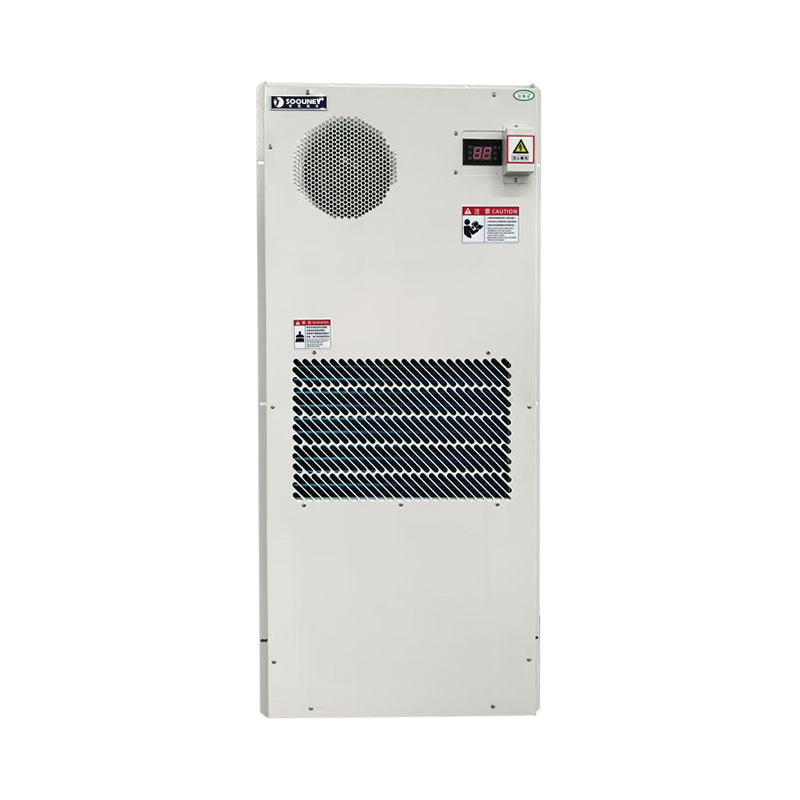
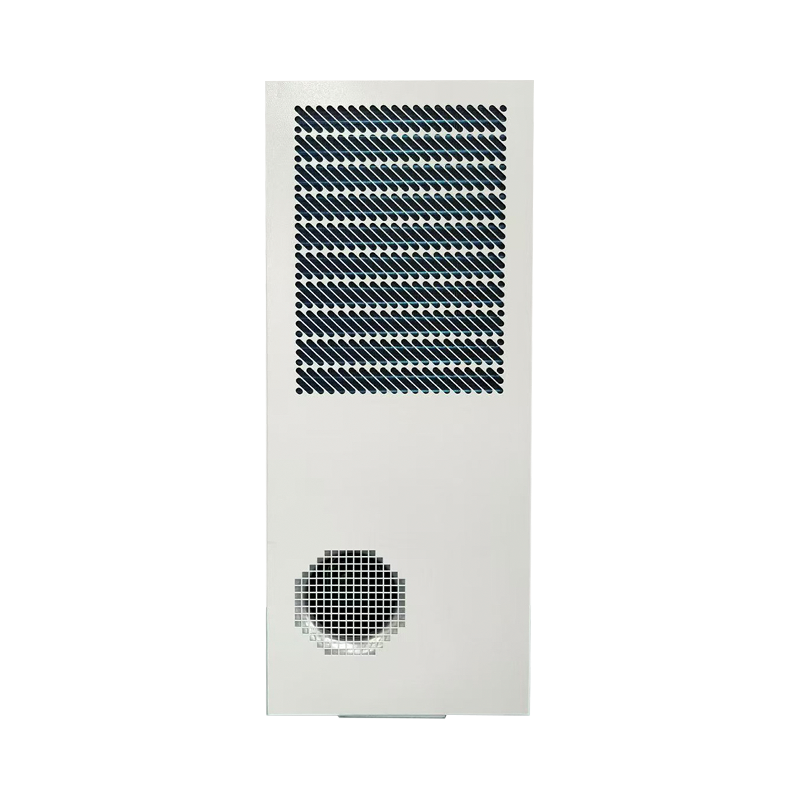
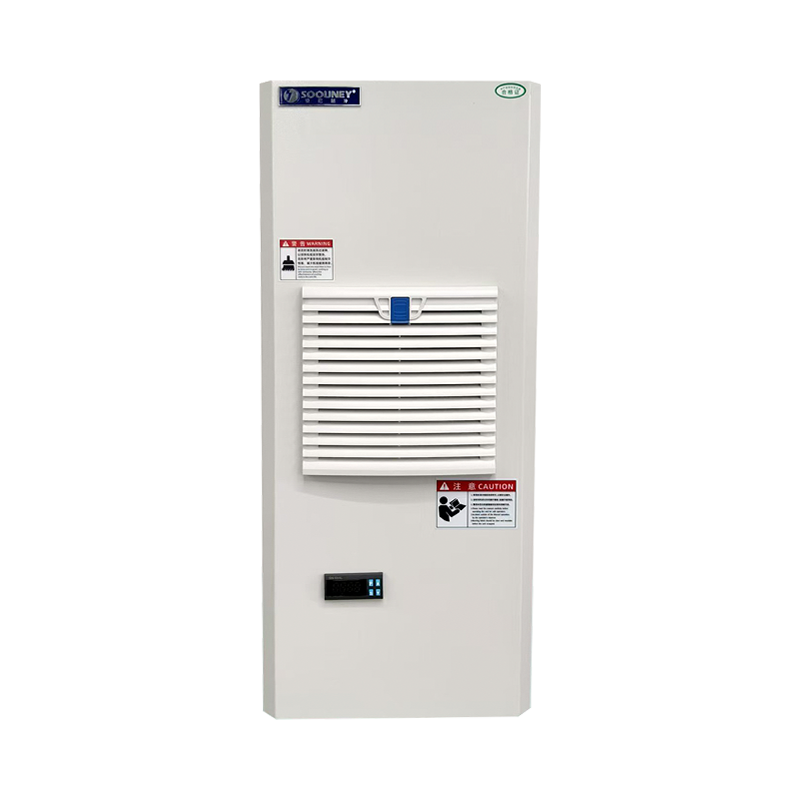
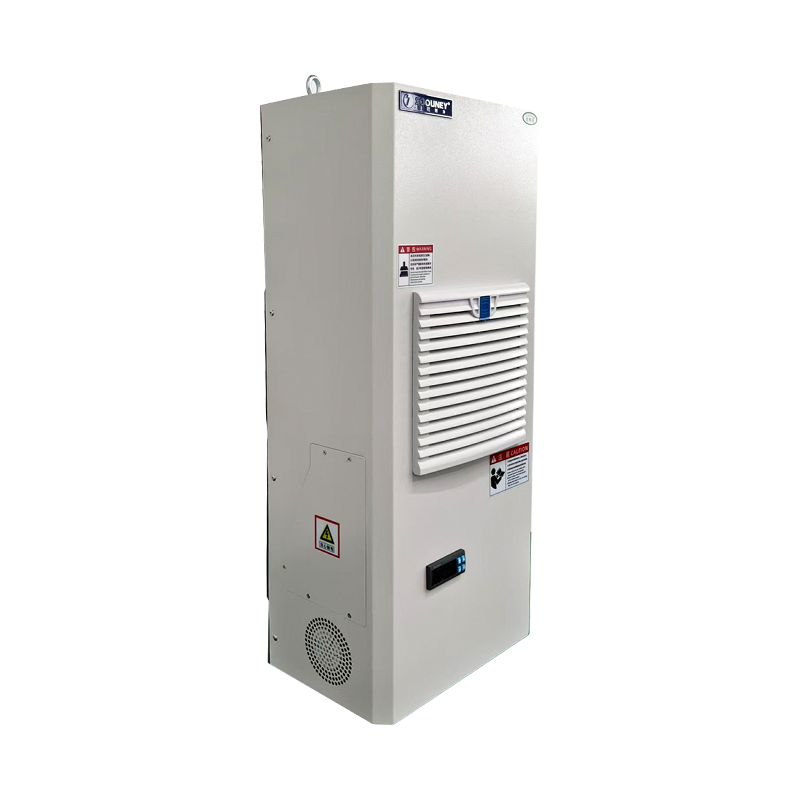
Selecting the right cabinet air conditioner unit is one of the most consequential decisions in industrial enclosure design. Get it wrong and you face overheating electronics, premature component failure, and costly downtime. Get it right and your enclosure runs reliably for decades — even in harsh, contaminated, or wet environments. This guide walks you through the three decisions that matter most: calculating the cooling capacity you actually need, choosing the correct ingress protection rating, and picking the mounting configuration that fits your installation.
How to Calculate Cabinet Cooling Capacity
Cooling capacity is determined by the total heat load inside the enclosure, measured in watts (W) or BTU/hr. Every component that draws power dissipates a portion of that power as heat — and that heat must be removed faster than it accumulates.
Use this formula as your baseline:
Add a 20% safety margin on top of the calculated figure to account for aging components and unexpected load spikes.
To estimate internal heat dissipation, sum the power consumption of every active component — drives, PLCs, power supplies, transformers — and multiply by the inefficiency factor. A typical VFD (variable frequency drive) dissipates roughly 3% to 5% of its rated power as heat. A 15 kW drive therefore generates approximately 450 W to 750 W of heat inside the enclosure.
Ambient heat gain matters equally. An enclosure exposed to direct sunlight in a 40°C environment can absorb an additional 200 W to 400 W depending on cabinet surface area and color. Dark-colored steel enclosures absorb significantly more solar radiation than light grey or white powder-coated surfaces.
Practical Sizing Example
Consider an enclosure housing three 7.5 kW drives, a PLC, and a 24V power supply with a combined dissipation of 950 W, installed outdoors in a 45°C climate with partial sun exposure. Adding 300 W for ambient gain gives 1,250 W. Apply the 20% margin: 1,250 x 1.2 = 1,500 W required cooling capacity. You would select a cabinet air conditioner unit rated at a minimum of 1,500 W at the maximum ambient temperature your site reaches.
Always verify the unit's rated capacity at the actual ambient temperature, not at standard test conditions (typically 35°C). Most manufacturers publish derating curves — a unit rated at 1,500 W at 35°C may deliver only 1,200 W at 50°C.
Choosing IP55 vs NEMA 4X for Harsh Environments
The ingress protection rating of your cabinet air conditioner unit must match — or exceed — the environmental classification of your installation site. IP55 and NEMA 4X are the two most common ratings specified for industrial cooling, but they are not equivalent.
| Feature | IP55 | NEMA 4X |
| Dust protection | Limited ingress, no harmful deposit | Full dust exclusion |
| Water protection | Low-pressure jets from any direction | Hosedown and splashing water |
| Corrosion resistance | Not specified | Required (salt spray tested) |
| Typical application | General industrial, light washdown | Food processing, coastal, chemical plants |
| Material requirement | Any compliant material | Stainless steel or coated aluminum typical |
IP55 is the minimum acceptable rating for most factory floor installations. It handles dust accumulation and water spray — common in machining, automotive assembly, and general manufacturing. However, IP55 does not address corrosion resistance, which means a standard IP55 unit will degrade rapidly in a coastal facility or anywhere caustic chemicals are present in the air.
NEMA 4X adds corrosion resistance explicitly and typically uses 304 or 316 stainless steel construction. Food and beverage processing plants routinely require NEMA 4X because high-pressure washdowns with cleaning chemicals occur daily. Marine offshore platforms, wastewater treatment facilities, and chemical plants are further examples where NEMA 4X is the correct choice — not IP55.
One important note: NEMA 4X does not directly map to a single IEC IP code. A NEMA 4X unit meets or exceeds IP56 in most tested criteria, but the two systems were developed independently. If your project specification lists both, verify compliance with your equipment supplier using test certificates, not just label claims.
Side-Mount vs. Top-Mount Cabinet Air Conditioners
Mounting position determines airflow direction, space requirements, and how the cooled air reaches heat-generating components. Neither configuration is universally superior — the right choice depends on your enclosure layout and installation constraints.
Side-Mount Configuration
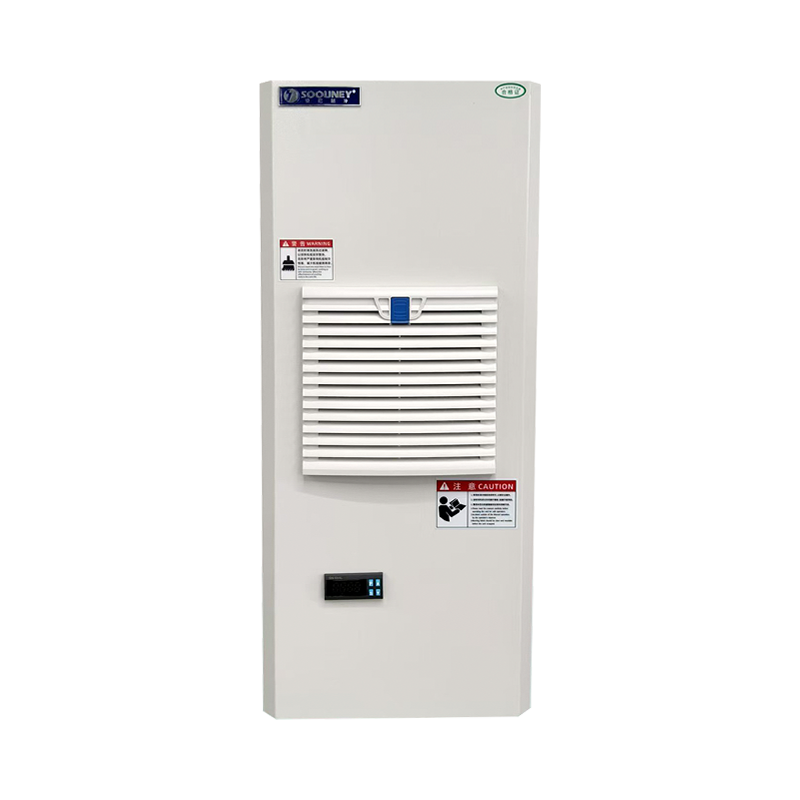
A side-mounted cabinet air conditioner unit attaches to the enclosure door or side panel. Cold air is discharged horizontally into the enclosure interior, typically at mid-height, and warm return air is drawn from a vent at the bottom of the unit. This creates a vertical recirculation loop inside the cabinet.
- Preserves the full height of the enclosure interior — top rail space remains available for cable management or busbars
- Allows the enclosure to be installed directly against a ceiling without clearance issues
- Easier to service: the unit can be accessed and removed without moving components inside the cabinet
- Requires a cutout on the door or side panel, which reduces panel space for component mounting
Top-Mount Configuration
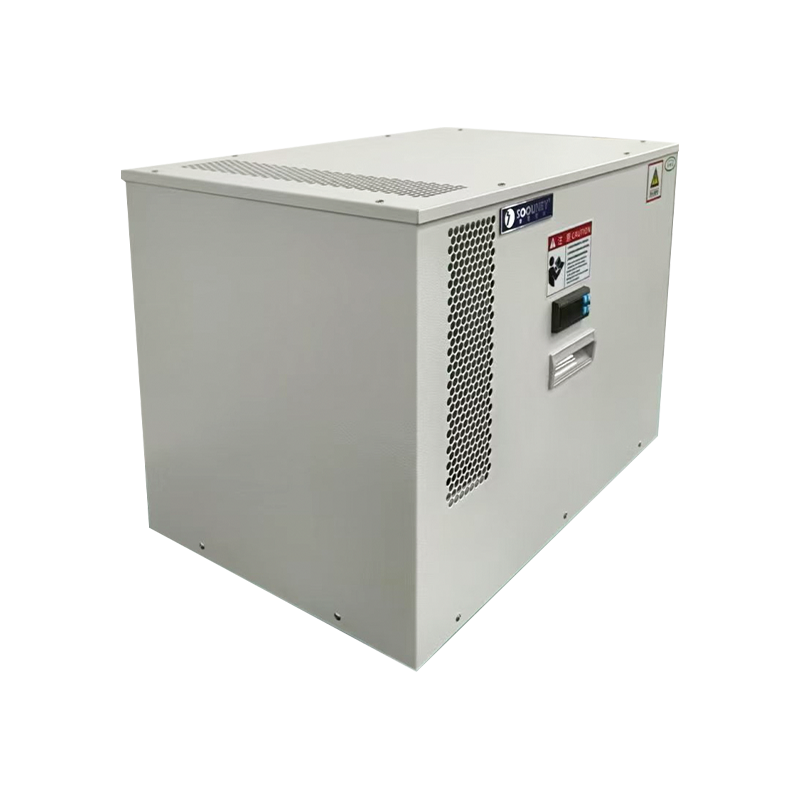
A top-mounted unit sits on the roof of the enclosure and delivers cooled air downward through the top panel. Warm air rises naturally and exits through return vents, which aligns with the convective airflow pattern inside most enclosures — making top-mount inherently efficient at removing heat from high-dissipation components mounted near the top.
- Does not consume any door or side panel space — all four vertical faces remain available for components
- Gravity-assisted warm air return improves thermal efficiency by 8% to 15% compared to side-mount in tall enclosures
- Requires ceiling clearance — typically 300 mm to 500 mm above the unit for condenser air exhaust
- Adds weight to the top of the enclosure, requiring verification of the cabinet's roof load rating
Frequently Asked Questions
What happens if I undersize my cabinet air conditioner unit?
An undersized unit runs continuously at full load and still cannot maintain the target internal temperature. Components inside the enclosure experience elevated operating temperatures, which accelerates capacitor aging, increases semiconductor failure rates, and can trigger thermal shutdowns. A 10°C rise above the rated operating temperature roughly halves the lifespan of most electronic components, according to Arrhenius thermal aging models.
Can I use an IP55-rated unit in a food processing environment?
No. Food processing facilities require daily washdowns with caustic cleaning agents. IP55 does not specify corrosion resistance, and the unit's housing and hardware will corrode within months under those conditions. Specify NEMA 4X or IP66 with stainless steel construction for any food, beverage, or pharmaceutical application.
Do top-mount units cost more to operate than side-mount units?
In enclosures taller than 1,600 mm, top-mount units are typically 8% to 15% more energy-efficient because natural convection assists the cooling cycle. In shorter enclosures, the difference is negligible. The dominant factor in operating cost is correct sizing — an oversized or undersized unit of either mounting type will consume more energy than a correctly sized one.
How often should a cabinet air conditioner unit be serviced?
Most manufacturers recommend cleaning the condenser and evaporator coils every 6 months in dusty or oily environments, and annually in clean indoor installations. Filter replacement intervals depend on airborne particulate levels — in metalworking or woodworking environments, monthly filter checks are standard practice. Neglecting coil cleaning is the single most common cause of reduced cooling capacity in the field.