
 English
 Español
Content
A pharmaceutical compounding line starts rejecting batches the moment the chilled water drifts more than 1.0°C from setpoint. The chiller on the roof has ample capacity; the root cause sits in the control logic. Most real-world chiller temperature complaints are control problems, not capacity problems: the machine is sized correctly but cannot respond fast enough or precisely enough to a changing heat load. This guide explains how air cooled chiller temperature control works, compares the accuracy of the main control strategies, and lists the specifications that separate a precision machine from a conventional one.
The Anatomy of Temperature Control in an Air Cooled Chiller
Temperature control in an air cooled chiller is the coordinated response of the compressor, expansion valve, condenser fan, and controller that holds leaving chilled water temperature at setpoint while process heat load and outdoor ambient conditions change.
Four Components, One Objective
The controller never cools anything by itself. It senses a temperature, decides how far the actual value sits from setpoint, and adjusts four actuators that all influence evaporating temperature and therefore the leaving water temperature.
- Compressor capacity: adjusted by on-off cycling, discrete steps, hot gas bypass, or variable speed. This is the largest single influence on setpoint stability.
- Electronic expansion valve: meters refrigerant flow and holds superheat; a fixed orifice responds too slowly to rapid load changes.
- Condenser fan: varies air flow across the coil; it mainly affects head pressure and efficiency, but extreme ambient swings also shift the evaporating point.
- Controller logic: the PID or PLC algorithm that reads feedback and decides when, how much, and how fast to change capacity.
Where Accuracy Is Lost
Field accuracy is decided after the chiller leaves the factory, and three conditions destroy most of it.
- A sensor reading return water instead of leaving water reacts one or two cycles late to a load change.
- An oversized compressor short-cycles, and every start pushes water temperature through the deadband.
- Insufficient water volume in the loop lets temperature swing faster than any feedback controller can follow.
The control band is the acceptable range around the chilled water setpoint. A chiller rated at +/-0.5°C holds water inside a 1.0°C window; a unit rated at +/-2.5°C allows a 5.0°C window. The correct band depends on the process tolerance, not on the performance table in the brochure.
Control Strategies and Their Real-World Accuracy
The control strategy determines temperature stability, part-load efficiency, and compressor service life more than any other design choice inside the chiller.
| Strategy | Setpoint stability | Part-load efficiency | Compressor starts | Typical application |
| On-off cycling | +/-2 to 3°C | Low | Frequent | Small loads, wide tolerance |
| Hot gas bypass | +/-1 to 1.5°C | Low, power stays constant | Low | Constant load, precise capacity |
| Multi-step capacity | +/-0.5 to 1°C | Medium to high | Moderate | General process cooling |
| VFD continuous control | +/-0.1 to 0.3°C | High | Very low | Precision processes |
The pattern is easy to identify on a temperature logger. On-off control leaves a sawtooth trace; VFD control with PID leaves a flat line that settles into setpoint without overshoot. The same chiller frame can be equipped with any of these strategies, which is why two machines with identical cooling capacity can behave completely differently under the same load.
For plants that need the same control discipline at higher capacity, the air cooled screw chiller range applies the same staging and sensor philosophy on larger compressors.
Three Numbers That Define Control Quality
Evaluate an air cooled chiller by approach temperature, steady-state stability, and recovery time, not by nameplate capacity alone.
Approach Temperature
Approach temperature is the gap between leaving chilled water temperature and evaporating refrigerant temperature. A standard air cooled chiller operates with a 3-6°C approach. A lower approach means a larger evaporator, better heat transfer, and a higher first cost, but it also gives the control loop a wider stable operating range at part load.
Steady-State Stability
Steady-state stability is the maximum deviation from setpoint when the load is constant. A VFD-equipped chiller holds +/-0.1 to 0.3°C; a step-controlled machine holds +/-0.5 to 1.0°C; an on-off unit swings +/-2 to 3°C. The number belongs on the data sheet next to the cooling capacity, not in a footnote.
Recovery Time
Recovery time tells you how fast the chiller returns to setpoint after a load step. It depends on water volume, sensor lag, and tuning. With a buffer tank and a responsive algorithm, recovery commonly lands between 30 and 60 seconds. A poorly tuned loop can hunt for minutes and never settle.
A chiller with a low approach temperature but a wide control band will still ruin a precision process. Control quality is not a side specification; it is the specification.
Matching Control Technology to Your Process Load
The right control configuration depends on the thermal inertia of the process, the amplitude and frequency of load swings, and the setpoint tolerance the process can actually accept.
Steady-Load Processes
Chemical reactors, continuous extrusion, and central plant loops produce smooth heat profiles. Multi-step capacity control is usually enough, and the money saved by skipping a VFD can go into better insulation or a larger buffer tank.
Pulsing-Load Processes
Injection molding machines, laser welders, and test benches release heat in abrupt spikes. These applications need fast-response sensors, tight PID tuning, and ideally VFD-controlled compressors, plus enough water volume to absorb the spike before the controller reacts.
Steady load
- Slow load ramps
- Narrow setpoint excursions
- Step control acceptable
- Smaller buffer tank
Pulsing load
- Rapid heat spikes
- Wide load swings on one cycle
- VFD and tight PID recommended
- Buffer volume critical
Shanghai Soouney Refrigeration Equipment Co., Ltd. matches chiller control packages to both load profiles. For processes that need leaving water below the standard 7-12°C range, the ambient temperature cryogenic air cooled chiller combines a low-temperature evaporator with control logic tuned for that operating window.
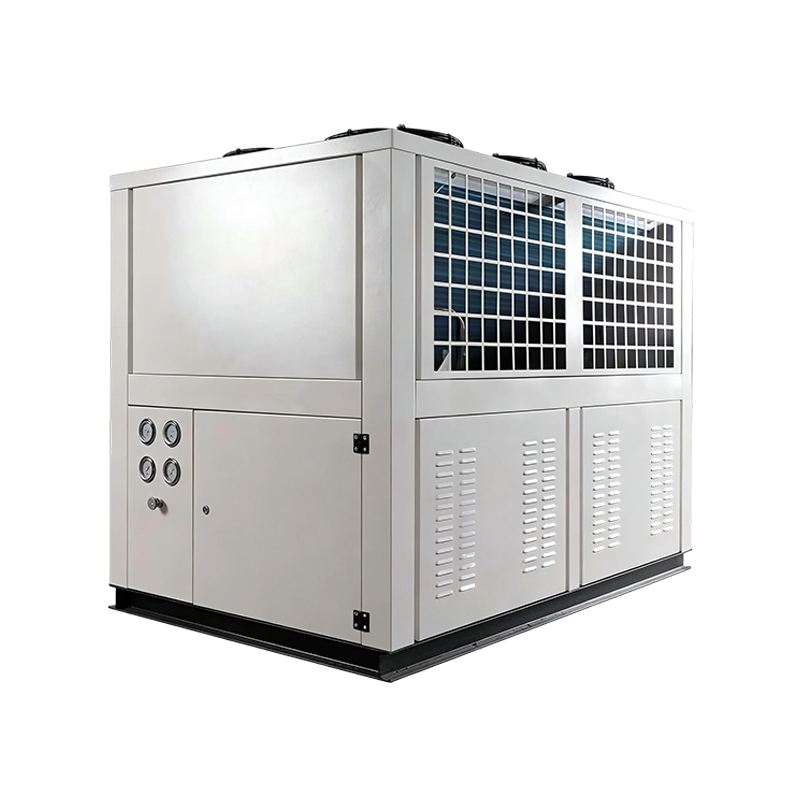 Wholesale Ambient Temperature Cryogenic Air Cooled Chiller Suppliers, Company, EShanghai Soouney Refrigeration Equipment Co., Ltd. Is China Wholesale Ambient Temperature Cryogenic Air Cooled Chiller Suppliers, Company...View Product →
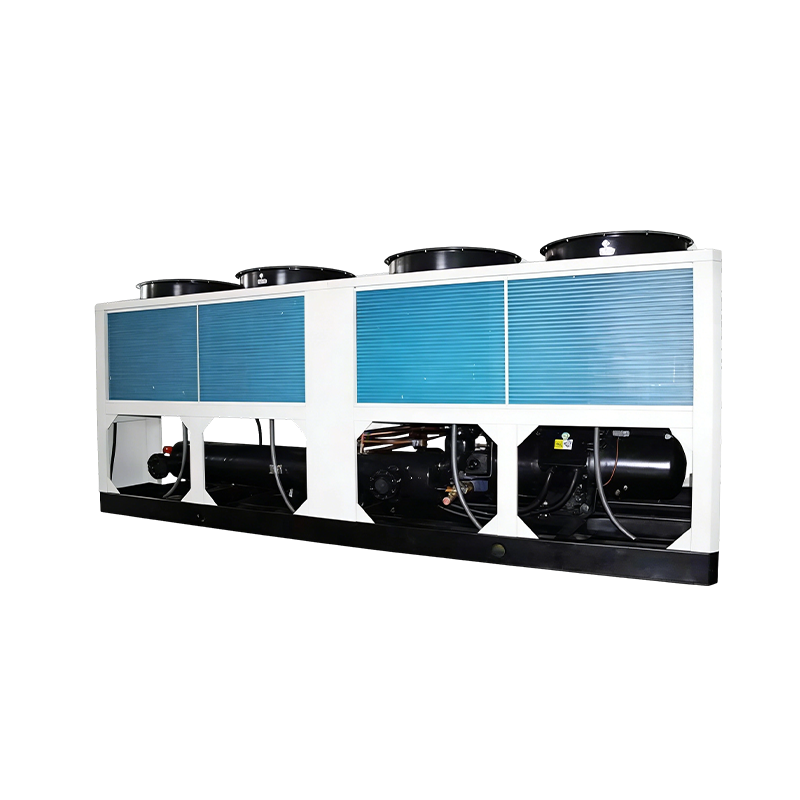
When load pulses arrive from large presses or extruders, the heat-cryogenic air cooled screw chiller with single or dual compressors stages capacity across separate compressor circuits so the loop does not overshoot after each heat spike.
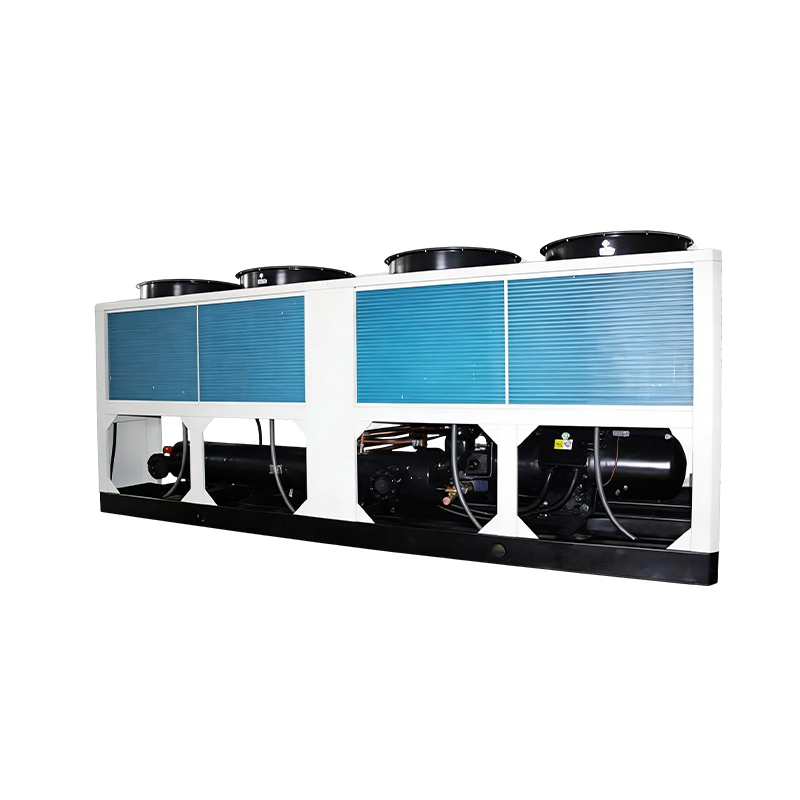 Wholesale Heat Cryogenic Single Compressor Double Compressors Air Cooled Screw CShanghai Soouney Refrigeration Equipment Co., Ltd. Is China Wholesale Heat Cryogenic Single Compressor Double Compressors Air Cooled Scre...View Product →
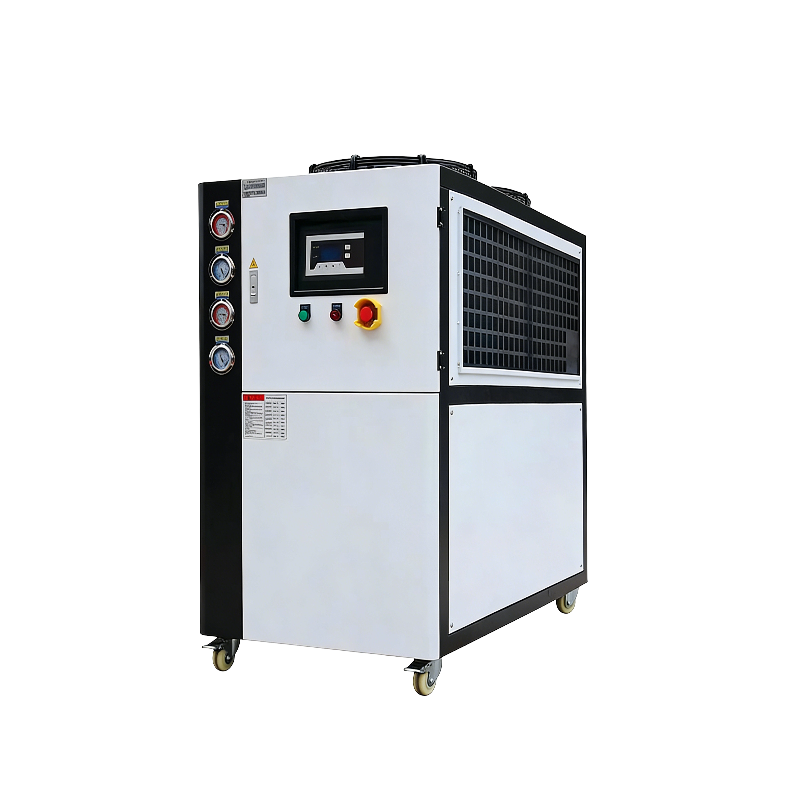
Where floor space is tight, the integrated chiller that combines pump, buffer tank, and controller on one frame shortens the water loop and cuts both response time and installation cost.
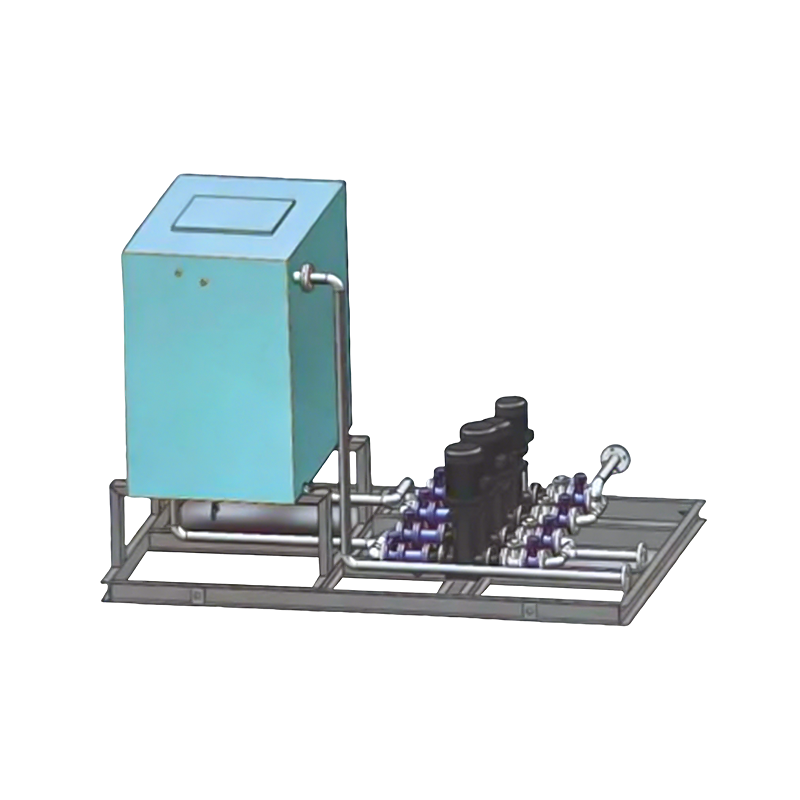 Wholesale Small Size Low Noise Long Service Time Easy Operation Integrated ChillShanghai Soouney Refrigeration Equipment Co., Ltd. Is China Wholesale Small Size Low Noise Long Service Time Easy Operation Integrated Ch...View Product →
Before committing to a control package, review the chiller selection guide for different industrial cooling processes, which matches load type to machine configuration.
Five Checks Before You Commit
A precisely tuned control system still fails if the chilled water loop around it is poorly built. These five checks decide whether the control specification survives installation.
- Verify water volume: hold at least 15-20 seconds of circulation volume in the loop, or add a buffer tank.
- Confirm sensor location: the leaving water sensor must sit in a well-mixed section of pipe, not directly at the evaporator outlet.
- Ask for the deadband and minimum cycle time settings on the controller, and require them written into the submittal.
- Check the communication options: Modbus RTU or 4-20 mA analog setpoint for process integration and remote monitoring.
- Plan condenser coil maintenance: fouled coils on an air cooled unit raise head pressure and shift the control point.
Step the setpoint by 1°C and watch the leaving water trace. A healthy loop returns to the new setpoint without overshoot or sustained hunting. Ask the supplier to demonstrate this test before delivery.
The same thinking applies across the wider industrial chiller product range, whether the machine is box-type, screw-type, air cooled, or water cooled.
Frequently Asked Questions
What temperature accuracy can an air cooled chiller achieve?
With a VFD-driven compressor and a properly tuned PID controller, leaving water temperature can be held within +/-0.1 to 0.3°C at steady state. Multi-step capacity control typically manages +/-0.5 to 1.0°C. On-off cycling is limited to +/-2 to 3°C and is not suitable for precision processes.
Does PID control work without a variable frequency drive?
Yes, within limits. A PID algorithm can stage fixed-speed compressors or modulate a hot gas bypass, but the smallest capacity step is usually 25-50% of full load, so the loop cannot resolve fine deviations. PID delivers its full precision only when paired with a continuously variable compressor or expansion valve.
Why does my air cooled chiller hunt or oscillate around the setpoint?
Hunting usually comes from a sensor in the wrong location, a deadband set too small for the system lag, or insufficient water volume. The controller overcorrects because the temperature signal arrives late. Add buffer volume, relocate the sensor, then re-tune the PID parameters.
How does outdoor ambient temperature affect control accuracy?
High ambient air raises condensing pressure, which shifts the compressor operating point and the evaporating temperature at a given leaving water condition. If the condenser fan control and refrigerant charge are correctly set for the full ambient range, the loop still holds setpoint; the effect appears more in energy consumption than in temperature error.
If a supplier cannot state the deadband, the sensor response time, and the result of a setpoint step test, treat the accuracy figure in the brochure as an aspiration rather than a specification.