
 English
 Español
Content
- 1 What Is an Air Cooled Industrial Chiller?
- 2 How an Air Cooled Industrial Chiller Works
- 3 Key Components of an Air Cooled Industrial Chiller
- 4 Air Cooled vs Water Cooled Industrial Chillers
- 5 Main Types of Air Cooled Industrial Chillers
- 6 Where Air Cooled Industrial Chillers Are Used
- 7 How to Select an Air Cooled Industrial Chiller
- 8 Final Considerations
What Is an Air Cooled Industrial Chiller?
Consider a plastics plant that needs chilled water at 10°C for injection mold cooling, but has no cooling tower, limited floor space, and poor water quality. An air-cooled industrial chiller is the equipment that solves this problem: a self-contained refrigeration system that cools a process fluid, usually water or a water-glycol mixture, and rejects the captured heat directly into the ambient air through condenser coils and fans.
The key distinction is what the machine does not need. Unlike a water-cooled chiller, an air-cooled unit requires no cooling tower, no condenser water pump, no water treatment loop, and no permanent connection to an external water source. That is why air-cooled units dominate small and medium loads, facilities with poor water quality, and sites where installation complexity must be minimized.
In packaged form, the compressor, air-cooled condenser, evaporator, expansion valve, circulation pump, and controls are assembled on a single frame. Connect the chilled water supply and return lines, bring in power, and the unit is ready to operate. From a procurement standpoint, when you need dependable process cooling without the cost and maintenance of a cooling tower, an air-cooled industrial chiller is usually the most direct solution.
Because air-cooled machines span a wide capacity range, manufacturers such as Shanghai Soouney offer air-cooled versions across their industrial chiller range, from compact box-type units to large screw-driven packages.
How an Air Cooled Industrial Chiller Works
The operating principle is the vapor-compression cycle used in most refrigeration equipment, scaled up for continuous industrial duty. The four main steps repeat continuously while the machine runs:
- The compressor draws low-pressure refrigerant vapor from the evaporator and raises its pressure and temperature.
- The hot, high-pressure vapor flows into the air-cooled condenser. Axial fans pull ambient air across finned coils, and the refrigerant gives up heat, condensing into a liquid.
- The liquid refrigerant passes through the expansion valve, where its pressure drops sharply and the temperature falls.
- The cold, low-pressure refrigerant enters the evaporator, typically a shell-and-tube or brazed-plate heat exchanger. Heat from the returning process water boils the refrigerant, and the cooled water leaves the evaporator to serve the process.
The vaporized refrigerant returns to the compressor and the cycle repeats. Note that cycle efficiency depends heavily on ambient dry-bulb temperature. Because the condenser rejects heat into air, higher ambient temperatures raise condensing pressure and increase compressor power draw. Good airflow around the condenser, clearance from walls, and protection from recirculating hot exhaust air are essential.
Key Components of an Air Cooled Industrial Chiller
Although designs vary by manufacturer and capacity, every air-cooled industrial chiller contains the same set of core components.
Compressor
For small and medium capacities, scroll compressors provide reliable, quiet operation with good part-load behavior. For larger loads, screw compressors are common because they handle higher refrigerant flow rates, produce less vibration, and remain stable under continuous duty.
Air-Cooled Condenser and Fans
The condenser consists of copper tubes with aluminum fins. One or more axial fans pull ambient air through the coil. Larger condenser surface area lowers the condensing temperature and improves efficiency, but also increases the footprint of the machine.
Evaporator
The evaporator transfers heat from the process fluid to the refrigerant. Shell-and-tube evaporators suit larger machines, while brazed-plate heat exchangers are common in compact units. On the water side, a circulation pump delivers chilled water between the evaporator and the process.
Expansion Valve and Filter Drier
The expansion valve meters refrigerant flow into the evaporator and maintains the correct superheat. A filter drier in the liquid line removes moisture and particulate contamination, protecting the compressor and the metering device.
Air Cooled vs Water Cooled Industrial Chillers
Before selecting a machine, most buyers compare air-cooled and water-cooled configurations. The table below summarizes the practical differences that affect first cost, operating cost, and maintenance.
| Factor | Air-Cooled | Water-Cooled |
|---|---|---|
| Heat rejection medium | Ambient air | Water, via cooling tower |
| Water consumption | None for heat rejection | Continuous makeup and treatment |
| Installation complexity | Single packaged unit | Tower, pumps, piping, and water treatment |
| Plant room footprint | Larger unit footprint | Smaller indoor plant with external tower |
| Full-load efficiency | Lower | Higher |
| Key maintenance task | Condenser coil cleaning | Water treatment and condenser cleaning |
| Typical application | Small and medium loads, limited water, retrofits | Large continuous loads, central plants |
Two conclusions follow from this comparison. First, air-cooled machines trade a slightly lower full-load efficiency for a much simpler installation, which is why they dominate retrofits and small-to-medium projects. Second, water-cooled systems only realize their efficiency advantage when the tower, pumps, and water treatment are properly maintained. If water is scarce or expensive to treat, the air-cooled choice is usually more rational.
For loads above several hundred kilowatts that run continuously, a water-cooled system may recover its higher first cost through lower energy consumption. For most other cases, particularly without an existing chilled water plant, air-cooled equipment is the better financial decision. Buyers with large, continuous loads should review the screw chiller range, where air-cooled and water-cooled options can be compared directly.
Main Types of Air Cooled Industrial Chillers
Air-cooled industrial chillers are not a single product category; the main differences are the refrigeration configuration and capacity range.
Box-Type Air Cooled Chillers
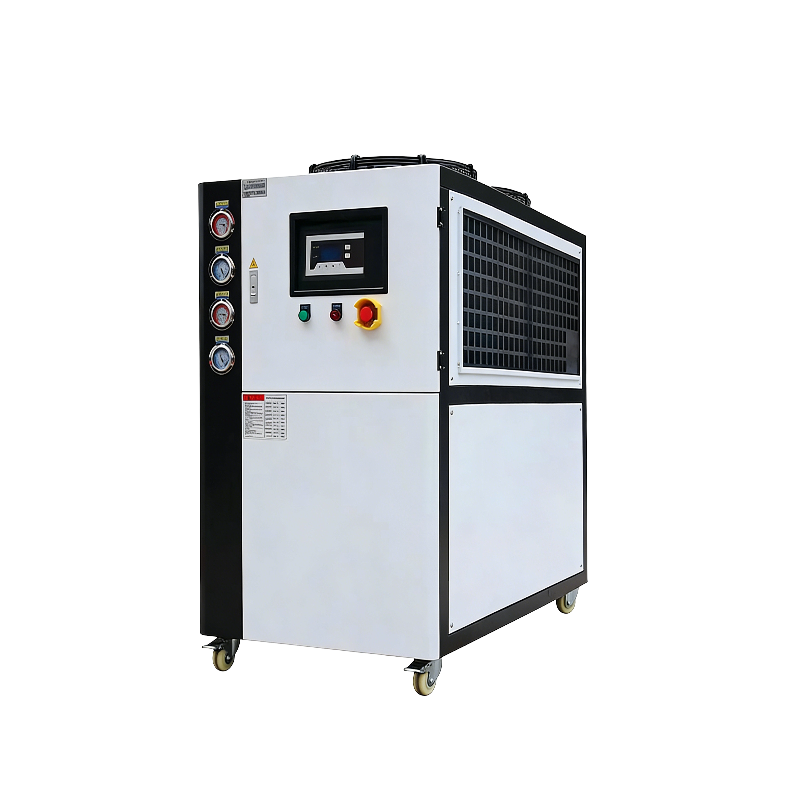
Box-type machines are the most common configuration for small and medium loads. The chiller, water tank, pump, and controls are housed in a single enclosure, which reduces installation work and saves floor space. These units are offered with low-temperature options when the process requires colder water. For production lines, laboratories, and process equipment from a few kilowatts to roughly 100 kilowatts, the air-cooled box chiller is the workhorse configuration.
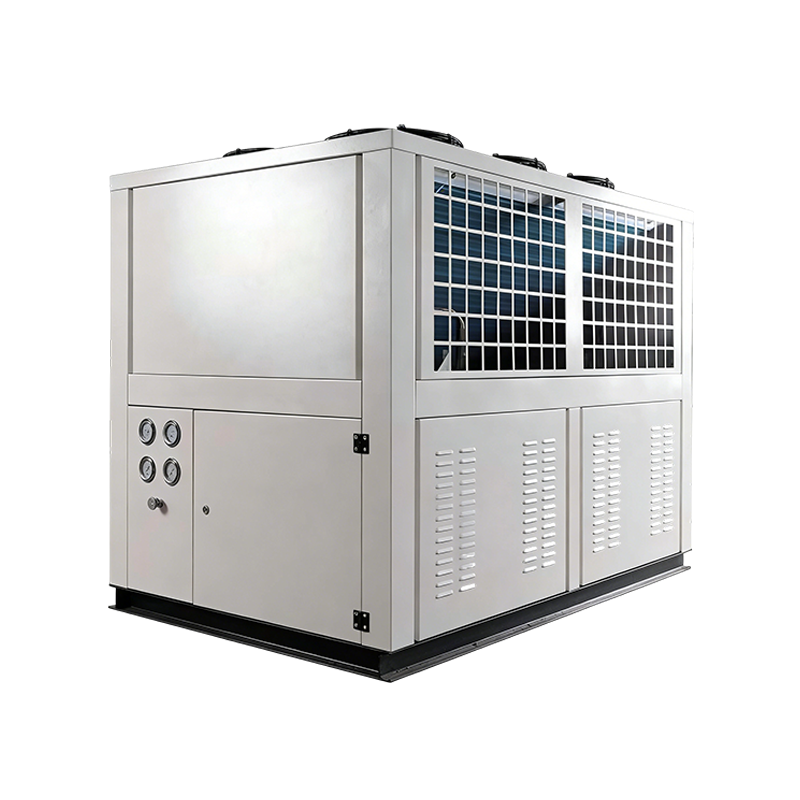 Custom Air Cooled Box Chiller Manufacturers, FactoryWe Are China Air Cooled Box Chiller Manufacturers, Factory, Shanghai Soouney Refrigeration Equipment Co., Ltd. Offer Custom Air Cooled Bo...View Product →
Screw Compressor Air Cooled Chillers
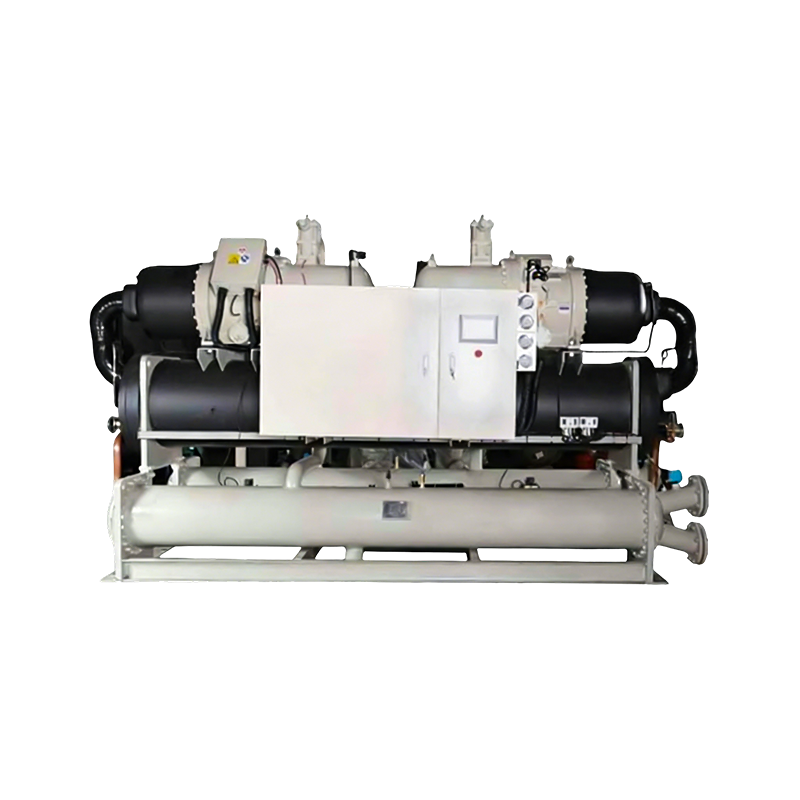
When the load grows into the hundreds of kilowatts and runs for long hours, screw compressor machines become the standard. Screw compressors operate smoothly under partial load, tolerate high compression ratios, and generate less vibration than reciprocating designs. Air-cooled screw chillers are frequently specified for continuous process cooling in chemical, pharmaceutical, and food plants. The air-cooled screw chiller category includes single- and dual-compressor packages, as well as low-temperature versions for cryogenic process requirements.
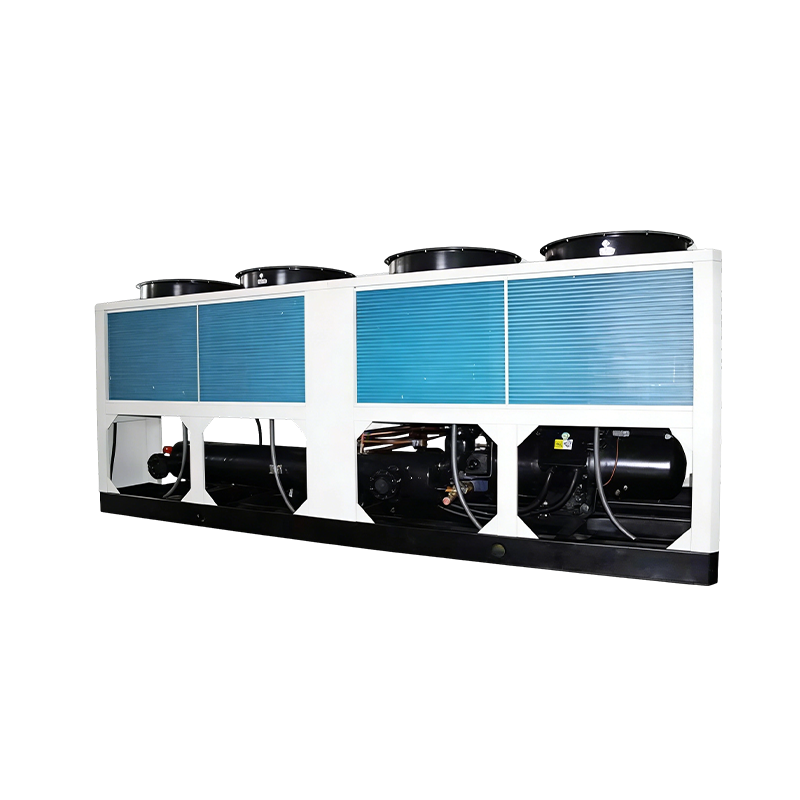 Custom Air Cooled Screw Chiller Manufacturers, FactoryWe Are China Air Cooled Screw Chiller Manufacturers, Factory, Shanghai Soouney Refrigeration Equipment Co., Ltd. Offer Custom Air Cooled ...View Product →
Integrated and Compact Air Cooled Chillers
Some applications need the smallest possible footprint: a laser cutter, a laboratory instrument, or a medical imaging system. Integrated chillers combine the refrigeration circuit, circulation pump, expansion tank, and controller in a compact cabinet. These units emphasize low noise, ease of operation, and long service life, and are frequently customized to match an OEM's exact flow and temperature requirements. The integrated air cooled chiller is a good example of this category, offering a quiet, maintenance-friendly package for equipment manufacturers.
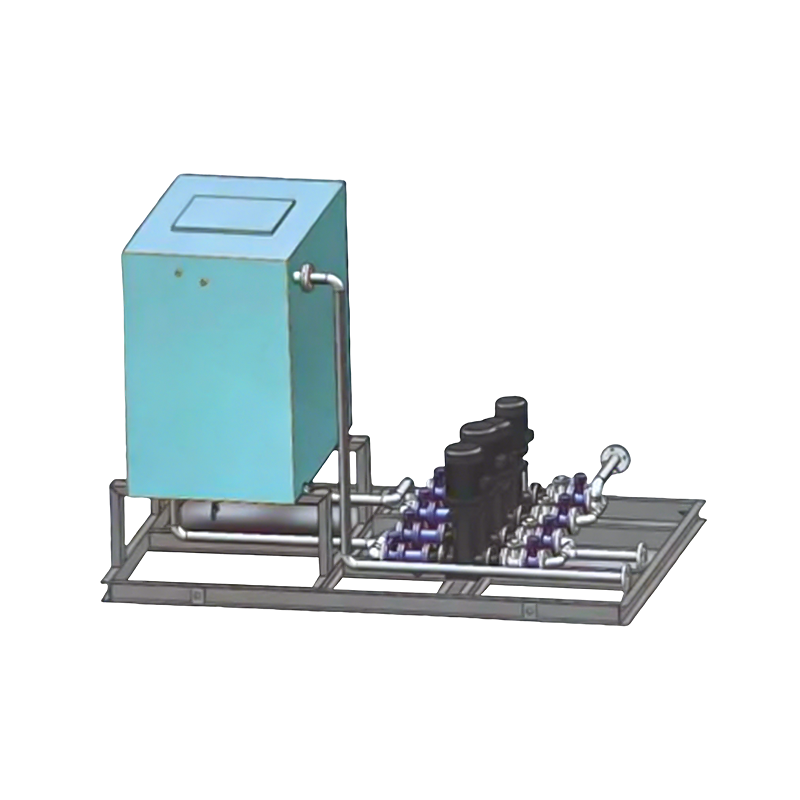 Wholesale Small Size Low Noise Long Service Time Easy Operation Integrated ChillShanghai Soouney Refrigeration Equipment Co., Ltd. Is China Wholesale Small Size Low Noise Long Service Time Easy Operation Integrated Ch...View Product →
Where Air Cooled Industrial Chillers Are Used
Air-cooled industrial chillers appear wherever a process generates heat that must be removed continuously. Typical applications include:
- Injection molding and blow molding, where mold temperature control affects cycle time and part quality.
- Laser cutting, welding, and marking, where cooling protects the laser source and optics.
- Machine tool spindles and hydraulic systems, where stable oil and spindle temperatures extend component life.
- Chemical and pharmaceutical reactors that require precise temperature control during exothermic reactions.
- Anodizing and electroplating lines, where bath temperature directly affects coating quality.
- Data centers and telecom rooms that require continuous heat rejection for high-density electronics.
In each of these settings, the essential requirement is the same: a dependable supply of chilled water at the correct temperature, without interrupting production.
How to Select an Air Cooled Industrial Chiller
Choosing the right machine means matching the chiller to the heat load, the site conditions, and the process requirements. Define these parameters before requesting a quotation:
- Cooling capacity: size the unit for the worst-case heat load, not the average, and include a safety margin of 10 to 20 percent for pump heat and ambient variation.
- Chilled water supply temperature and flow rate: define the required outlet temperature and the water flow needed to carry the heat away.
- Ambient temperature range: the unit must be rated for the hottest summer condition at the installation site.
- Fluid type: water, glycol, or inhibited fluids affect evaporator sizing and freeze protection.
- Control accuracy and part-load behavior: processes with strict temperature tolerances need precise controllers and staged compressor operation.
- Installation environment: dust, salt, and corrosive atmospheres demand coated condenser coils and suitable enclosure protection.
- Noise constraints: axial fans and compressors produce measurable noise, so verify project limits early.
- Maintenance access: condenser coils require regular cleaning, and the unit needs clearance for airflow and service.
For a complete walkthrough of these parameters, our guide to choosing industrial chiller units for different cooling applications explains how to convert process data into a clear specification. A manufacturer that builds box-type, screw-driven, and integrated machines can recommend the right configuration instead of selling a one-size-fits-all unit.
Final Considerations
An air-cooled industrial chiller is a complete cooling plant in a single package: it removes heat from a process fluid and rejects that heat to the ambient air, with no cooling tower and no water treatment loop. It is the most practical option for facilities with limited water, modest loads, or tight budgets.
The buying decision reduces to a few clear questions. How much heat must be removed, and at what temperature? What is the hottest ambient condition at the site? How much space and service access are available? And is the load small enough for a box-type machine, or large enough to justify a screw-driven package?
Answer those questions honestly, verify the manufacturer's rating conditions, and an air-cooled industrial chiller will deliver reliable process cooling for many years.