
 English
 Español

Content
A packaging material plant in Kunshan replaced a failing 160 kW air-cooled chiller last year and received nearly identical quotes for scroll and screw compressor packages from the same contractor. The team chose the screw unit because the line ran 24 hours per day, and the full-load efficiency advantage recovered the higher service cost in less than two cooling seasons.
That decision sequence is more reliable than brand preference. Scroll and screw compressor chillers are both positive-displacement machines, but they differ sharply in capacity range, part-load efficiency, maintenance rhythm, and long-term cost. This guide compares both technologies at the level of the packages you actually buy and gives a clear selection path for industrial cooling loads.
Scroll and Screw Compressor Chillers at a Glance
Scroll compressors compress refrigerant with two interleaving spiral plates, while screw compressors use twin helical rotors; that mechanical difference drives every practical difference in chiller selection.
A scroll compressor traps gas between an orbiting and a fixed spiral plate and squeezes it toward the center in continuous pockets. The motion is simple, with fewer sliding parts and no suction or discharge valves on the compression chambers. A screw compressor uses two interlocking helical rotors that mesh and reduce the trapped volume along the rotor axis; the design accepts higher compression ratios and much larger refrigerant flows, which is why it scales to big packages.
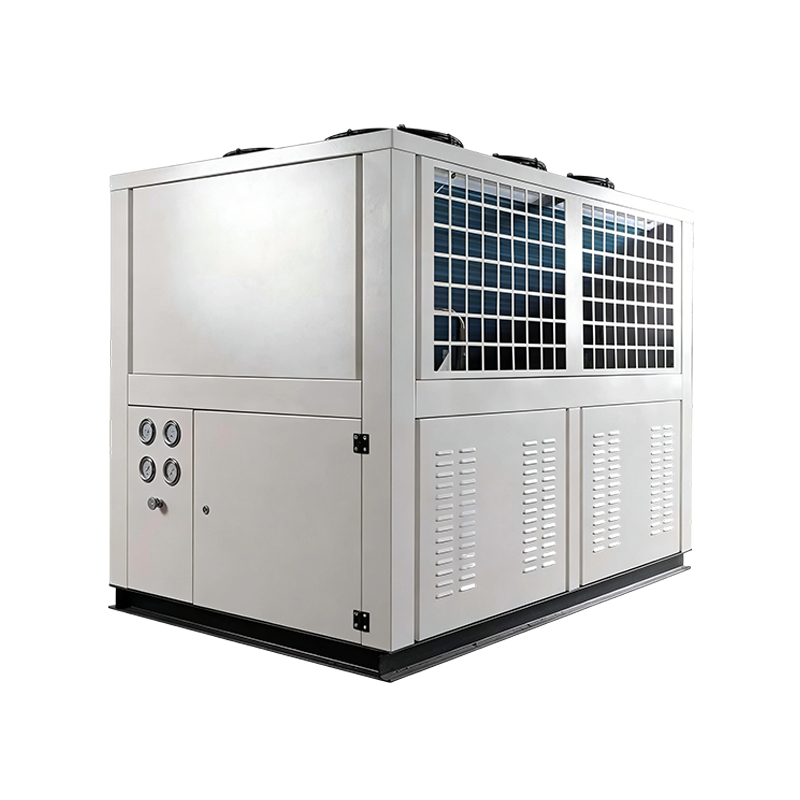
Refrigerant choice also splits the field. Scroll packages dominate light-commercial refrigerants such as R410A and R32, while large screw packages commonly ship with R134a or R513A, which matters when you plan for refrigerant phase-down schedules.
The table below summarizes the package-level differences that appear in real quotes.
| Characteristic | Scroll chiller | Screw chiller |
| Typical capacity | 10-200 kW per package | 100-1,500 kW per package |
| Compressor arrangement | often 2-4 scrolls per unit | 1-2 screw compressors |
| Best load window | 25-75 percent partial load | 75-100 percent full load |
| Noise at equal duty | quieter, fewer harmonics | mechanical noise, needs isolation |
| Service profile | low scheduled service | oil management, more planned service |
Capacity Limits Define the Fitting Point
Capacity is the first hard filter: scroll packages rarely exceed 200 kW, screw packages rarely start below 100 kW, and the 100-200 kW overlap is where you compare real operating data.
Below 100 kW, scroll-based packages dominate because multiple scroll compressors stage unloading that matches a fluctuating process load. Above 200 kW, screw packages become the standard single-package answer, and single-screw or twin-screw designs divide the load for redundancy. In the overlap zone both technologies are quoted, so the decision should rest on load shape, water or air cooling, and service capability, following the logic in our guide on how to choose industrial chiller units for different cooling loads.
Physical layout separates them as well. A 150 kW screw package is typically heavier and longer than a four-scroll package of the same capacity, which affects rigging, roof loading, and plant-floor space in existing buildings.
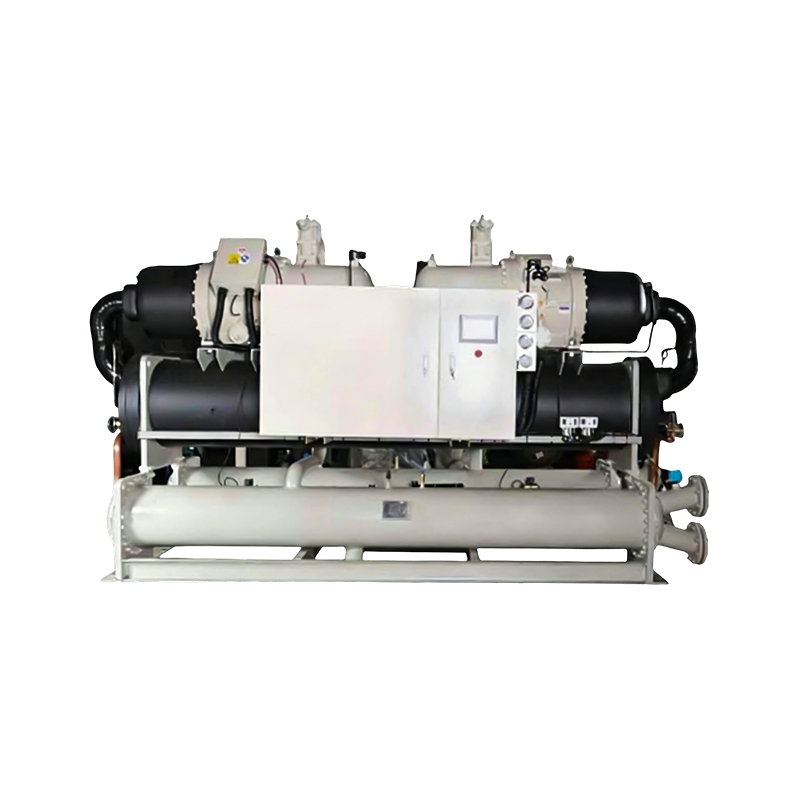
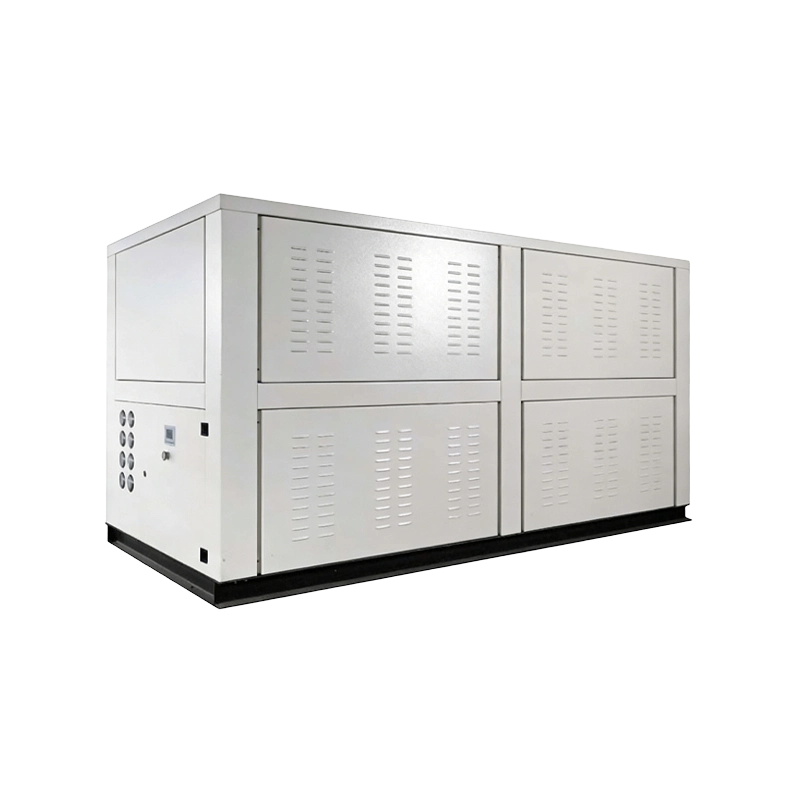
For mid-to-high capacity plants with a condenser water loop, water-cooled screw packages give the best full-load efficiency in a single frame.
 Water-Cooled Screw Chiller with Single or Twin CompressorsThis water-cooled screw chiller suits mid-to-high capacity plants with a condenser water loop, offering strong full-load efficiency. Its part-load performance matters for variable industrial loads, where annual energy costs often hinge on operation at lower loads.View Product →
Part-Load Efficiency Separates the Two Technologies
At full load a screw chiller can record a higher coefficient of performance, but a scroll chiller holds efficiency better down to 25 percent load, and that difference usually decides the annual energy bill on a variable industrial load.
Most chiller plants do not run at 100 percent design load. Production lines cycle, shift, and idle, and energy cost tracks the part-load curve. The chart below plots representative COP values for scroll and screw packages in the 150 kW class: scroll holds the advantage below 50 percent load, screw closes the gap at 75 percent, and screw takes a small lead at full load. The figures are indicative of modern air-cooled packages, not guaranteed ratings.
On larger water-cooled screw packages, full-load COP often reaches 4.5 to 5.5, which is why continuous 24/7 plants prefer screw machines. If your process load varies widely during a shift, a multi-scroll package stages more gracefully and usually posts a better IPLV (Integrated Part Load Value) in the overlap band. Always compare quotes on the same rating standard, such as AHRI 550/590, before trusting a headline efficiency number.
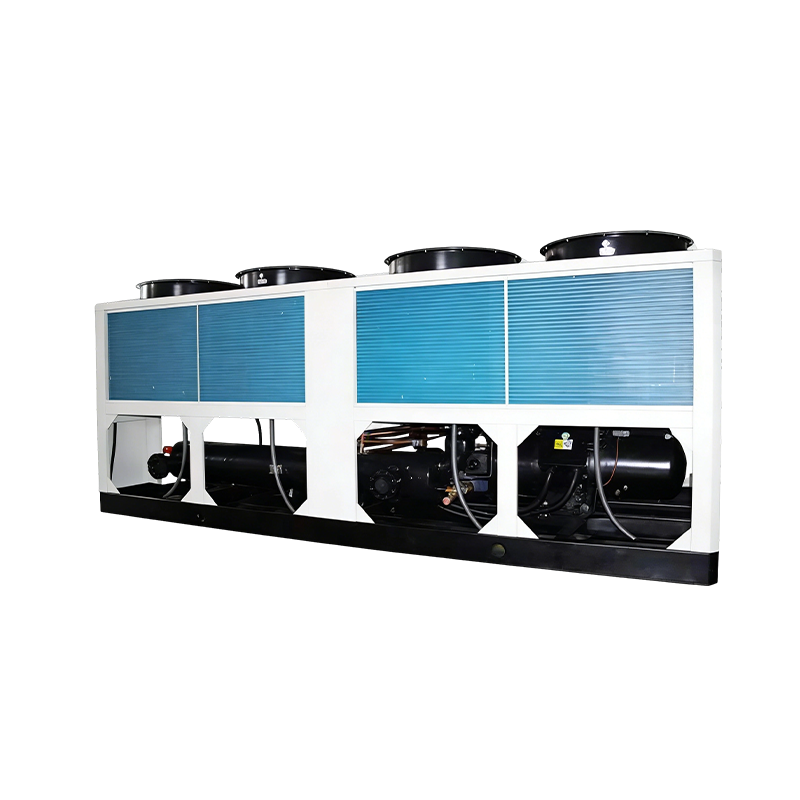
For larger air-cooled installations, twin-compressor screw packages preserve redundancy across the 150-600 kW band.
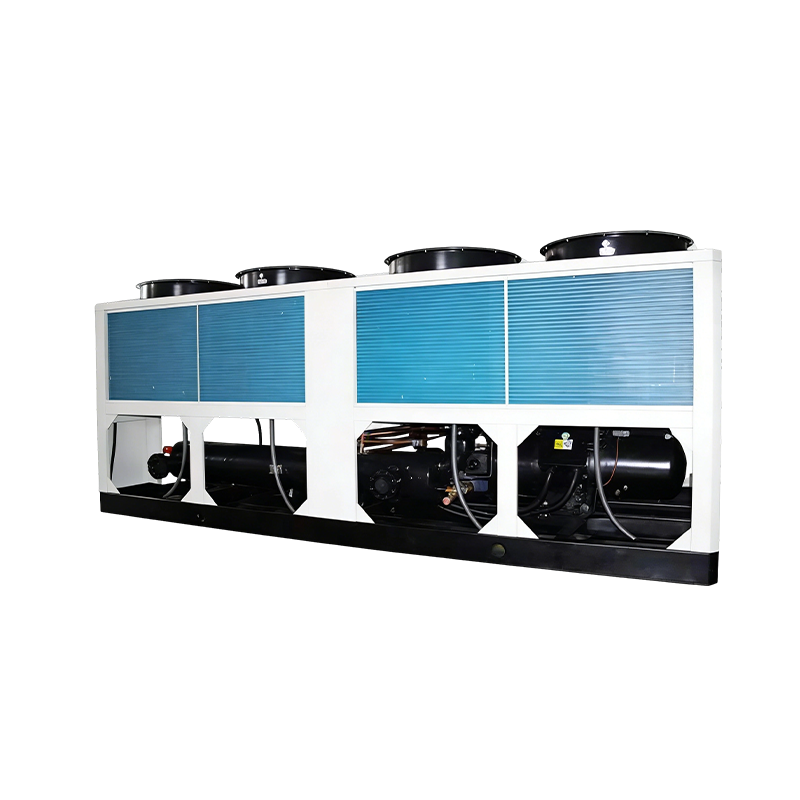 Air-Cooled Screw Chiller with Single or Twin CompressorsFor larger air-cooled installations, this twin-compressor screw package provides redundancy across the 150-600 kW band. While scroll units need less maintenance, screw compressors handle continuous full-load duty better and offer longer service life when oil maintenance is followed.View Product →
Maintenance Rhythm and Long-Term Cost
Scroll compressors need less scheduled maintenance, but screw compressors tolerate continuous full-load duty better and deliver a longer service life when the oil program is followed.
The practical difference is the type of service, not just the frequency. Scroll packages have fewer wear surfaces, so routine work is limited to refrigerant circuit checks, filter-drier changes, and condenser cleaning. Screw packages carry a dedicated oil system - separator, filter, and charge - that must be sampled and changed on schedule. Common guidance for industrial screw packs calls for oil analysis around 2,000 operating hours and oil replacement at 8,000 to 10,000 hours.
Scroll service profile
- Fewer components and a shorter checklist
- Less technician time per visit
- Simpler spare parts holding
- Weaker on heavy continuous duty at high compression ratios
Screw service profile
- Scheduled oil analysis and oil change
- Vibration monitoring on rotors and bearings
- Planned downtime windows
- Pays back with full-load efficiency and a long design life
Spare parts strategy differs too. Scroll service parts are compact and inexpensive to keep in stock, while screw rotors, oil pumps, and bearings are more expensive and are usually replaced as assemblies. If your site is remote, that affects lead time more than first cost.
Selection Guide for Industrial Cooling
Choose a scroll chiller when peak load is below 100 kW or strongly fluctuating; choose a screw chiller when you need a single package above 200 kW or sustained high-load operation.
Use a structured comparison rather than a single headline number. The steps below are the sequence we apply in practice.
- Define the design load and the minimum load your process draws overnight or at idle.
- Map the hours at each load point across a year; this decides whether part-load or full-load efficiency matters.
- Check the heat-rejection path: air-cooled suits sites without a condenser water loop, water-cooled requires a cooling tower and water treatment.
- Compare full-load EER and IPLV from the datasheets, not just the brochure headline.
- Estimate a five-year service cost including oil, filters, refrigerant top-up, and planned downtime.
- Review redundancy needs; twin-compressor screw and multi-scroll packages both give partial backup.
The decision table below condenses the comparison into a quick reference for engineering reviews.
| Selection factor | Scroll choice | Screw choice |
| Peak load under 100 kW | preferred | rarely justified |
| Peak load 100-200 kW | choose if load varies | choose if full load dominates |
| Peak load above 200 kW | multi-package layouts | preferred single package |
| Load shape fluctuates | part-load advantage | acceptable with staging |
| 24/7 continuous duty | acceptable | preferred |
| Maintenance capability | simpler to support | requires oil discipline |
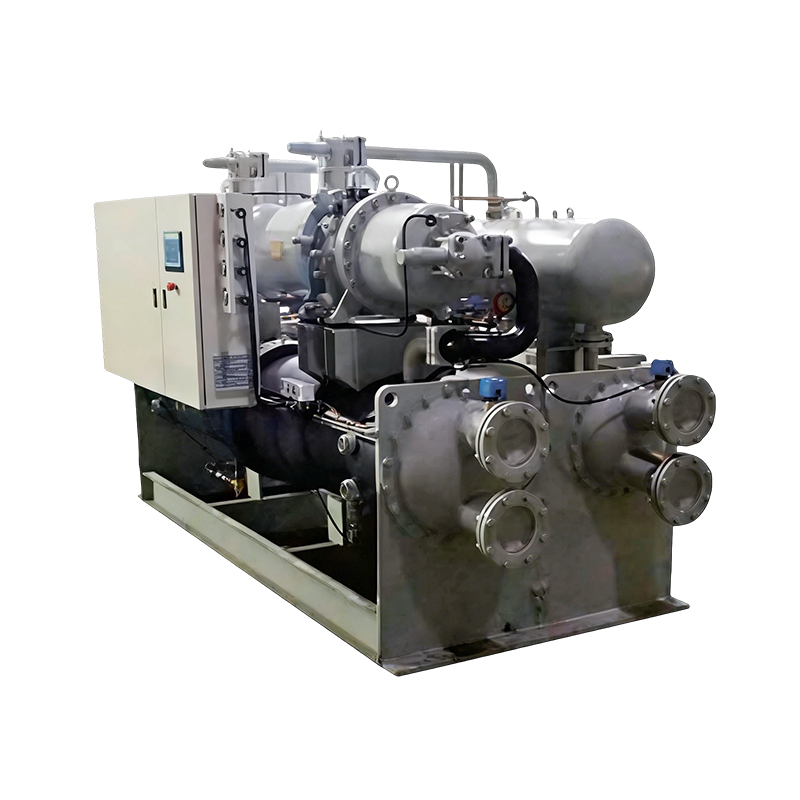
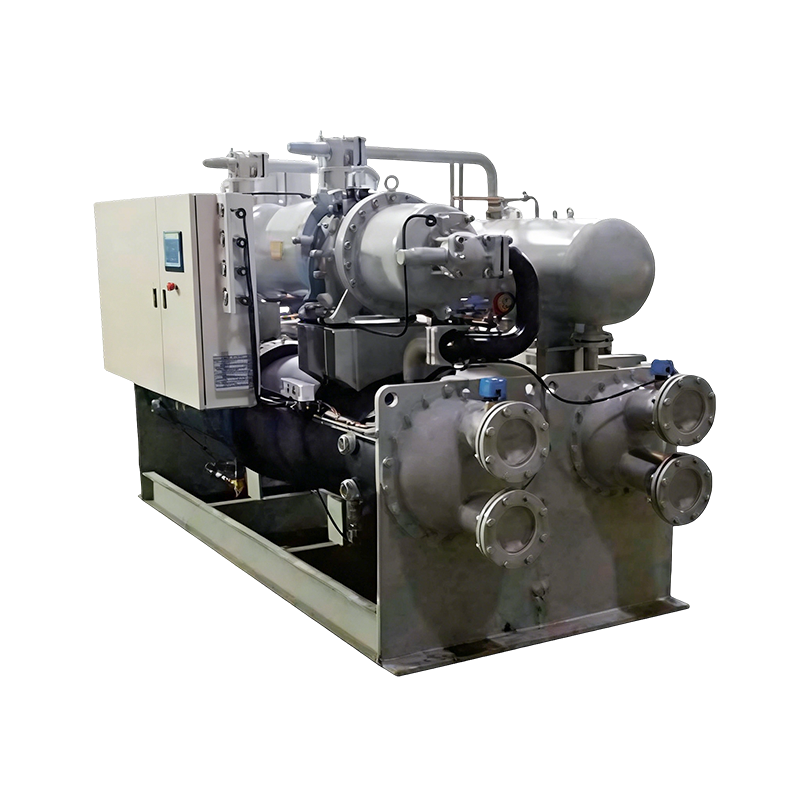 Flooded Water-Cooled Screw ChillerThis flooded-type water-cooled screw chiller uses an electronic expansion valve and jet pump oil return for improved efficiency and reliability. It is positioned as the recommended supply option, purchasable directly from the manufacturer with factory-supported commissioning and spares.View Product →
Finally, standardize the supply channel. Packages can be specified and purchased directly from the manufacturer, with factory-supported commissioning and spares, which shortens lead times and keeps responsibility in one place. Shanghai Soouney Refrigeration Equipment Co., Ltd. builds the scroll and screw chiller lines referenced in this guide.
Frequently Asked Questions
Can a scroll chiller replace a screw chiller?
In the 100-200 kW band, yes, when the plant load fluctuates and peak hours are short. Above 200 kW, replacing one screw package with scrolls means installing multiple packages and accepting lower full-load efficiency plus a larger footprint.
Which chiller compressor lasts longer?
In continuous full-load service, a properly maintained screw compressor typically runs 60,000 to 100,000 operating hours. In short-cycling duty, scroll compressors often outlast screws because they are less stressed by starts and stops.
Are screw chillers more efficient than scroll chillers?
At full load in a single package above 300 kW, yes - water-cooled screw packages often record COP values of 4.5 to 5.5. In the 100-200 kW overlap with variable load, scroll packages frequently show better part-load COP over the annual curve.
How many compressors should an industrial chiller have?
One compressor gives the lowest first cost; two or more give staged capacity control and partial redundancy. Multi-scroll packages typically use two to four compressors, and screw packages are available with single or twin compressors to match redundancy requirements.