
 English
 Español

Content
- 1 Portable vs Fixed Industrial Chiller: Definitions and Core Differences
- 2 Capacity, Temperature Stability, and Load Matching
- 3 Installation, Footprint, and Mobility
- 4 Energy Efficiency and Total Operating Cost
- 5 Maintenance, Reliability, and Lifespan
- 6 Decision Framework: How to Choose Between Portable and Fixed
- 7 Frequently Asked Questions
During a production switch in a Guangdong extrusion facility, a rented 12-ton portable chiller carried the line for six weeks while the permanent unit was serviced. It delivered stable cooling, but at 1.25 kW per ton of electricity draw versus 0.65 kW per ton for the plant's fixed water-cooled chiller, the temporary solution added roughly $730 to that period's energy bill. That trade-off between fast deployment and long-term operating cost sits at the center of every portable-versus-fixed industrial chiller decision.
Portable and fixed chillers both remove process heat, but they are engineered, priced, and specified for different operating realities. This comparison guide examines capacity, temperature stability, installation, energy cost, maintenance, and lifespan, giving you the framework to match the right cooling architecture to your plant conditions.
Portable vs Fixed Industrial Chiller: Definitions and Core Differences
A portable industrial chiller is a self-contained cooling package on casters, integrating compressor, condenser, evaporator, pump, and reservoir in one cabinet. A fixed industrial chiller is a permanent plant asset, hard-piped into a dedicated chilled-water loop and, when water-cooled, connected to a cooling tower.
Portable chiller: a caster-mounted cooling unit rated from 1 to 40 tons that connects to the process with flexible hoses and requires no permanent plumbing.
Fixed chiller: a stationary cooling system, commonly 3 to 500+ tons, installed on a dedicated foundation and integrated with permanent piping, electrical supply, and heat-rejection equipment.
| Attribute | Portable chiller | Fixed chiller |
| Typical capacity | 1-40 tons | 3-500+ tons |
| Installation effort | Wheel in, connect hoses | Hard-piped, pad-mounted |
| Energy efficiency | 1.0-1.4 kW/ton | 0.6-0.9 kW/ton |
| Lifespan | 7-10 years | 15-25 years |
| First cost | Low to moderate | Moderate to high |
Capacity, Temperature Stability, and Load Matching
Fixed chillers win on capacity headroom because they can be scaled with multiple compressors, a properly sized pump set, and a buffer tank, while portable units are limited to single or dual compressor packages inside a compact frame.
Processes that demand stable leaving water temperature - laser cutting heads, chemical reactors, or precision injection molding - benefit from a fixed chiller's larger evaporator and buffer volume, which absorb load spikes that a portable unit would ride through. Portable chillers commonly hold temperature within 1 C; a well-designed fixed system keeps it inside 0.5 C.
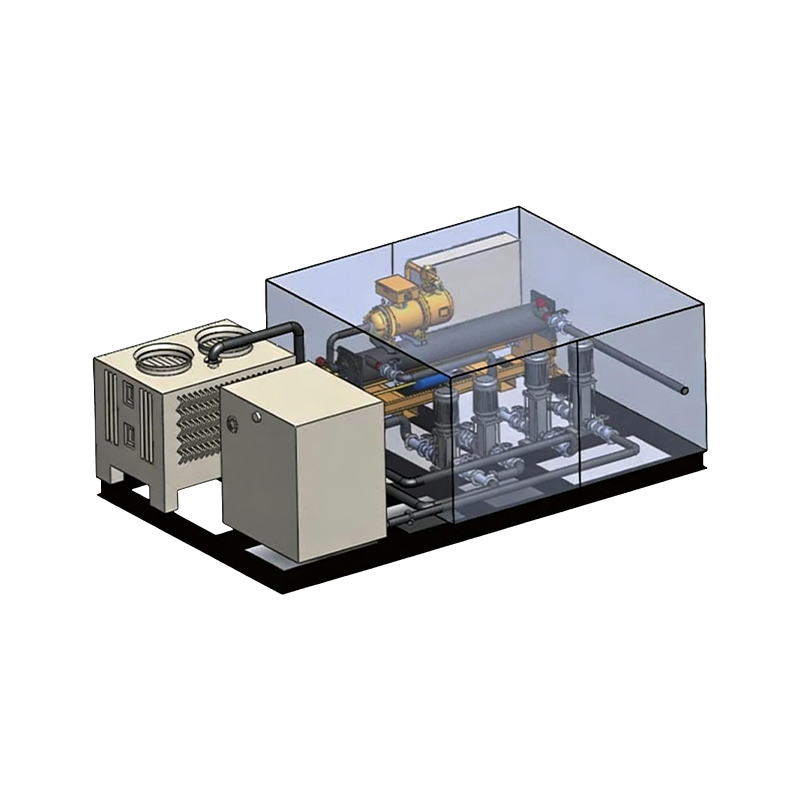
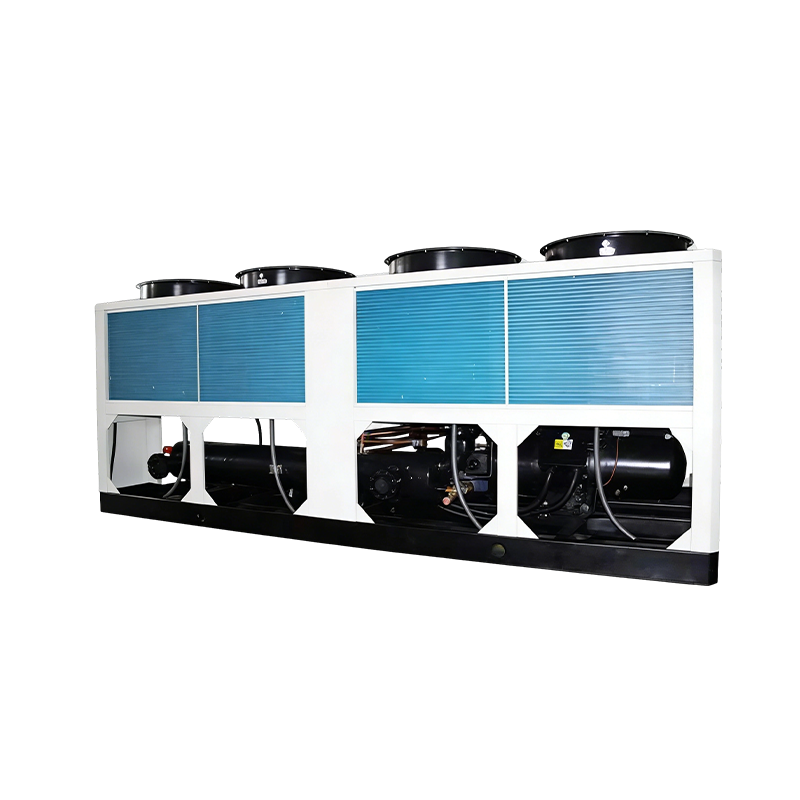
Above roughly 40 tons of load, portable packages become impractical and fixed screw chillers take over. When you are comparing large screw machines against centrifugal alternatives, our side-by-side guide covers that decision in detail.
Takeaway: when a process load exceeds 40 tons, portable packages stop being practical. Design around fixed screw chillers instead.
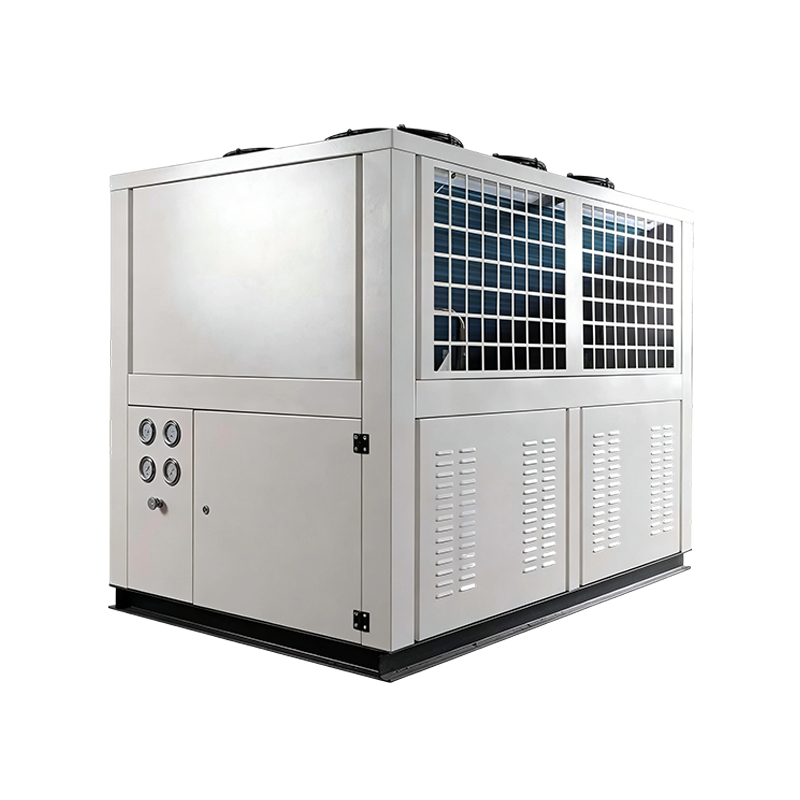
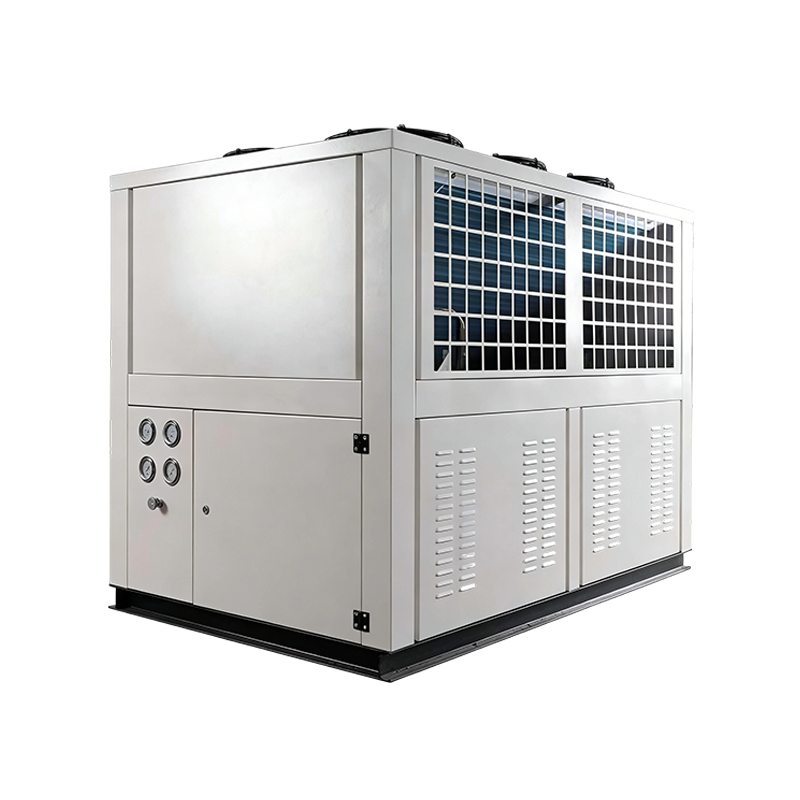 Air-Cooled Box Chiller for Portable Cooling DemandsAir-cooled box chiller for moving loads below 40 tons, with scroll compressor and protection features. It offers portability without a dedicated room, ideal for temporary or changing cooling demands.View Product →
Installation, Footprint, and Mobility
Choose a portable chiller when the cooling load moves between production cells or is needed for a defined period; choose a fixed chiller when the process is permanent and the plant can justify a dedicated equipment room or outdoor pad.
Portable chiller strengths
- Deployable within hours, with no civil works or welding.
- Relocatable when production lines shift or expand.
- Useful as maintenance standby or seasonal backup capacity.
- Low first investment for trial runs and short projects.
Fixed chiller strengths
- Highest operating efficiency and the lowest energy cost per ton.
- Capacity to match permanent loads with room to grow.
- Central monitoring and integration with plant control systems.
- Longer lifespan with predictable, lower maintenance demand.
Space constraints are the main reason mid-sized plants start with a portable frame. When the limitation is footprint rather than mobility, a compact integrated chiller delivers fixed-grade reliability in a smaller cabinet than a traditional box chiller and can be lifted into tight mechanical rooms.
Rule of thumb: a cooling load that stays in one location for more than two years belongs on a fixed chiller.
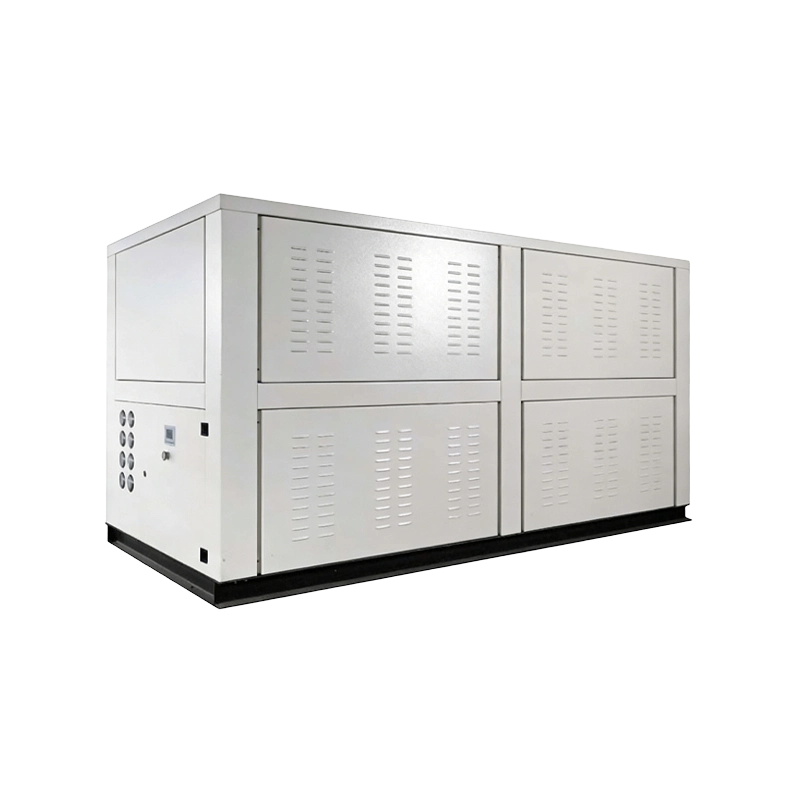
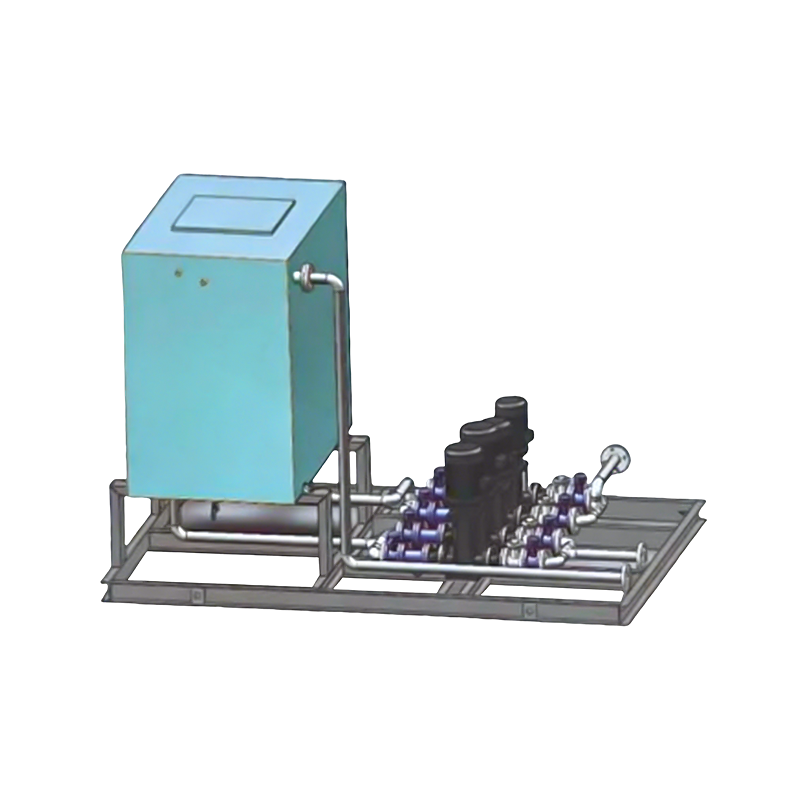 Integrated Water-Cooled Chiller with Self-Contained Hydraulic ModuleIntegrated chiller combining water-cooled unit, cooling tower, pumps, and piping in one module. It reduces installation time and floor space, offering high efficiency for permanent, continuous loads—a key advantage for long-term fixed installations.View Product →
Energy Efficiency and Total Operating Cost
A fixed water-cooled chiller typically uses 0.65 kW per ton of cooling, while a portable air-cooled unit draws 1.2 to 1.4 kW per ton. That efficiency gap, not the purchase price, decides the economic outcome for most facilities.
The math shifts in favor of the fixed chiller after roughly two seasons of continuous load. If your process runs fewer than 2,000 hours per year, the portable unit's lower first cost can win; beyond that, the fixed unit's efficiency and service life amortize the higher capital investment.
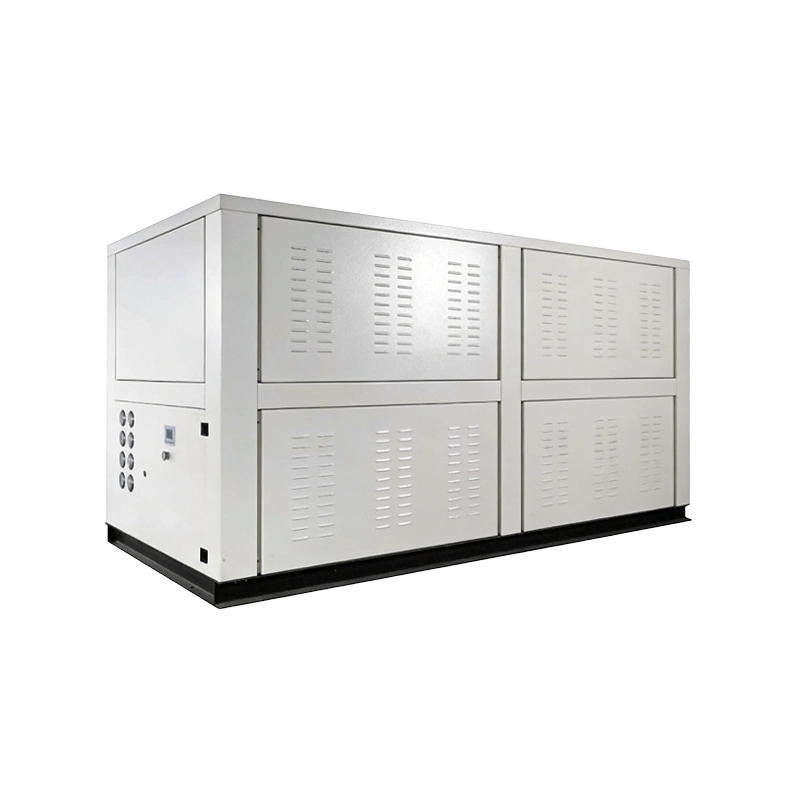 Water-Cooled Box Chiller for High-Efficiency Permanent CoolingWater-cooled box chiller for permanent installations, offering higher efficiency than portable air-cooled units. Its scroll compressor and robust protection make it economical for continuous loads exceeding 2,000 hours per year.View Product →
Maintenance, Reliability, and Lifespan
Fixed industrial chillers typically last 15 to 25 years and follow a predictable maintenance schedule, while portable units have a 7-to-10-year working life and demand more frequent attention to hoses, pumps, and condenser coils.
Portable chiller service realities
- Inspect flexible hoses for kinks and leaks before every move.
- Clean the condenser coil monthly in dusty environments.
- Replace pump seals and verify refrigerant charge each season.
- Budget for full replacement in 7 to 10 years.
Fixed chiller service realities
- Treat and test the chilled-water loop quarterly to prevent fouling.
- Service the cooling tower or condenser annually.
- Monitor compressor vibration, oil condition, and superheat.
- Plan for major overhauls at 8 to 10 year intervals.
The costliest failure mode is identical for both types: evaporator fouling from untreated water. A permanent loop with filtration and corrosion inhibitor protects a fixed chiller's heat exchanger for decades, while portable hoses are easier to contaminate and harder to flush.
Decision Framework: How to Choose Between Portable and Fixed
Base the decision on annual running hours: above roughly 2,000 operating hours per year the efficiency gap amortizes the fixed chiller's capital cost, and below that a portable unit is often the more economical and practical answer.
- Calculate the cooling load in tons from flow rate and required temperature drop, then add a 15 percent safety factor.
- Project annual running hours, energy tariff, and whether the load moves between locations.
- Run a five-year total cost comparison covering electricity, water treatment, maintenance labor, and downtime risk.
- Verify site constraints: foundation, ventilation, cooling tower access, power capacity, and noise limits.
- Plan redundancy. Plants with fixed chillers still keep a portable unit as an emergency backup during summer peaks.
2,000 hours per year is the practical crossover where fixed chillers become more cost-effective than portables.
Shanghai Soouney Refrigeration Equipment Co., Ltd. manufactures both air-cooled and water-cooled fixed chillers, from compact box units to screw-type packages, and can size a system around your flow, temperature, and uptime requirements. For load-by-load sizing guidance across common processes, work through the guide on how to choose industrial chillers for different industrial cooling loads before requesting quotations.
Frequently Asked Questions
When should I use a portable chiller instead of a fixed chiller?
Use a portable chiller for temporary loads, shifting production lines, seasonal cooling, and projects with fewer than 2,000 annual operating hours. Use a fixed chiller for permanent loads that run year-round or more than one full shift.
How much more efficient is a fixed chiller than a portable one?
A fixed water-cooled chiller typically operates at 0.65 to 0.75 kW per ton, while a portable air-cooled unit runs at 1.2 to 1.4 kW per ton. In continuous operation the fixed unit is 40 to 50 percent more energy-efficient.
Can a portable chiller serve as a backup for a fixed system?
Yes. Plants commonly rent or own a portable unit as standby for scheduled maintenance, compressor failures, or summer peak load. It cannot match the fixed unit's efficiency, but it prevents production stops.
Are all fixed industrial chillers water-cooled?
No. Fixed chillers are available as air-cooled or water-cooled models. Air-cooled units suit plants without a cooling tower, while water-cooled units deliver the best efficiency and are standard above 100 tons.